Rory Sutherland on why luck beats logic in marketing
Timestamps are as accurate as they can be but may be slightly off. We encourage you to listen to the full context.
Podcast Summary
Marketing legend Rory Sutherland returns to Young Center CMO for an enlightening conversation about why marketing works best when it embraces luck, spontaneity, and a touch of irrationality. Sutherland challenges the industry's obsession with logic and optimization, arguing that confected outrage and self-censorship are stifling creativity (07:04). He explores how success is often misunderstood as skill rather than luck, the value of strategic irresponsibility, and why inefficiency can be a feature rather than a flaw. The discussion weaves through behavioral science, creativity, and business reality with Sutherland's signature wit and unconventional wisdom.
- Core themes: The role of serendipity in marketing success, the dangers of over-optimization, and the power of customer-focused thinking over process-driven approaches
Speakers
Rory Sutherland
Rory Sutherland is Vice Chairman of Ogilvy and a leading voice in behavioral economics and marketing psychology. He's the author of "Alchemy: The Dark Art of Creation" and writes for The Spectator, bringing psychological insights to advertising and business strategy. His unconventional approach to marketing has made him one of the most sought-after speakers in the industry, combining behavioral science with practical business applications.
Jon Evans
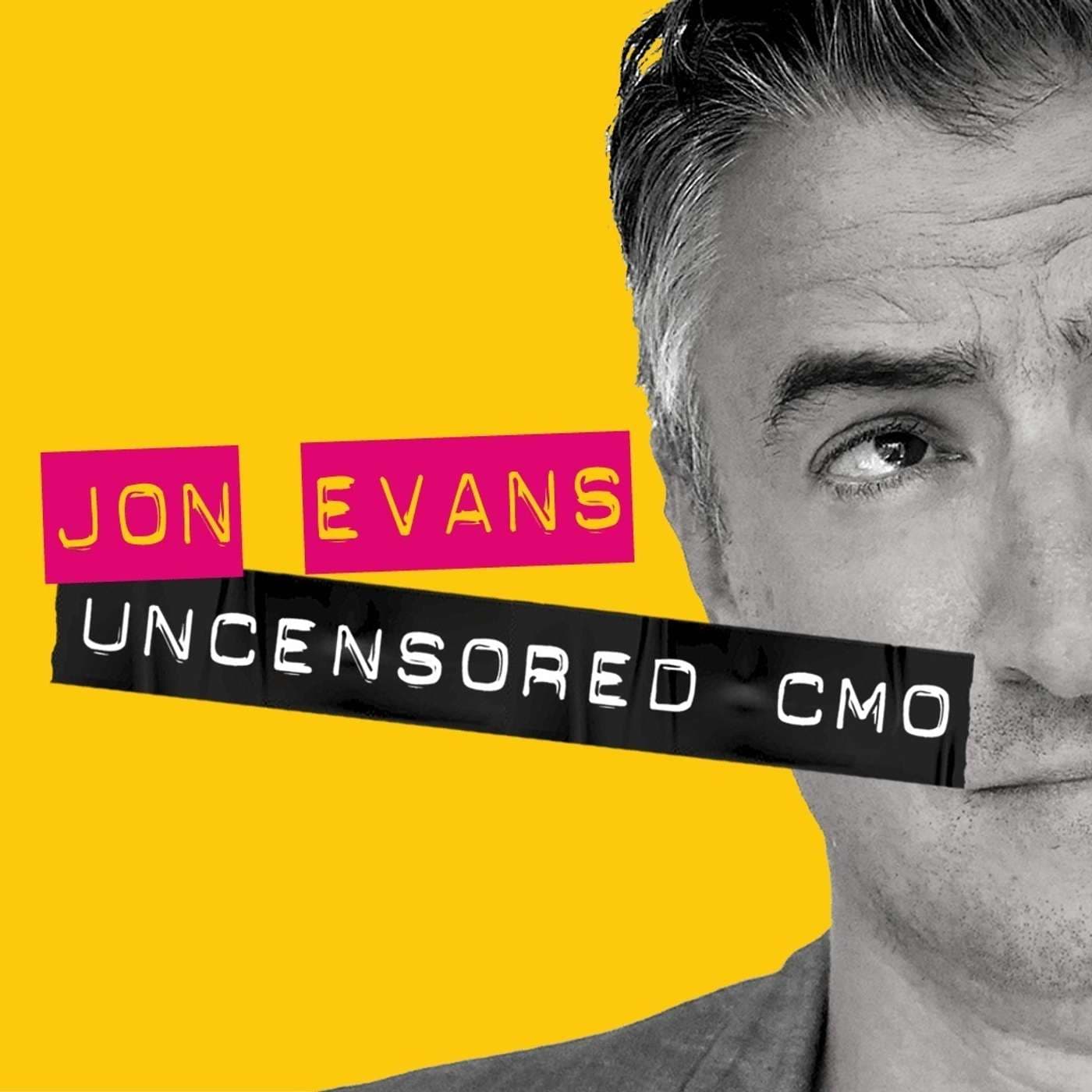
Jon Evans is the host of Uncensored CMO and a marketing professional with extensive brand management experience. He previously worked on major brands including DiSaronno Amaretto, where he created memorable campaigns including the famous underground almond scent activation that made headlines for unexpected reasons.
Key Takeaways
Marketing Success is Fat-Tailed, Not Linear
Sutherland emphasizes that marketing operates under fat-tailed distributions where a small number of extraordinary successes outweigh everything else (15:03). Like pharmaceutical research or Hollywood, marketing's real value comes from occasional breakthrough moments rather than consistent incremental gains. The problem is that finance departments judge marketing by linear metrics, missing the fundamental nature of how marketing actually creates value. Sutherland notes that Nassim Taleb, the world's leading expert on fat-tailed distributions, specifically told him that "marketing is fat-tailed," meaning marketers should focus on creating opportunities for spectacular wins rather than optimizing for predictable returns.
The 95/5 Rule: Strategic Irresponsibility Creates Magic
Drawing from Will Guidara's philosophy, Sutherland advocates spending 95% of resources responsibly and efficiently, but dedicating 5% to spectacular, seemingly irresponsible gestures (23:13). These moments of discretionary generosity—like the Doubletree warm cookies or Italian-made spoons at an ice cream stand—create disproportionate emotional impact because they're unexpected and unentitled. The magic lies in doing things you didn't have to do, which signals genuine customer care rather than mere compliance with service standards.
Reverse Benchmarking Beats Traditional Competition
Instead of benchmarking against competitors and becoming increasingly similar, Sutherland proposes "reverse benchmarking"—identifying what competitors do badly and excelling dramatically in those areas (30:17). This creates distinctive differentiation that gains disproportionate attention. Examples include Will Guidara's beer sommelier at a Michelin-starred restaurant or Buc-ee's palatial gas station restrooms. By doubling down on neglected areas, businesses can achieve outsized impact with focused investment.
Self-Censorship is Killing Creativity
The fear of confected outrage is causing marketers to self-censor before ideas even reach the surface, eliminating the "foothills of silliness" necessary for breakthrough creativity (10:40). Sutherland argues that many legendary campaigns emerged from jokes or accidents—"Should've Gone to Specsavers" began as an on-set joke, while the Dulux dog wandered onto set by mistake. When creativity requires evading our own self-censorship mechanisms, excessive caution eliminates the very randomness that produces marketing magic.
Loose Fitness Functions Enable Innovation
Drawing from mathematician Stephen Wolfram's insights about evolution, Sutherland argues that businesses need "loose fitness functions" rather than narrow KPIs (49:00). Just as evolution succeeds because it only requires staying alive and reproducing (allowing massive biodiversity), businesses should focus on broad objectives like customer satisfaction rather than micromanaging metrics like call times. This approach unleashes human ingenuity, intuitive judgment, and allows people to discover lucky accidents that tight process control would suppress.
Statistics & Facts
- The podcast episode featuring Rory Sutherland and Scott Galloway ranked #31 globally on Spotify, demonstrating the unexpected viral power of authentic, unscripted conversations between experts (00:45).
- The "Share a Coke" campaign by Ogilvy Australia, featuring personalized names on bottles, became a billion-dollar idea run in 110 countries over 10 years, yet the agency only earned approximately $350,000 for creating it (18:26).
- The Spectator magazine has published over 10,000 issues since 1828, making it the oldest continuously published weekly magazine in the English language, providing nearly 200 years of advertising evolution data (51:47).



