How to Measure Creative Success in 2026
Timestamps are as accurate as they can be but may be slightly off. We encourage you to listen to the full context.
Podcast Summary
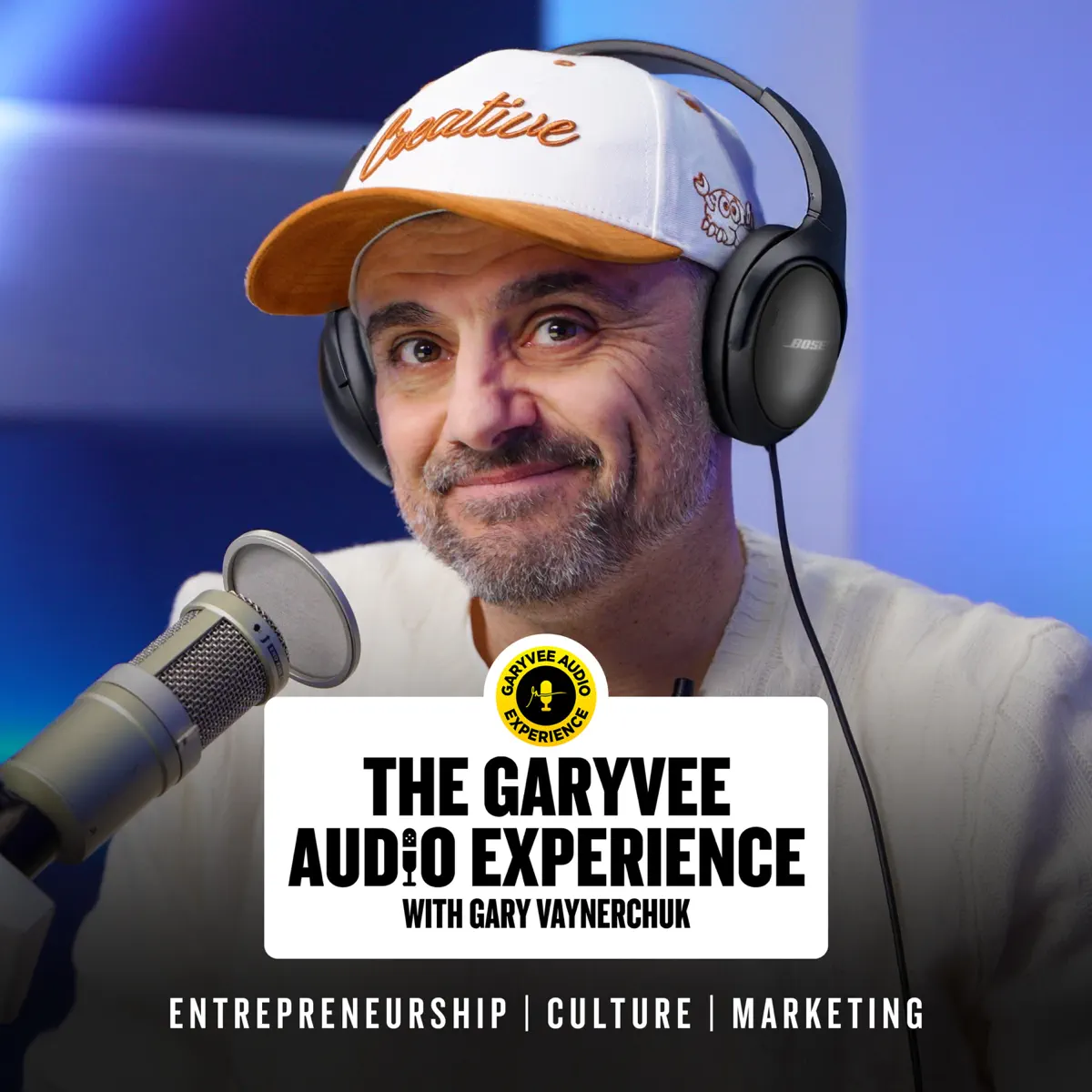
In this episode of the GaryVee Audio Experience, Gary Vaynerchuk delivers a high-energy presentation to marketing practitioners about the revolutionary shift happening in digital marketing. (02:00) He argues that we're in the first era where creative content can be accurately measured through organic social media performance, fundamentally changing the marketing mix. (03:12) Gary emphasizes that organic social media has evolved from a "nice to have" to the most critical component of performance marketing, as algorithms now allow creative content to find its target audience organically before any paid media investment.
- Main Theme: The convergence of art and math in marketing, where organic social creative has become measurable and should be the foundation of all paid media strategies
Speakers
Gary Vaynerchuk
Gary Vaynerchuk is a serial entrepreneur and CEO of VaynerMedia, which manages $400 million in media billings annually with over $23 billion in total media spend. He has been actively involved in business marketing execution since 1996, building multiple companies including WineText and VeeFriends while maintaining hands-on operational control of marketing strategies across all ventures.
Key Takeaways
Organic Social Creative as Performance Measurement Tool
Gary argues that we're in the first era where creative content can be accurately measured without spending media dollars. (02:42) By posting content organically across social platforms, marketers can gauge creative effectiveness through reach and engagement before investing in paid amplification. This represents a fundamental shift from guessing about creative performance to having concrete data about what resonates with audiences. The insight comes from understanding that organic reach on social platforms provides real-time feedback on creative quality, eliminating the traditional need to spend money just to test creative concepts.
Content Finds Audience in Interest Media Era
The shift from social media to "interest media" means that follower count is declining in importance while content relevance is paramount. (09:08) Gary explains that when you create content about skateboarding on TikTok, even if you've never posted about it before, the first 500 non-followers who see it will be interested in skateboarding. This algorithmic precision allows brands to reach highly targeted audiences organically, making it possible to identify and validate customer segments before spending on paid targeting. The practical application is creating content for specific consumer segmentations rather than broad demographic buckets.
Creative Quality Determines Media Spend Efficiency
The effectiveness and scalability of paid advertising is directly proportional to creative quality, not just media buying strategy. (14:00) Gary emphasizes that when marketers blame "inventory" for declining ad performance, they're actually dealing with creative fatigue. High-quality creative can support exponentially larger media spends with sustained performance, while poor creative quickly exhausts its effectiveness regardless of targeting precision. This insight challenges the traditional approach of focusing primarily on media buying optimization rather than creative excellence.
Feeding AI Language Models Through Content Creation
Creating consistent organic content serves a dual purpose: immediate marketing results and positioning for future AI-driven search. (14:42) Gary predicts that posting three pieces of content daily on Google Shorts will be crucial for appearing in AI search results in three years, comparing it to SEO strategy from the 1990s. This forward-thinking approach recognizes that current social media content is training the LLMs that will power future search experiences. The strategic implication is that today's organic content investment will compound into tomorrow's discoverability advantage.
Budget Reallocation from Media to Creative
Traditional marketing budget allocation heavily favors media spend over creative production, but Gary argues this should be inverted for better ROI. (19:10) He suggests that instead of spending $1.9 million on media and $100,000 on creative, marketers should invest $500,000 in creative and $1 million in media for superior results. The logic is that better creative enables more efficient media spend, allowing the same business outcomes with less total investment. This reallocation strategy requires confidence in creative capabilities but delivers significantly better cost-effectiveness.
Statistics & Facts
- VaynerMedia manages $400 million in billings this year with over $23 billion in total media spend across all client accounts. (18:25) This statistic establishes Gary's credibility and the scale at which his agency operates, providing context for his strategic recommendations.
- Gary has been actively involved in business marketing execution for 30 years, from 1996 to present day. (01:38) This demonstrates his long-term perspective on marketing evolution and hands-on experience rather than just theoretical knowledge.
- In his example scenario, reallocating budget from $100,000 creative/$1.9 million media to $500,000 creative/$1 million media (totaling $1.5 million) will outperform the original $2 million spend. (19:30) This specific mathematical comparison illustrates his central thesis about creative being the primary variable in marketing effectiveness.