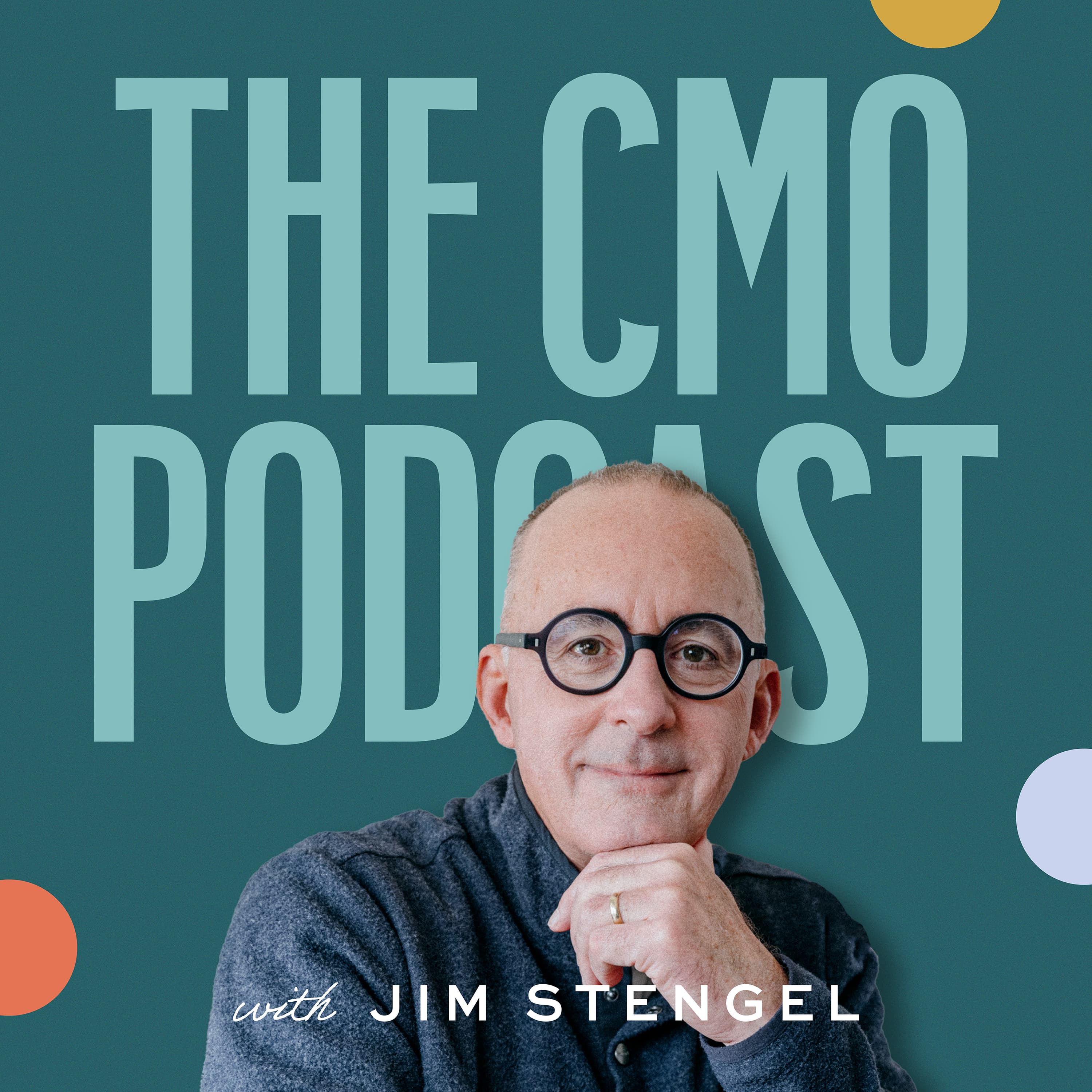
Dave Schneider (Red Wing Shoe) | Boots, Builders, and Brand Legacy
Timestamps are as accurate as they can be but may be slightly off. We encourage you to listen to the full context.
Podcast Summary
Dave Schneider, CMO of Red Wing Shoe Company, joins Jim Stengel for the inaugural episode of the CMO podcast on tour in Minneapolis. This episode explores how Red Wing, founded in 1905, has built a billion-dollar business serving both skilled workers and style-conscious consumers through authentic brand building and vertical integration. (02:07)
- Main themes center on creating human connections to unlock growth, balancing timely relevance with timeless craftsmanship, and the power of family-owned business culture in driving long-term brand equity.
Speakers
Dave Schneider
Dave Schneider is the Chief Marketing Officer of Red Wing Shoe Company, a position he has held for nine years of his nearly twelve-year tenure at the company. He leads global marketing practices including brand management, digital marketing, e-commerce, and retail experience for the billion-dollar footwear company. Before joining Red Wing, Dave spent over ten years in senior leadership positions with world-class advertising agencies including Cole McVoy, Martin Williams, and BBDO in Minneapolis and Chicago.
Jim Stengel
Jim Stengel is a renowned brand purpose expert and former Global Marketing Officer at Procter & Gamble. He hosts the CMO podcast and has helped hundreds of major brands discover and activate their purpose, believing that when a brand's purpose is clear, compelling, and authentic, profit naturally follows.
Key Takeaways
Create Human Connections to Unlock Growth
Dave emphasized Red Wing's philosophy of creating human connections as the driver of both brand equity and business growth. (14:04) This isn't just about consumer relationships—it extends internally to teams, sales, and product development. Red Wing implements this through structured rituals like "the crew," a group of 20 diehard loyalists who provide unfiltered feedback monthly, and biweekly marketing meetings featuring outside speakers and cross-functional collaboration. This approach ensures the brand stays grounded in authentic human insights while building internal alignment around shared purpose.
Balance Long-Term Brand Equity with Performance Marketing
As a privately held, family-owned company, Red Wing takes a fundamentally different approach to marketing investment than publicly traded competitors. (11:25) Dave explained that being privately held "changes the dynamic in such a fundamental way" because they can focus on long-term brand building without quarterly earnings pressure. Their strategy organizes around both brand/product teams and channel teams, ensuring performance marketing and brand equity work in tandem rather than competing for resources and attention.
Stay Both Timely and Timeless
Red Wing's brand philosophy centers on being "both timely and timeless," staying attuned to current culture while maintaining enduring craftsmanship values. (25:06) This is evident in their collaborations with icons like Steve McQueen's estate and Super Mario, which attract new audiences while preserving their authentic work boot heritage. Dave noted they don't over-commercialize celebrity endorsements, preferring organic adoption by figures like Bradley Cooper and Lady Gaga, maintaining authenticity while gaining cultural relevance.
Leverage the Power of Family-Owned Culture
The company's family ownership creates a unique culture driven by four core values: respect, integrity, community, and excellence. (21:17) Unlike many companies where values are "something you put on the lunchroom wall," these values actively drive behavior and decision-making from CEO Alison Geddings down through the entire organization. This culture enables long-term thinking, decisive leadership changes like board restructuring, and authentic commitment to supporting skilled trades workers.
Build Authentic Brand Purpose Through Real Stories
Red Wing's Wall of Honor program celebrates customers whose boots have lasting stories, creating authentic brand narratives. (39:41) Dave shared the story of Tom McCarthy, who threw his final pair of Red Wings into the concrete at center ice of the Minnesota Wild arena, later honored by his grandson who played in the state hockey tournament on that same ice. These authentic stories reinforce their brand purpose of helping skilled laborers do their best work, positioning boots as essential tools rather than just products.
Statistics & Facts
- Red Wing Shoe Company generates more than a billion dollars in annual revenue across its portfolio of brands and multichannel retail network. (02:22)
- There are five people leaving the skilled trades for every one entering in the United States today, a statistic that drives Red Wing's mission to highlight skilled trades as viable career paths. (41:13)
- Red Wing operates 550+ retail stores across North America and distributes to 110+ countries with 900+ shoe styles and 600+ workwear styles, demonstrating their massive vertical integration and global reach. (28:42)



