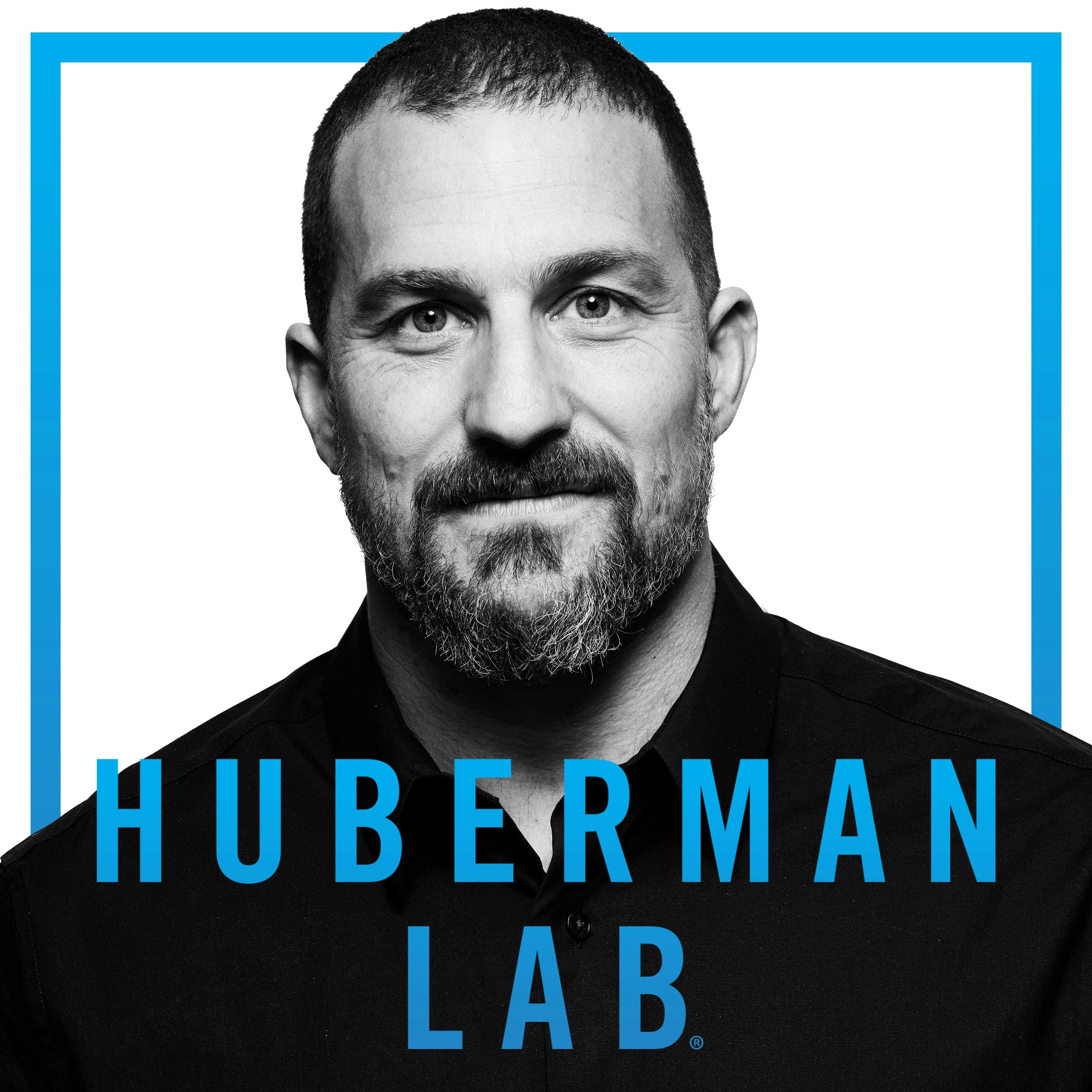
How to Expand Your Consciousness | Dr. Christof Koch
Timestamps are as accurate as they can be but may be slightly off. We encourage you to listen to the full context.
Podcast Summary
In this profound episode, Stanford neurobiology professor Andrew Huberman sits down with renowned neuroscientist Dr. Christophe Koch to explore the nature of consciousness, perception, and human experience. (03:00) Dr. Koch, a chief scientist at the Tiny Blue Dot Foundation and investigator at the Allen Institute for Brain Science, provides a remarkably clear definition of consciousness as simply our subjective experience - the fact that we see, hear, feel, love, and dream.
The conversation delves into how each of us lives within what Koch calls a "perception box" - our unique, subjective construction of reality shaped by our experiences, beliefs, and neural wiring. (22:59) They explore transformative experiences that can expand these perception boxes, from virtual reality encounters with racism to mystical psychedelic journeys.
Key themes include the neurobiology of consciousness, the malleability of self-perception, the role of psychedelics in expanding awareness, and practical approaches to changing limiting beliefs and behaviors. (46:10) The discussion also touches on societal challenges, the mental health crisis among young people, and how understanding consciousness can help us navigate an increasingly polarized world.
- Main Focus: Understanding consciousness as the foundation of human experience and exploring how we can expand our perception boxes to live more fully and compassionately
Speakers
Dr. Andrew Huberman
Professor of neurobiology and ophthalmology at Stanford School of Medicine and host of the Huberman Lab Podcast. Huberman has spent over 30 years researching brain function and translating complex neuroscience into practical tools for everyday life. His podcast has become one of the most influential health and science platforms, reaching millions of listeners worldwide with evidence-based protocols for optimizing mental and physical performance.
Dr. Christophe Koch
Chief scientist at the Tiny Blue Dot Foundation and investigator at the Allen Institute for Brain Science. Koch is considered one of the great pioneers of modern neuroscience, having spent decades studying visual perception, neural correlates of consciousness, and the nature of subjective experience. He has authored numerous influential books on consciousness and has been at the forefront of developing practical methods to measure consciousness in unresponsive patients, potentially revolutionizing medical care for those in vegetative states.
Key Takeaways
We All Live in Unique "Perception Boxes"
Dr. Koch introduces the powerful concept that each person operates from their own subjective "perception box" - a unique construction of reality based on their experiences, beliefs, and neural wiring. (22:59) This isn't just philosophical; it has profound practical implications. Just as people literally see "the dress" as different colors due to variations in visual processing, we interpret major life events through completely different lenses based on our individual priors and experiences. Understanding this can dramatically increase empathy and reduce interpersonal conflict by recognizing that others aren't being difficult - they're genuinely experiencing a different reality. The key insight is that these perception boxes can be expanded and modified through transformative experiences, making us more flexible and understanding humans.
Consciousness Can Be Measured and Has Clinical Applications
One of the most striking revelations is that consciousness isn't just a philosophical concept - it can be quantitatively measured using brain complexity analysis. (44:32) Dr. Koch describes how transcranial magnetic stimulation combined with EEG can generate a "perturbation complexity index" (PCI) between 0 and 1. Anyone above 0.31 is conscious; below this threshold indicates unconsciousness. This has revolutionary implications for medicine, as 25% of patients in apparent vegetative states actually show covert consciousness. (47:24) This technology could prevent premature withdrawal of life support and help families make more informed decisions about their loved ones' care, potentially saving lives and reducing tragic medical errors.
Transformative Experiences Can Rapidly Expand Perception
Huberman shares a powerful example of how a brief VR experience simulating racism completely transformed his awareness and daily perceptions. (20:05) Within just 10 minutes of experiencing life as a Black person in virtual reality, his understanding of subtle discrimination became visceral rather than intellectual. This demonstrates that we don't need years of therapy or meditation to achieve profound shifts in consciousness - the right experience can create lasting change almost instantaneously. The key is that transformative experiences provide "direct acquaintance" rather than just intellectual understanding. This suggests we should actively seek experiences that challenge our assumptions and expose us to different perspectives, as they can rapidly expand our empathy and understanding of others.
Consciousness Doesn't Require Self or Even Space and Time
Through his profound 5-MeO-DMT experience, Dr. Koch discovered that consciousness can exist without the sense of self, space, or time. (73:00) During this experience, "Christophe" completely disappeared, yet awareness remained - experiencing only bright light, terror, and ecstasy in a timeless, spaceless state. This challenges our fundamental assumptions about what consciousness requires and suggests that our normal waking consciousness, dominated by self-concern and spatial-temporal thinking, is just one possible configuration. This insight can be profoundly liberating, showing us that our everyday worries and self-centered thinking aren't inherent to consciousness itself. We can potentially access states of pure being that exist beyond our usual mental constraints, offering a different relationship to suffering and identity.
Cynicism Is the Enemy of Growth and Healing
Perhaps the most practical takeaway is Dr. Koch's emphasis that cynicism literally prevents positive change by blocking the belief necessary for transformation. (108:27) Whether it's therapy, relationships, or societal progress, cynicism creates a self-fulfilling prophecy of failure. The placebo effect demonstrates how belief in healing actually facilitates healing through measurable brain changes. Conversely, approaching life with curiosity keeps our perception boxes open and malleable. This has immediate applications: when facing challenges, consciously choosing curiosity over cynicism literally increases your chances of finding solutions and growing from difficulties. The practical strategy is to notice when you're becoming cynical and deliberately shift toward wondering "what else might be possible?" rather than concluding "nothing will work."
Statistics & Facts
- There's a sharp threshold at 0.31 on the perturbation complexity index (PCI) - anyone above this threshold is conscious, while below indicates unconsciousness. (45:12) This has been tested on over 300 people and provides the first reliable method to objectively measure consciousness in unresponsive patients.
- 25% of patients in apparent vegetative states actually show covert consciousness and can voluntarily modulate their brain activity in response to commands. (47:24) This groundbreaking discovery means that one in four patients presumed unconscious may actually be aware but unable to respond behaviorally.
- 70-90% of families decide to withdraw life-sustaining therapy within 4-5 days when doctors discuss end-of-life decisions for unresponsive patients. (47:06) This statistic becomes especially concerning given that a quarter of these patients may actually be conscious but unable to communicate.



