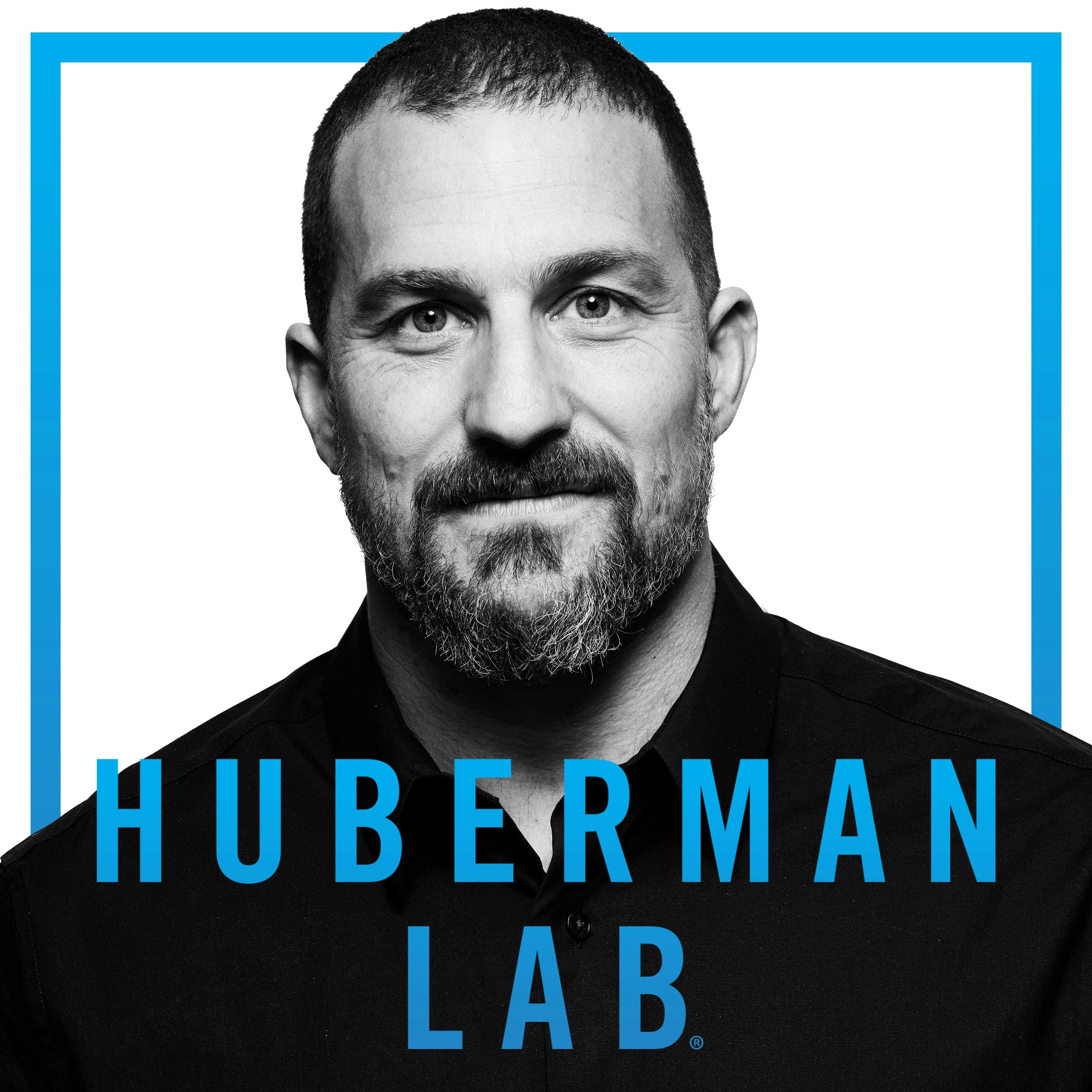
Essentials: How to Exercise for Strength Gains & Hormone Optimization | Dr. Duncan French
Timestamps are as accurate as they can be but may be slightly off. We encourage you to listen to the full context.
Podcast Summary
In this Huberman Lab Essentials episode, Andrew Huberman sits down with Dr. Duncan French at the USC Performance Institute to explore the intricate relationship between exercise and hormone optimization. (00:40) Dr. French, whose name appears on dozens of research papers examining how weight training impacts hormones, breaks down the science behind testosterone release during resistance training and reveals the optimal training protocols for maximizing anabolic environments. The conversation dives deep into practical applications, covering everything from the stress-hormone connection to strategic periodization of cold exposure and nutrition timing for peak performance.
Speakers
Andrew Huberman
Andrew Huberman is a professor of neurobiology and ophthalmology at Stanford School of Medicine and host of the Huberman Lab podcast. He's renowned for translating complex neuroscience research into practical, science-based tools for optimizing mental health, physical health, and performance.
Dr. Duncan French
Dr. Duncan French is a leading exercise physiologist at the USC Performance Institute whose research primarily focuses on catecholamines, sympathetic arousal, and hormonal responses to resistance training. His extensive work on testosterone and stress hormone interactions has produced dozens of peer-reviewed publications, making him a go-to authority on exercise-induced hormonal adaptations.
Key Takeaways
Master the 6x10 Protocol for Testosterone Optimization
Dr. French reveals the research-backed formula for maximizing testosterone release through resistance training. (05:15) The optimal protocol involves six sets of 10 repetitions at 80% of your one-rep maximum with just two-minute rest periods. This combination creates both mechanical stress through heavy loading and metabolic stress through volume, triggering the dual pathways needed for testosterone release. The key insight is maintaining intensity while accumulating volume - if you can't complete 10 reps, reduce the weight rather than sacrifice the repetition target. This protocol should be limited to twice per week for non-bodybuilders to allow proper recovery while maximizing hormonal benefits.
Strategic Cold Exposure Timing Can Make or Break Your Results
The timing of cold exposure dramatically impacts its effectiveness, and using it incorrectly can actually hinder your progress. (17:05) During muscle-building phases, cold therapy dampens the mTOR pathway and hypertrophic signaling, essentially short-circuiting the adaptation process your body needs for growth. However, during competition phases when technical execution and recovery are paramount, cold exposure becomes invaluable for maintaining performance quality. Dr. French emphasizes that elite athletes periodize their cold exposure - avoiding it during building phases but embracing it when peak performance and rapid recovery are the goals.
Skill Development Requires Quality Over Quantity
When it comes to motor skill acquisition, shorter high-quality sessions dramatically outperform longer, fatigue-compromised training. (25:01) Dr. French explains that as soon as fatigue impacts movement accuracy, you're no longer grooving proper neural pathways - you're actually reinforcing incorrect patterns. Elite coaches and athletes understand that a focused 90-minute session will always beat a three-hour session when it comes to skill development. The brain's reward system can only handle so many dopamine hits from successful technique execution before becoming dampened, making mental fatigue a real limiting factor in learning.
Metabolic Flexibility Trumps Dietary Dogma
Rather than adhering to a single nutritional approach, elite performance requires teaching your body to efficiently utilize different fuel sources at appropriate intensities. (29:08) Dr. French advocates for training your body to use fats at lower intensities while reserving carbohydrates for high-intensity efforts. At the UFC Performance Institute, they implement tactical carbohydrate timing - maintaining largely ketogenic eating patterns but strategically fueling with carbohydrates immediately before, during, and after training sessions. This approach prevents the common problem of athletes exhausting their carbohydrate stores at lower intensities, leaving them fuel-depleted when high-intensity demands arise.
Heat Adaptation is a Long-Term Investment with Specific Benefits
Building heat tolerance requires a systematic 8-10 week approach starting with 15-minute sauna exposures and progressing to 30-45 continuous minutes at around 200°F. (35:00) Dr. French's research shows that approximately 14 sauna exposures begin driving the thermogenic adaptations needed for improved sweat rates and heat tolerance. For fighters, this adaptation serves the practical purpose of enhanced weight cutting through improved fluid loss capabilities. The key principle is progressive overload - just like strength training, heat adaptation requires gradually increasing the stimulus over time rather than expecting quick fixes.
Statistics & Facts
- The optimal testosterone-boosting protocol involves six sets of 10 repetitions at 80% of one-rep maximum with two-minute rest periods. (05:15) Dr. French developed this specific formula through research investigating testosterone release, finding that this combination of intensity and volume creates the ideal mechanical and metabolic stress needed to trigger hormonal responses.
- Approximately 14 sauna exposures are required to drive meaningful heat adaptation responses. (35:52) This finding comes from Dr. French's work with UFC fighters, where they discovered that heat acclimation protocols need to begin 8-10 weeks before competition to achieve the thermogenic adaptations necessary for improved sweat rates.
- In women, testosterone release during resistance training comes exclusively from the adrenal glands, while in men the scientific community remains divided on whether the response comes from the adrenals, testes, or both. (01:44) This distinction is crucial for understanding how different populations respond to resistance training protocols.



