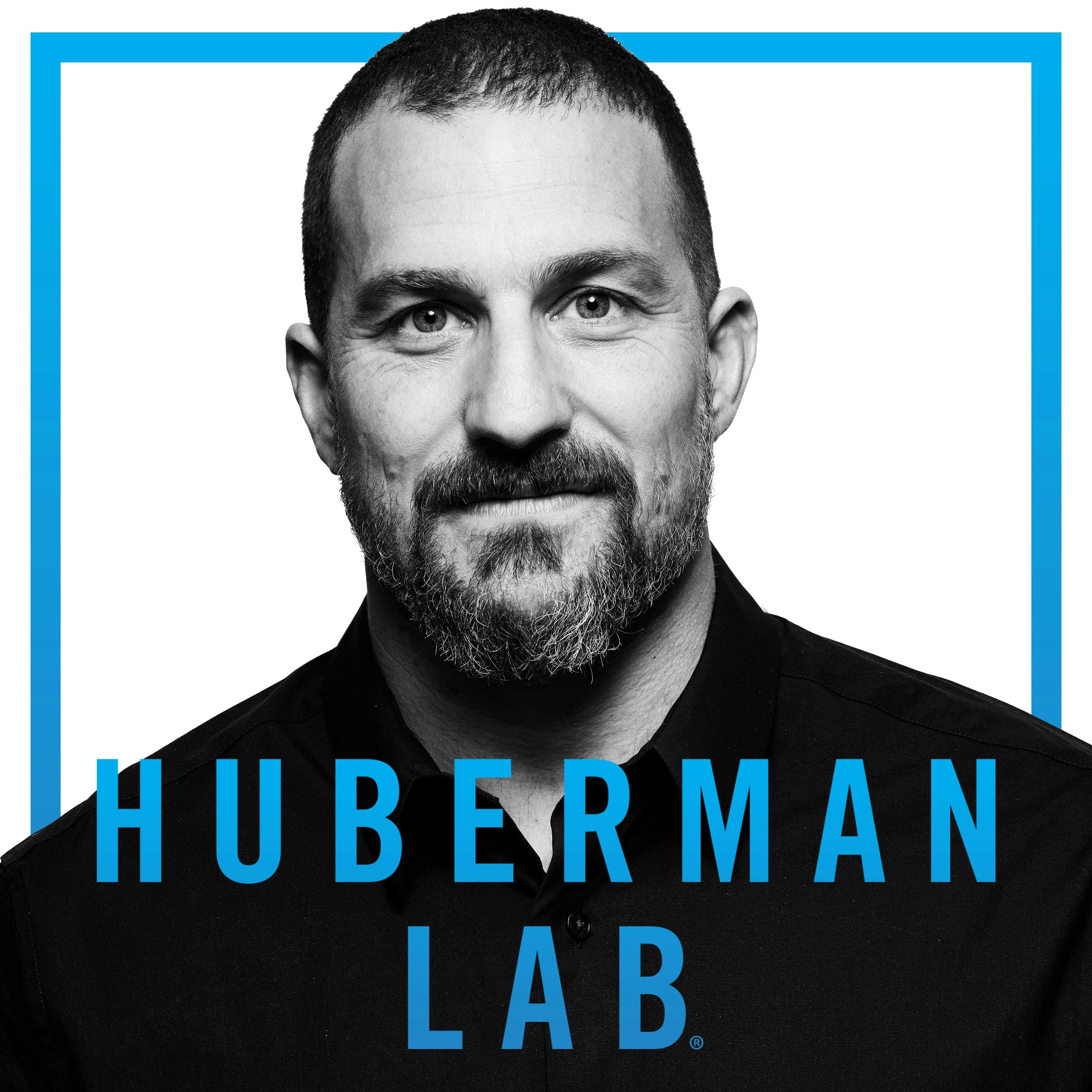
Build Muscle & Strength & Forge Your Life Path | Dorian Yates
Timestamps are as accurate as they can be but may be slightly off. We encourage you to listen to the full context.
Podcast Summary
In this episode, Dr. Andrew Huberman interviews legendary bodybuilder Dorian Yates, the six-time Mr. Olympia winner who pioneered high-intensity, low-volume training. (03:00) Yates explains how his revolutionary approach to bodybuilding and fitness can benefit anyone looking to build muscle and improve health. The conversation covers his unique training methods, his journey from Birmingham working-class roots to world champion, and his insights on longevity, mindset, and life philosophy.
- Core discussion centers on how brief, intense training sessions (45 minutes, 2-3 times per week) can produce superior results compared to conventional high-volume approaches.
Speakers
Dorian Yates
Dorian Yates is a legendary six-time Mr. Olympia winner (1992-1997) and one of the greatest pioneers of high-intensity, low-volume training methods. Born in Birmingham, England, he revolutionized bodybuilding with his "Blood and Guts" training approach, achieving unprecedented muscle mass and conditioning through brief but intensely focused workouts. Beyond competition, Yates has become an influential figure in health and fitness, sharing practical training wisdom that applies to everyday people seeking better health and strength.
Dr. Andrew Huberman
Andrew Huberman is a professor of neurobiology and ophthalmology at Stanford School of Medicine and host of the Huberman Lab Podcast. He conducts research on brain development, function and neuroplasticity, and is known for translating complex neuroscience into practical tools for improving human performance and wellbeing.
Key Takeaways
Train Brief and Intense for Maximum Results
Yates advocates for 45-minute sessions just 2-3 times per week, taken to muscular failure with perfect form. (00:44) His approach contradicts the common belief that more time in the gym equals better results. He documented every workout from 1983-1997, proving that when he increased training frequency from 3 to 4 times per week, his progress completely stopped for several weeks. The key principle is to provide enough stimulus to trigger adaptation, then allow complete recovery before training again. For most people, this approach eliminates the constant aches and pains from overtraining while providing energy for other life activities.
Master the Mind-Muscle Connection Through Preparation
Success in training comes from meticulous preparation and visualization before entering the gym. (61:00) Yates would review his previous workout, set specific targets, and even iron his clothes as part of his pre-training ritual (which research shows lowers cortisol by 40%). He emphasizes learning proper movement mechanics first, understanding what each muscle does, and maintaining perfect form even when exercises become extremely difficult. The body naturally wants to recruit other muscles when an exercise gets hard, so overriding this instinct requires conscious effort and practice.
Use Negative Emotions as Fuel for Success
Transform anger, frustration, and past slights into productive energy through what Yates calls "fuck you motivation." (62:00) Rather than letting negative emotions become destructive, he channeled them into his training intensity. This included anger toward teachers who said he wouldn't amount to anything, and determination to prove doubters wrong. After intense training sessions, he felt peaceful and balanced, having converted destructive energy into constructive progress. This approach teaches emotional alchemy - transforming negative experiences into positive outcomes through focused effort.
Understand When to Pivot and Maintain Perspective
Yates demonstrates remarkable wisdom in knowing when to transition between life phases. (92:37) Before turning professional, he set clear criteria: if he didn't place top 5 at Night of Champions, he would stop competing and using steroids. This logical approach prevented him from chasing unrealistic goals indefinitely. After retirement, he struggled with identity issues but eventually reframed his situation - instead of focusing on what he lost, he appreciated the freedom and opportunities his success had created. This mental flexibility allowed him to evolve from competitor to mentor and businessman.
Prioritize Recovery and Listen to Your Body
The principle of "stress, recover, adapt" applies universally, whether training for elite competition or general health. (11:15) Yates recommends training hard for 5-6 weeks, then backing off for 2 weeks with lighter, sub-maximal training. Taking complete weeks off occasionally can actually make you stronger upon return. He compares muscle building to construction - you can't rebuild a wall if you keep knocking it down before the workers finish. For natural lifters especially, respecting recovery time is crucial since they don't have pharmaceutical assistance for faster adaptation.
Statistics & Facts
- Yates put on 30 pounds of muscle naturally from 180 to 210 pounds in his first year and a half of serious training. (46:15) This demonstrates the significant gains possible for beginners using proper high-intensity methods without performance-enhancing drugs.
- Between 70-80% of NFL and NBA players use cannabis daily according to surveys mentioned by Yates. (142:37) He argues that elite athletes wouldn't use it if it negatively impacted performance, and team owners would prohibit it if they thought it was detrimental.
- A 25-year UCLA study of heavy daily cannabis smokers showed slight increase in lung capacity compared to non-smokers and no cancer cases. (134:34) This contrasts with tobacco smokers who showed decreased lung function and increased cancer rates in the same study period.



