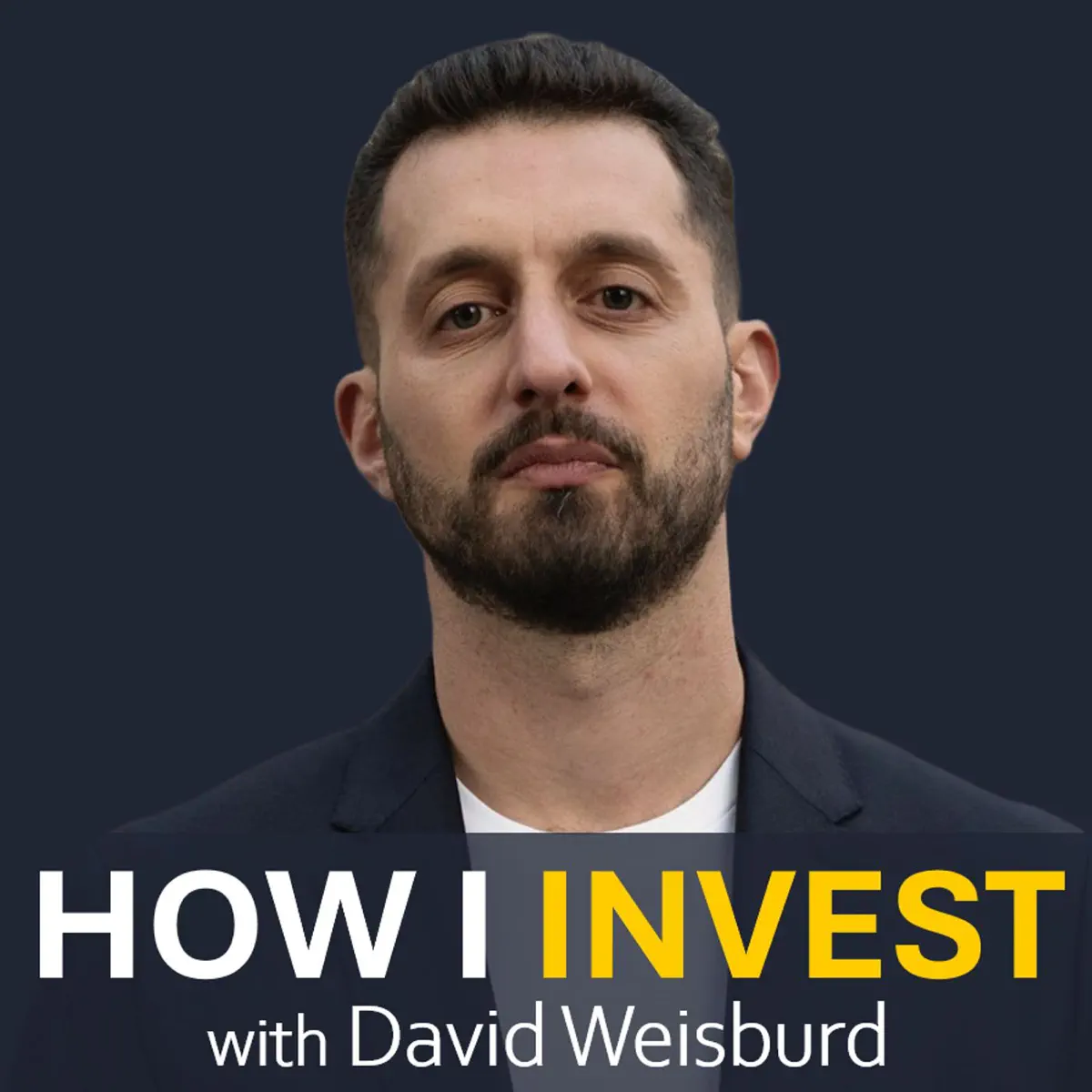
E246: Private Equity in 2025: Fees, Rates, and the Law of Large Numbers
Timestamps are as accurate as they can be but may be slightly off. We encourage you to listen to the full context.
Podcast Summary
In this episode of "How I Invest," host Colin Mochrie sits down with Nolan Bean, CFA, CAIA, Chief Investment Officer at FEG Investment Advisors, which manages over $95 billion in assets for nonprofits, endowments, and foundations. (00:17) The conversation explores the evolving landscape of private equity, particularly the challenges facing large buyout funds due to increased capital flows and higher valuations. Bean argues that while large buyout may struggle with reduced returns going forward, the lower middle market still presents compelling opportunities for alpha generation. (07:50) They also discuss the coming wave of 401(k) access to private markets, interval funds as an "easy button" for alternative investments, and FEG's crisis management playbook that emphasizes leaning into market downturns rather than timing them perfectly.
- Core themes include the structural challenges in large private equity, opportunities in lower middle market investing, and portfolio construction principles focused on risk management over return optimization.
Speakers
Nolan Bean
Nolan Bean, CFA, CAIA, serves as Chief Investment Officer and Head of Portfolio Management at FEG Investment Advisors, an independent, employee-owned firm that advises on over $95 billion in assets. (00:17) He joined FEG in 2004 when the firm managed $25 billion in assets and has been instrumental in the firm's growth, particularly in the transition from traditional consulting to outsourced CIO services. Bean specializes in portfolio construction for endowments, foundations, healthcare systems, and other mission-driven institutions, with 90% of FEG's clients being nonprofits.
Key Takeaways
Start with Risk, Not Return in Portfolio Construction
Bean emphasizes that successful portfolio construction begins with identifying four key risks rather than chasing returns. (29:45) These include understanding your investment objectives, determining market risk tolerance (how much volatility you can handle), establishing an illiquidity budget, and assessing "maverick risk" - your willingness to be different from benchmarks or peers. This framework prevents behavioral mistakes during market stress. For example, university endowments often compare themselves to schools they compete with in athletics, creating pressure to conform rather than optimize. By setting these parameters upfront, investors can stick to their strategy during downturns and even lean into opportunities when others panic.
Lower Middle Market Private Equity Offers Superior Alpha Potential
While large buyout funds face structural headwinds from increased capital flows and higher purchase prices, the lower middle market (sub-$1 billion funds) presents better opportunities for generating alpha. (13:09) Bean explains that 80% of private equity dry powder sits with firms that raised $5+ billion funds, leaving less competition in smaller deals. Lower middle market firms typically acquire family-owned, founder-led lifestyle businesses with $5-15 million EBITDA that can be professionalized and scaled. These deals use less leverage (around 3x debt versus 5-6x for large buyout), reducing interest rate risk while focusing on operational value creation rather than financial engineering.
The "Don't Fight the Fed" Principle Remains Paramount
Bean's key lesson from 20+ years of investing is that interest rates are like gravity for asset prices - don't underestimate their impact. (47:31) When rates went to zero after the Global Financial Crisis, those who remained risk-averse missed an incredible bull run because low cost of capital benefits virtually all asset classes. Conversely, when rates rise sharply as in 2022, both stocks and bonds can suffer double-digit losses. While there's always a narrative for why "this time is different," the fundamental relationship between interest rates and asset valuations consistently proves more powerful than other factors.
Build Relationships Through Genuine Value Creation
Bean identifies relationship building as crucial for investment success, emphasizing the philosophy of "always be connecting dots" rather than "always be closing." (55:37) The key is helping others without expecting anything in return, which creates a network of knowledgeable professionals you can call upon when facing challenges. In the investment world's small community, being known as someone who genuinely helps others accelerates learning curves and provides access to better managers and opportunities. This reciprocity principle is evolutionarily hardwired - when you provide significant value to others, they feel compelled to help you back.
Use a Systematic Crisis Management Framework
FEG employs a "VFS" framework (Valuations, Fundamentals, Sentiment) to navigate market downturns systematically rather than relying on gut instincts. (40:38) Bean stresses the importance of having a predetermined game plan because you won't time markets perfectly - the goal is to "sin a little" by making calibrated bets incrementally. This approach allows for multiple opportunities to deploy capital during extended downturns. The framework prevents panic selling and enables contrarian positioning when others are fearful. Most importantly, it requires setting expectations with clients beforehand that downturns are expected and will be viewed as opportunities rather than reasons to panic.
Statistics & Facts
- FEG Investment Advisors currently manages over $95 billion in assets for more than 300 clients, with 90% being nonprofits. (00:17) The firm has grown significantly since Bean joined in 2004 when they managed $25 billion.
- There are approximately 200,000 privately owned businesses in the US with at least $10 million in revenue, compared to only 3,500 publicly traded stocks (down from 7,000 in the early 2000s). (20:50) This demonstrates the much larger opportunity set in private markets.
- 80% of private equity dry powder (committed but undeployed capital) sits with firms that have raised funds of $5 billion or greater in size. (13:34) This concentration of capital in large funds creates more competition for mega-deals while leaving relatively less capital chasing smaller opportunities.