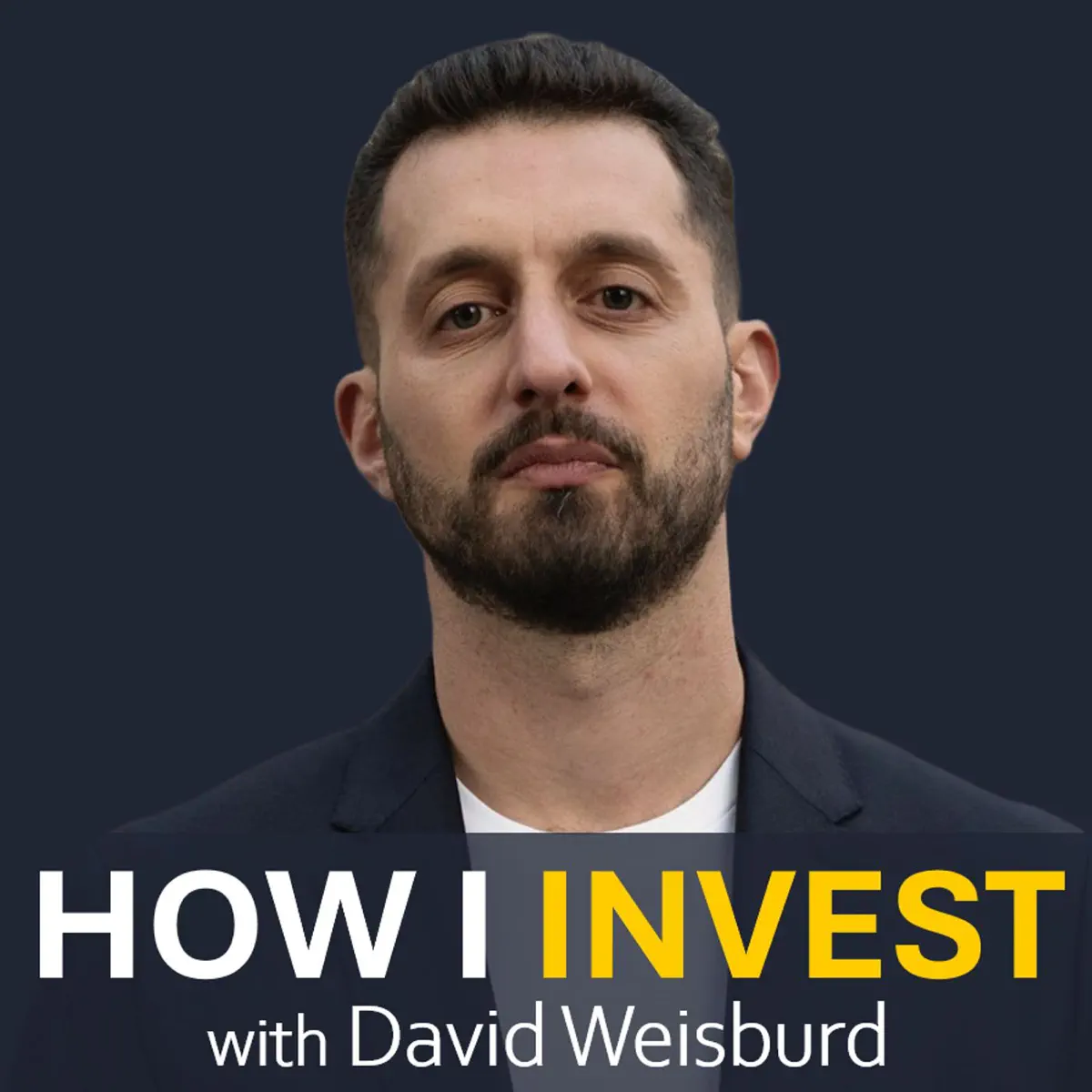
E236: How the Top 0.1% Founders Build AI Companies
Timestamps are as accurate as they can be but may be slightly off. We encourage you to listen to the full context.
Podcast Summary
In this compelling episode, Dave Fontenot, founder of HF0, reveals how his revolutionary startup residency is helping AI companies achieve what he calls "two years of progress in 12 weeks." HF0 operates on a radical principle: that the most dangerous distraction for founders isn't networking or conferences, but rather the second most important thing in their business. (03:00) Through a rigorous process of "recursive subtraction," founders eliminate every non-essential activity to focus solely on their highest-leverage opportunities. The conversation explores how competition in AI has fundamentally changed company-building, why uninterrupted flow state compounds exponentially, and how this residency model is producing breakout companies with explosive revenue growth. (05:30)
• Core Theme: HF0's residency model transforms how AI startups are built by eliminating distractions and creating conditions for uninterrupted flow state, resulting in accelerated company growth and breakthrough realizations.
Speakers
Dave Fontenot
Dave Fontenot is the founder of HF0, a groundbreaking startup residency that has revolutionized how AI companies are built. Through 11 batches, HF0 has achieved remarkable success with one in three teams breaking $2 million annualized revenue in just 12 weeks, and their first three batches already showing greater than 10x MOIC returns. Dave has productized what he calls the "monastic" approach to company building, drawing inspiration from how generational companies like Facebook and Cognition built their early foundations through intensive, distraction-free environments.
Key Takeaways
Master Recursive Subtraction to Find Your Highest-Leverage Work
The most transformative insight from HF0 is their approach to "recursive subtraction" - systematically removing not just obvious distractions, but even the second, third, and fourth most important things in your business. (03:00) Dave emphasizes that "the most insidious distraction isn't a conference or networking - it's actually the second most important thing in your business." This process forces founders into a space of uncertainty where they must ask: "Is this the most important thing I could be doing right now?" Only in that vulnerable space do breakthrough realizations occur at an accelerated rate. The key is recognizing that even highly productive founders can escape into important-but-not-critical tasks when facing truly difficult challenges that might reveal fundamental business problems.
Leverage AI's Speed to Compound Your Rate of Realizations
In the age of AI, success is bounded primarily by your rate of realizations, not your ability to execute on them. (04:30) Dave explains that where founders previously needed two months to test a realization, AI now enables testing in two weeks or even two days. This creates a compounding effect: faster experimentation leads to faster learning, which leads to better decisions and more rapid iterations. The most valuable thing for startup founders to focus on is "thinking and working about the next problem to solve" while leveraging AI to handle the grinding and execution. This shift makes mental clarity and deep thinking exponentially more valuable than traditional hustle.
Protect Uninterrupted Flow State Like Your Competitive Advantage
HF0's goal is reducing daily interruptions from the typical 3-5 that even highly productive founders experience down to zero or one interruption per day. (06:36) Dave argues that "any context switching, like even ordering DoorDash, can interrupt the compounding return of your flow state." The compound returns of uninterrupted flow are so powerful that founders have built systems they expected to take six months in just two weeks of continuous deep work. This isn't just about productivity - it's about accessing what Dave calls "that other place" where breakthrough innovations emerge. In today's hyper-competitive AI landscape, protecting flow state isn't a luxury but a survival mechanism.
Build Products That Become Extensions of Users' Being
The highest-quality AI products aren't just tools people use occasionally - they become "entrenched in not just someone's workflow, but almost like an extension of someone's being." (30:56) Dave notes that products built from deep flow states have a fundamentally different quality - they have "soul" and inspire genuine user trust and dependence. This happens when founders maintain their "felt sense" of user needs throughout the building process, creating products that users can't imagine living without. The difference between a product someone tries versus one that becomes essential lies in the depth of empathy and continuous connection to user problems during development.
Embrace the Residency Model as the Future of Company Building
Dave predicts that residencies will "eat 40% of all early stage venture" because they provide exactly what founders need at the critical early stages. (33:16) With AI reducing startup costs and increasing the number of potential builders, the competitive advantage goes to teams willing to operate like "athletes in training camp." The residency model works because it provides witnessing and accountability that founders can't achieve alone - having others observe and call out when you're working on lower-leverage activities. This trend is already expanding globally with residencies launching in New York and Europe, representing a fundamental shift in how serious founders approach company building.
Statistics & Facts
- One in three teams at HF0 break $2 million annualized revenue in 12 weeks, with consistent examples of teams growing from $500k to $20 million ARR in the same timeframe. (09:15)
- HF0 has received applications from almost 40,000 teams but only accepts 10 teams per batch, representing a selection rate of approximately 0.025% across their 11 batches. (29:46)
- HF0's first three batches have already achieved greater than 10x MOIC (Multiple on Invested Capital) returns just a few years in, demonstrating exceptional early performance. (43:02)