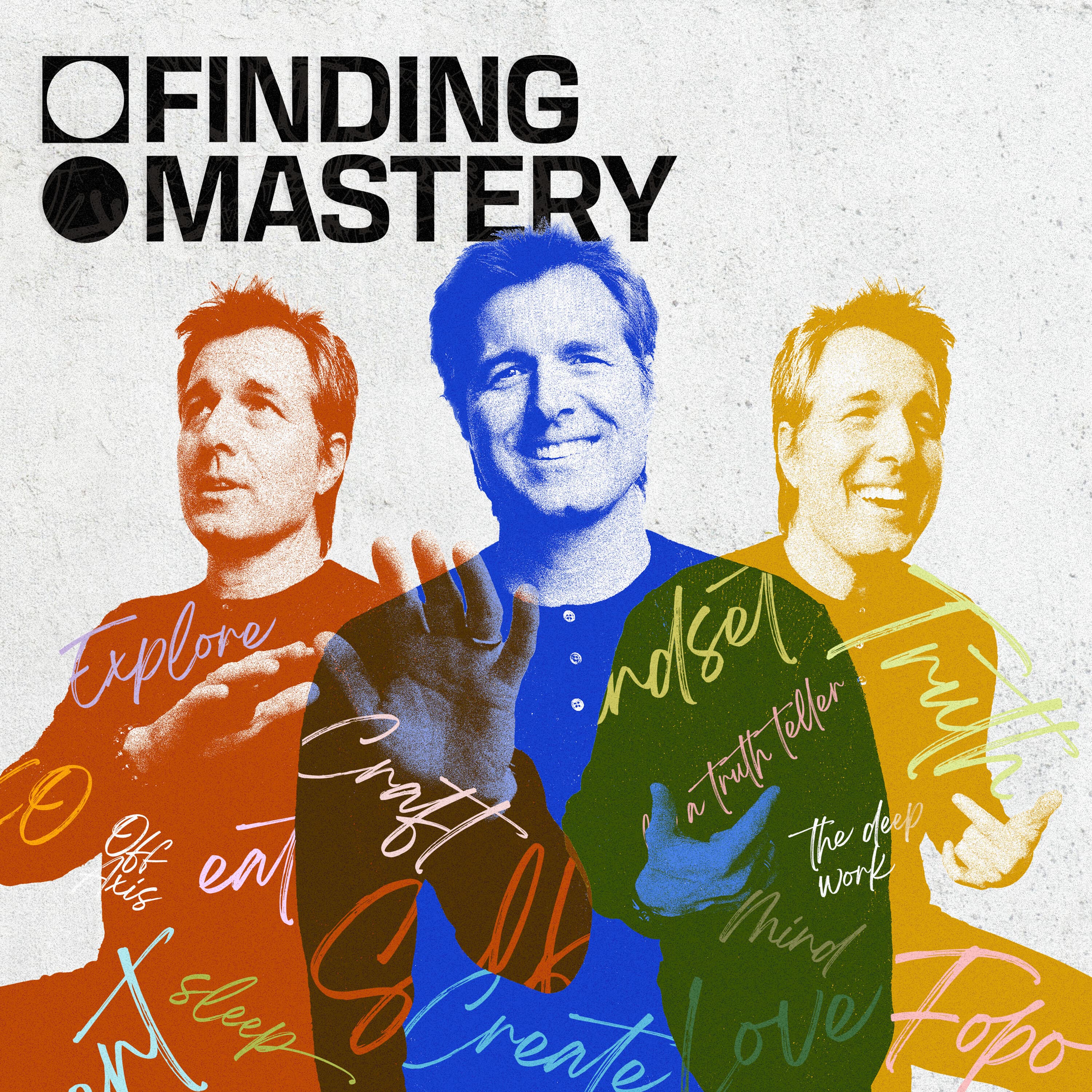
How to Get Unstuck in Life — Lessons on Love from Sharon Salzberg, Meditation Pioneer
Timestamps are as accurate as they can be but may be slightly off. We encourage you to listen to the full context.
Podcast Summary
In this powerful episode from the Finding Mastery Vault, Dr. Michael Gervais reconnects with Sharon Salzberg, one of the world's leading teachers of mindfulness and loving-kindness meditation. Their conversation explores how love can be trained as an ability rather than just a feeling, the importance of discernment in personal growth, and how to meet fear without hardening. (05:33) Sharon shares insights from her four years of isolation during the pandemic, reflecting on fundamental questions of what remains true during times of upheaval and disruption.
- Core Theme: The conversation centers on practical approaches to loving-kindness meditation, the power of connection over hatred, and how to maintain innocence and vulnerability while navigating competitive environments.
Speakers
Dr. Michael Gervais
Dr. Michael Gervais is a high-performance psychologist and host of the Finding Mastery podcast, where he explores the minds of world-class performers. He works with elite athletes, executives, and organizations to help them unlock their potential through mindfulness and psychological training.
Sharon Salzberg
Sharon Salzberg is one of the world's most respected meditation teachers and authors, with over 50 years of practice experience. She co-founded the Insight Meditation Society and has written numerous books including "Loving Kindness" and "Real Love," teaching mindfulness and loving-kindness meditation to millions worldwide.
Key Takeaways
Love as a Trainable Ability Rather Than Just Emotion
Sharon emphasizes that love is fundamentally "not a feeling, it's an ability" - a capacity that exists within each person that can be cultivated and strengthened. (08:25) This reframes love from something external that others give or take away into an internal resource we can develop. When viewed as an ability, love becomes our responsibility to nurture and bring forth, giving us agency over our emotional well-being and relationships rather than leaving us dependent on others' actions.
The Power of Loving-Kindness Through Connection Recognition
Rather than seeing loving-kindness as an abstract emotional practice, Sharon frames it as a "bone deep recognition of how connected all of our lives are." (11:57) She uses the powerful question: "How many other people need to be doing their job well for you to do your job well?" This perspective shift helps people understand interdependence in practical terms, making the practice more accessible for competitive environments where traditional "love" language might feel too soft or impractical.
Self-Kindness as Performance Enhancement
Harsh self-criticism, while seemingly motivating, actually depletes energy and creates demoralization that hinders improvement. (14:07) Sharon explains that kindness toward ourselves - giving ourselves a break when we make mistakes and moving on without endless recrimination - is actually the most effective way to succeed and learn new skills. This approach frees up mental energy for actual improvement rather than wasting it on unproductive self-attack patterns.
Teaching Others Strengthens Your Own Mastery
When faced with competitive environments where sharing knowledge might seem disadvantageous, Sharon advocates for discernment through experiential learning. (55:49) She points out that teaching someone else actually gives you better command of the skill because you must explain it clearly. The act of teaching deepens your own understanding while creating positive team dynamics, ultimately enhancing rather than diminishing your competitive advantage.
Returning to Innocence as Advanced Practice
Sharon discusses the importance of maintaining what she calls "innocence" - an openness and freshness of approach that prevents us from becoming ossified by success. (56:21) This isn't about being naive or vulnerable inappropriately, but about maintaining the capacity for wonder, growth, and authentic engagement with life even as we develop expertise and sophistication. Elite performers practice this vulnerability daily by pushing to the edge of their capabilities and risking mistakes in pursuit of growth.
Statistics & Facts
- Sharon spent four years in relative isolation due to health issues and the pandemic, using this time for deep reflection and practice development. (03:36)
- She has been practicing meditation for over 50 years, beginning with her first intensive retreat in Burma in 1985. (29:39)
- Her first meditation retreat took place in January 1971 in India, where she learned to settle attention on the feeling of breath. (57:41)



