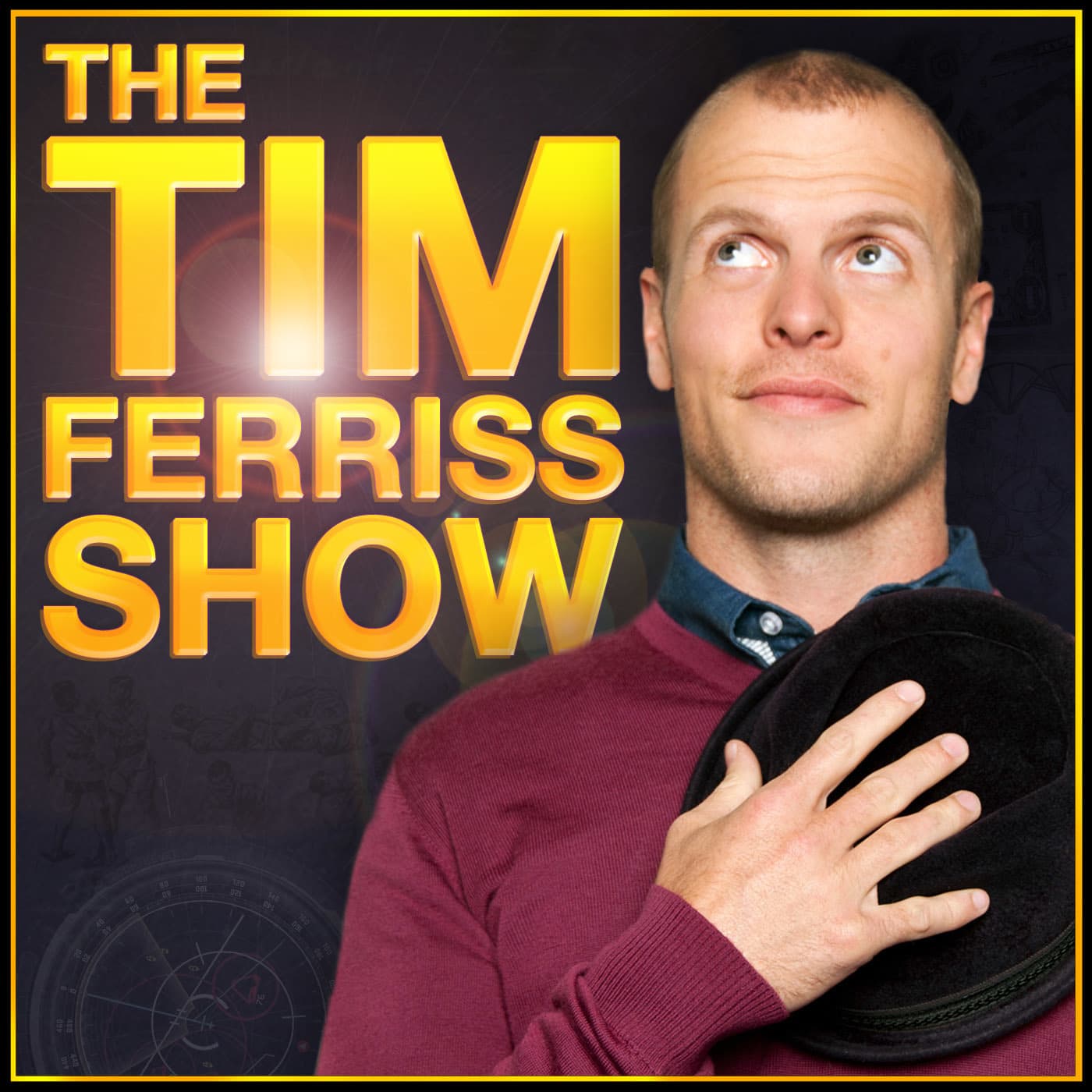
#827: Pablos Holman — One of The Scariest Hackers I’ve Ever Met
Timestamps are as accurate as they can be but may be slightly off. We encourage you to listen to the full context.
Podcast Summary
In this wide-ranging conversation, Pablo Holman—hacker, inventor, and bestselling author of "Deep Future: Creating Technology That Matters"—shares his journey from a nine-year-old reverse-engineering Apple computers in Alaska to becoming a trusted advisor to billionaires like Jeff Bezos and Bill Gates. The discussion explores Pablo's philosophy of "hacking" everything beyond computers, his work on revolutionary technologies from hurricane suppression machines to autonomous cargo ships, and his mission to rescue brilliant hackers from the computer security department to tackle humanity's biggest challenges. (03:00)
Key themes include:
- The evolution from traditional hacking to "deep tech" innovation, where Pablo seeks 10x improvements in century-old industries rather than incremental software advances
Speakers
Pablo Holman
Pablo Holman is a hacker, inventor, and bestselling author of "Deep Future: Creating Technology That Matters." He has worked on spaceships at Blue Origin with Jeff Bezos, helped build the Intellectual Ventures lab where he invented breakthrough technologies including brain surgery tools, hurricane suppression machines, 3D food printers, and laser mosquito-elimination systems for malaria eradication with Bill Gates. His TED talks have been viewed over 30 million times, and he currently serves as managing partner at Deep Future, investing in technologies to solve the world's biggest problems.
Tim Ferriss
Tim Ferriss is the host of The Tim Ferriss Show and bestselling author of books including "The 4-Hour Workweek" and "Tools of Titans." He is known for deconstructing world-class performers to understand their methods and has built a reputation for learning complex skills rapidly through unconventional approaches.
Key Takeaways
Embrace the Hacker Mindset Beyond Technology
Pablo defines a hacker as someone who asks "What can I make this do?" rather than "What does this do?" This fundamental shift in perspective—from accepting conventional wisdom to exploring unlimited possibilities—can be applied far beyond computers. (08:34) Pablo demonstrates this by showing how Tim Ferriss himself exemplifies the hacker mindset through his approach to learning tango, wrestling, and swimming, proving that this methodology works across all disciplines. The key is developing extreme curiosity combined with a willingness to reverse-engineer anything to understand its true potential.
Focus on 10x Improvements in Established Industries
Rather than pursuing incremental improvements, Pablo targets technologies that are 10 times better than current state-of-the-art solutions. (46:26) He explains that 2x better doesn't provide enough margin to ensure success, but 10x improvements create real windows of opportunity. This applies whether it's 10x cheaper, faster, more efficient, or better on any meaningful metric. Examples include autonomous sailing cargo ships that eliminate fuel costs and nuclear reactors that can be manufactured like cars in factories.
Solve Energy First to Unlock Everything Else
Pablo advocates for an aggressive focus on nuclear energy as the foundational solution that makes other technologies viable. (40:09) He argues that many environmental solutions like recycling and carbon capture are putting the cart before the horse—they would work great with abundant clean energy but are inefficient when powered by fossil fuels. By solving energy first through deploying nuclear reactors at scale, we can then tackle other challenges with virtually unlimited clean power, creating a cascade of technological possibilities.
Think in Longer Time Horizons for Strategic Advantage
Pablo learned from Jeff Bezos to start with 100-year thinking and work backwards to 10-year actionable plans. (81:09) When evaluating new technologies, he asks: "A hundred years from now, are we going to be burning nasty bunker oil to move cargo, or would we have self-sailing ships?" This extended time horizon eliminates most objections—regulatory environments change, monopolies dissolve, and technology advances. The key insight is that anything definitively better in 100 years might be achievable in 10 years with the right approach and sufficient focus.
Marry Technical Innovation with Commercial Execution
Pablo's biggest challenge as an investor is finding inventors who also have commercial skills or entrepreneurs willing to tackle deep technical challenges. (142:11) He frequently encounters brilliant technical founders who can't sell anything and charismatic entrepreneurs who lack substantial technology. The most successful deep tech ventures require both components—someone who can create genuine 10x technical breakthroughs paired with someone who can build markets and scale businesses around those innovations.
Statistics & Facts
- Pablo got one of the first couple thousand Apple II computers ever made when he was nine years old, giving him decades of experience reverse-engineering technology before formal software development methods existed. (05:43)
- The global software industry (including Microsoft, Meta, and all tech companies combined) generates about $2 trillion annually, while global GDP exceeds $100 trillion, meaning Silicon Valley addresses only 2% of human economic activity. (50:24)
- In shipping, five out of every six dollars spent annually in the $2 trillion industry is burned as fuel, with cargo ships spending 36 out of 50 days waiting in ports rather than moving goods. (53:18)



