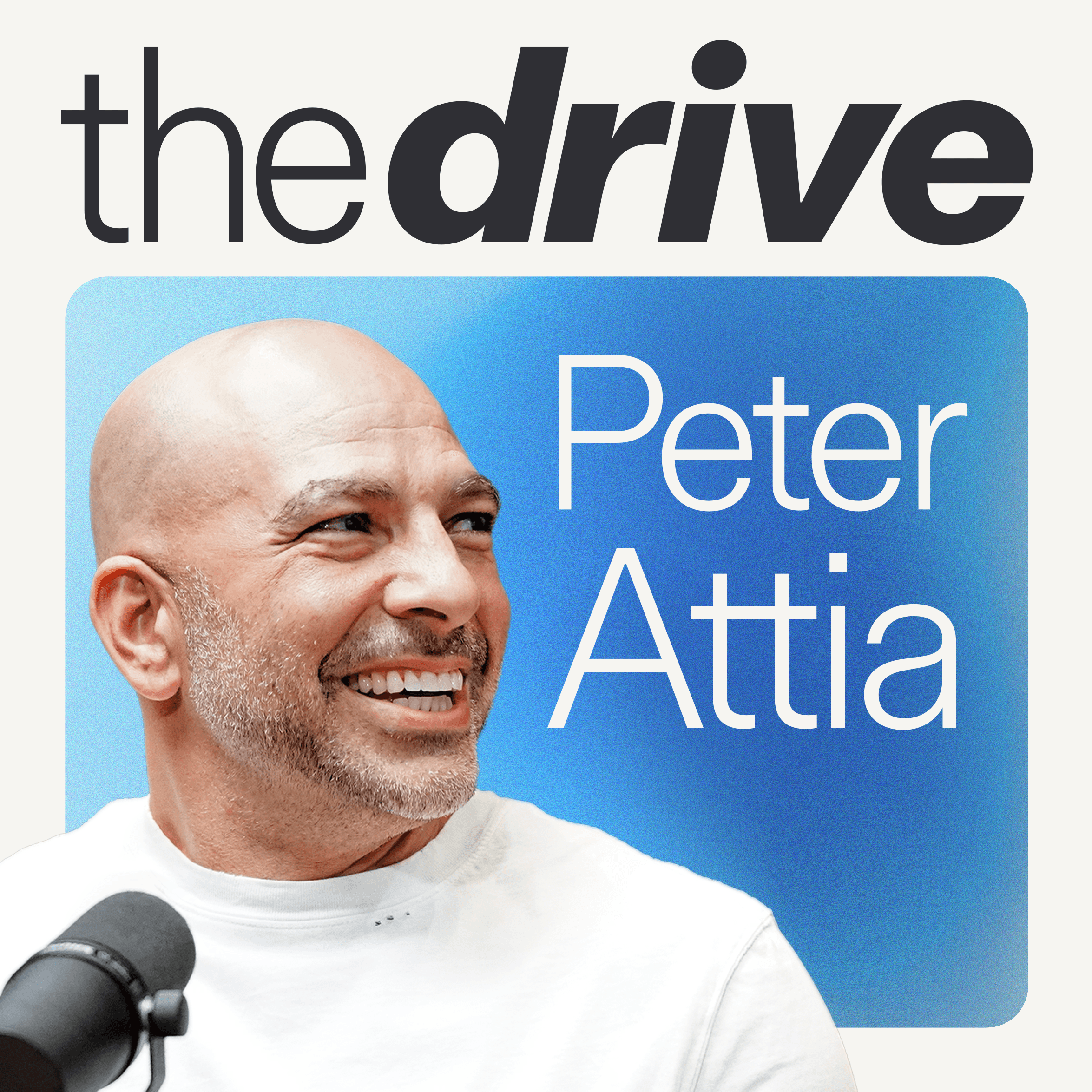
#368 ‒ The protein debate: optimal intake, limitations of the RDA, whether high-protein intake is harmful, and how to think about processed foods | David Allison, Ph.D.
Timestamps are as accurate as they can be but may be slightly off. We encourage you to listen to the full context.
Podcast Summary
In this comprehensive episode of The Drive Podcast, host Peter Attia sits down with renowned scientist David Allison for an in-depth exploration of protein requirements and processed foods. This first part of a two-part series tackles the contentious debate surrounding protein intake, examining whether current RDA recommendations are adequate for optimal health and performance. (31:24) The conversation delves into the science behind protein needs, moving beyond simple survival to thriving, while addressing the methodological challenges in nutrition research and the role of conflicts of interest in scientific discourse.
- Core theme: The episode challenges conventional protein intake recommendations, advocating for higher amounts based on goals beyond mere survival, while examining the broader challenges in nutrition science research methodology.
Speakers
Peter Attia
Peter Attia is a physician focused on longevity science and the host of The Drive podcast. He translates complex scientific research into actionable insights for health optimization, with particular expertise in metabolic health, exercise physiology, and nutritional science.
David Allison
David Allison is a world-renowned scientist and award-winning scientific writer who has been at the forefront of obesity research for the last twenty years. He currently serves as the director of the Children's Nutrition Research Center at Baylor College of Medicine and Texas Children's Hospital, bringing both deep scientific understanding and clear-eyed perspective to nutrition science.
Key Takeaways
The RDA Is Designed for Survival, Not Optimal Performance
The current protein RDA of 0.8 grams per kilogram was established using nitrogen balance studies on sedentary, lean young men weighing around 150 pounds. (32:28) These studies determined the minimum amount needed to maintain nitrogen balance - essentially survival level. However, if your goals extend beyond basic survival to include maintaining muscle mass, optimizing recovery, or enhancing performance, this baseline is insufficient. The research subjects were inactive and represented a very narrow demographic, making the RDA inadequate for most people's actual needs and lifestyle demands.
Aim for 1.6-2.0 Grams Per Kilogram for Thriving
For individuals seeking to thrive rather than merely survive, the evidence strongly supports consuming 1.6-2.0 grams of protein per kilogram of body weight daily. (31:43) This recommendation applies especially to those who are training, older adults, people recovering from injury, or anyone looking to optimize muscle protein synthesis. As Allison notes, "if you just want to survive, the RDA is probably okay for most people. But if you want to thrive in these goals that most of us share, then I would aim for in the neighborhood of two grams per kilogram per day." This translates to roughly one gram per pound of body weight - an easy heuristic to remember.
No Compelling Evidence of Harm from Higher Protein Intake
Despite extensive searching through the literature, including a public challenge for evidence, no compelling human intervention studies demonstrate harm from higher protein intake. (39:38) Allison issued an open call asking for controlled intervention studies in humans showing deleterious effects on clinically meaningful endpoints from higher protein consumption. The response was minimal, with only studies in extremely sick ICU patients on total parenteral nutrition showing no benefit (not harm) from higher protein. This absence of evidence for harm, combined with substantial evidence for benefits, shifts the burden of proof to those claiming higher protein intake is dangerous.
Focus on Molecular Structure, Not Food Ancestry
When evaluating foods, including processed and ultra-processed options, what matters is molecular structure rather than processing ancestry. (87:14) As food scientist Joe Schwartz states, "The effect of substances in the body depends on their molecular structure, not their ancestry." Whether a molecule comes from a "natural" source or is synthesized in a laboratory, if it's the same molecular structure, it will have the same biological effect. This principle challenges the widespread demonization of processed foods based solely on their processing methods rather than their nutritional composition and actual effects on health outcomes.
Ultra-Processed Foods Are Better Used as Heuristics Than Science
The ultra-processed food category serves better as a practical heuristic for food choices rather than a scientifically meaningful classification for understanding food effects. (83:49) While telling someone to "avoid ultra-processed foods" might be useful as a simple rule that correlates with better food choices, it doesn't provide meaningful scientific insight into how specific foods affect health. The category is too broad and variable, encompassing everything from meal replacement shakes to chocolate bars. For scientific understanding and optimal nutrition, it's more valuable to focus on the specific nutritional composition and effects of individual foods rather than their processing classification.
Statistics & Facts
- The current protein RDA of 0.8 grams per kilogram was established using studies on lean, inactive, sedentary young men weighing approximately 150 pounds (65-70 kilograms). (10:51) This narrow demographic formed the basis for protein recommendations applied to the entire population.
- In 1928, two Polish scientists demonstrated that humans could maintain nitrogen balance for six months consuming only potatoes as their protein source, along with minimal fat for cooking and fruit to avoid deficiencies. (09:56) This study showed that even a supposedly "incomplete" protein source could meet basic survival needs.
- The sample sizes in nutrition studies are orders of magnitude smaller than pharmaceutical trials, often featuring just six subjects in each group compared to tens of thousands in drug studies. (49:12) This fundamental difference in statistical power contributes to the weaker evidence base in nutritional science compared to pharmaceutical research.



