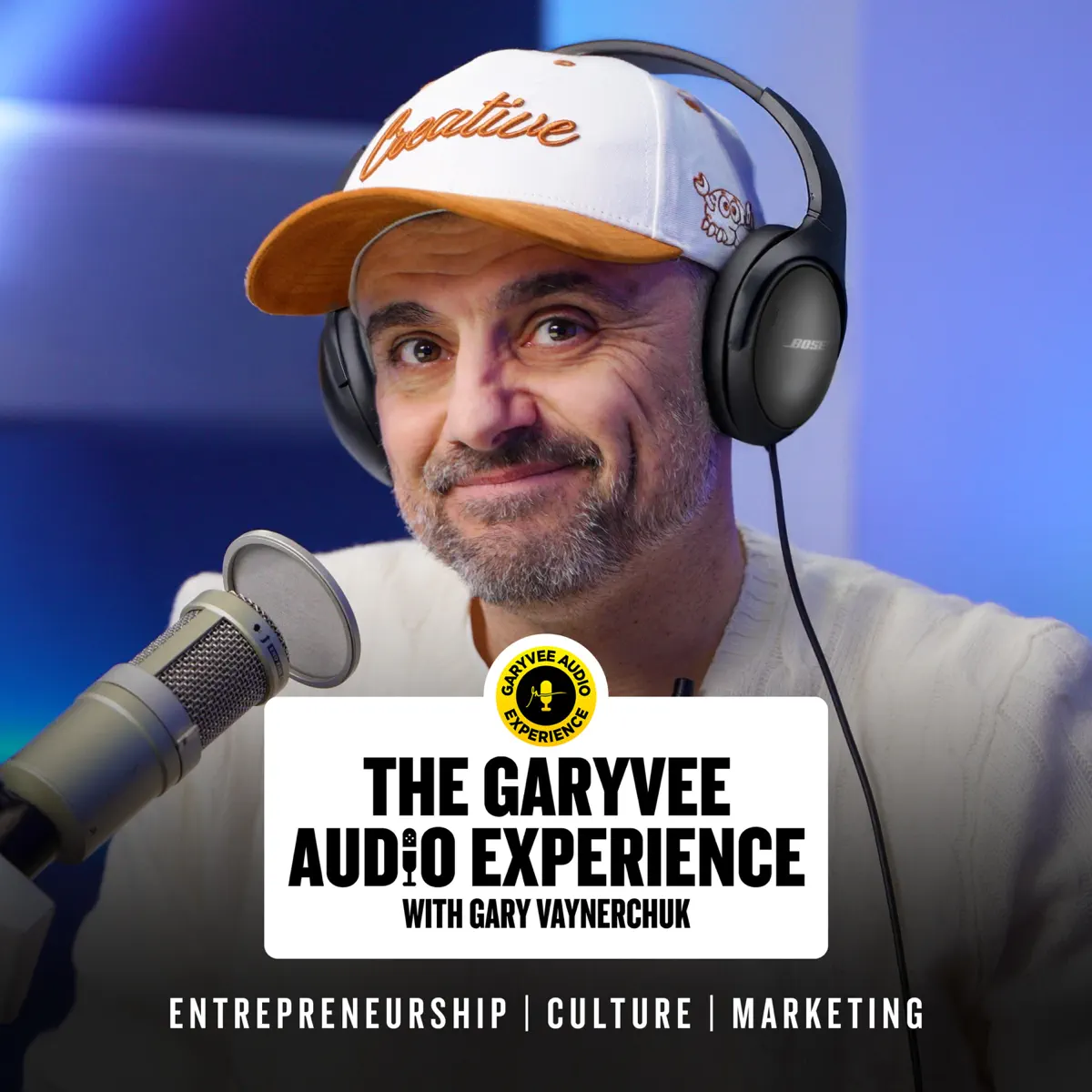
Your Exact Game Plan for Career & Business Success l Tea with GaryVee
Timestamps are as accurate as they can be but may be slightly off. We encourage you to listen to the full context.
Podcast Summary
In this energetic episode of Tea with Gary Vee, Gary Vaynerchuk delivers unfiltered advice to ambitious entrepreneurs and professionals seeking real-world guidance. The episode features live Q&A sessions covering everything from pursuing theater acting at 46 to building confidence around successful people. Gary emphasizes the importance of taking action over making excuses, challenging listeners to stop blaming external factors like algorithms and instead focus on creating better content and putting in the work. (04:28)
- Main Theme: Taking radical personal accountability while pursuing your dreams despite life's responsibilities and societal expectations
Speakers
Gary Vaynerchuk
Gary Vaynerchuk is a serial entrepreneur, CEO of VaynerMedia, and one of the most influential voices in business and social media. He's built multiple companies from the ground up, including transforming his family's wine business from $3M to $60M in annual revenue, and has authored several bestselling books including "Crush It" and "Jab, Jab, Jab, Right Hook." Known for his direct, no-nonsense approach to business advice and his deep understanding of social media marketing and consumer behavior.
Key Takeaways
Stop Blaming the Algorithm, Focus on Content Quality
When Julio complained about the algorithm potentially working against him, Gary delivered a reality check that resonates far beyond social media. (04:28) Gary explained that "the algorithm is people's attention" and emphasized that when content doesn't perform, it's usually because the content itself isn't good enough, not because of some mysterious system working against you. He shared his own recent experience where his team's content struggled for months because they were "mailing it in" with old content and lack of thoughtfulness. The breakthrough came when they refocused on better strategy, thumbnails, hooks, and overall energy. This takeaway applies to any professional situation where we might blame external systems instead of examining our own performance and effort levels.
Pursue Dreams Before Responsibilities Pile Up
A 46-year-old theater actor wannabe with kids in college triggered Gary's passionate response about timing and life choices. (09:14) Gary emphasized that early years should be dedicated to going "all in on your dreams" rather than taking safe jobs that society expects. He challenged listeners to consider what they did from 20-30 years old, questioning whether they took jobs for slightly better pay or apartments instead of pursuing their passions. For current young professionals, this means seriously evaluating whether you're making career choices based on others' expectations or your genuine interests. The harsh reality is that once you have dependents, your freedom to pursue risky dreams becomes severely limited.
Own Your Mistakes Completely and Publicly
When addressing someone who made a mistake under the influence, Gary provided a masterclass in taking accountability. (22:23) His advice was to create a public video completely owning the mistake, apologizing to everyone affected, and acknowledging that any lingering consequences are entirely self-inflicted. This approach of "going naked" and being fully transparent about failures demonstrates strength rather than weakness. For professionals, this means when you mess up, don't make excuses or blame circumstances - take full responsibility, learn from it, and use it as an opportunity to show your character and growth mindset.
Conviction Over Convincing - Show Don't Tell
For the professional trying to get their company to adopt live social shopping, Gary emphasized that "conviction over convincing" is the key. (39:16) Instead of trying to persuade decision-makers through presentations and arguments, Gary suggested actually doing a live show, selling random household items, and then walking into the office with concrete results. This strategy works because actions demonstrate potential more effectively than theoretical discussions. In any workplace situation where you're trying to implement new ideas or approaches, creating a small-scale proof of concept is far more compelling than endless meetings and proposals.
Use Nights and Weekends for Your Dreams
Throughout the episode, Gary consistently pushed back against the notion that nights and weekends are off-limits for pursuing goals. (13:18) He questioned how these time periods became sacred, suggesting that people have overcorrected from hustle culture to entitlement. For professionals with day jobs who want to pursue additional goals - whether acting, public speaking, or starting a side business - the solution is utilizing time outside of work hours. This doesn't mean burning out, but rather being strategic about how you spend your free time and what you're willing to sacrifice in the short term for long-term goals.
Statistics & Facts
- Gary predicts that within the next 15-20 years, five of the 10 biggest influencers in the world will be over the age of 70, suggesting a major shift toward valuing wisdom over youth culture. (29:33)
- Gary mentioned that after his first paid speaking engagement, the next 25 speeches he gave were completely free as he built his reputation and skills. (17:23)
- No additional specific statistics were provided in this episode beyond these data points about speaking engagements and future influencer predictions.



