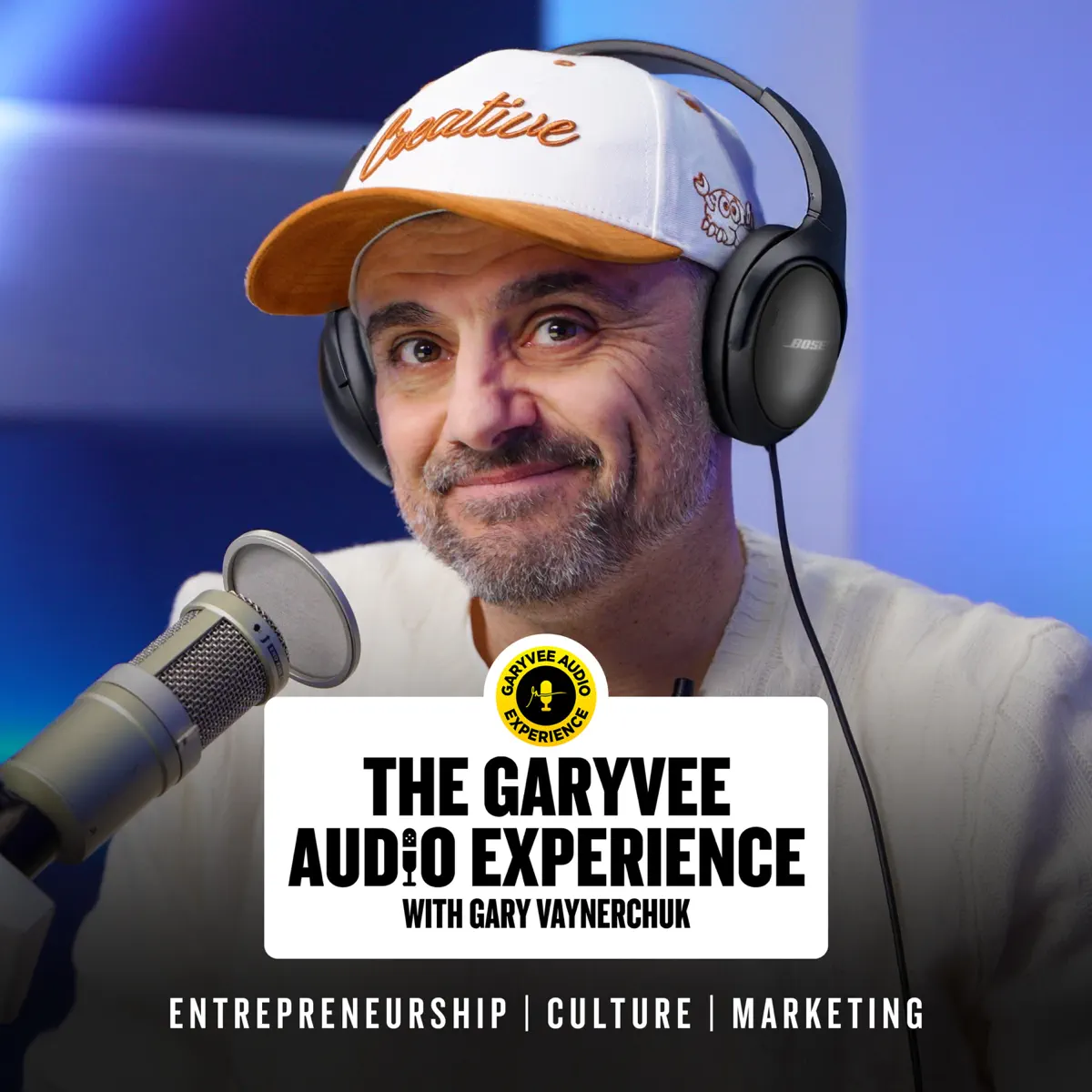
Why Most Businesses Need a Podcast More Than Ever
Timestamps are as accurate as they can be but may be slightly off. We encourage you to listen to the full context.
Podcast Summary
In this keynote presentation from Portugal, Gary Vaynerchuk delivers a comprehensive blueprint for modern marketing success in 2026 and beyond. (00:00) He emphasizes that creativity has become the most critical component of marketing, arguing that businesses must shift from traditional math-driven approaches to an art-first methodology backed by data. (05:00) Gary explains how the marketing landscape has fundamentally transformed from social media to what he calls "interest media," where algorithms now dominate content distribution based on user behavior rather than follower connections. (08:00) He provides actionable strategies for leveraging organic social media content creation, developing podcast and streaming opportunities, and preparing for the future of AI-driven marketing.
• Main Theme: The critical shift from traditional paid media strategies to organic content creation as the foundation for effective modern marketing.
Speakers
Gary Vaynerchuk
Gary Vaynerchuk is the chairman of VaynerMedia, a global marketing agency with 3,000 employees worldwide that has worked extensively with major gaming and sports betting companies including DraftKings and Fanatics. He built his reputation by transforming his father's liquor store into a successful wine e-commerce business in the late 1990s through early adoption of email marketing, Google AdWords, and YouTube content creation. Known for his prescient insights on digital marketing trends, Gary received a medal from Portugal in 2007 for promoting Portuguese red wines in America.
Key Takeaways
Prioritize Organic Social Media Content Creation Over Paid Media
Gary emphasizes that the most successful marketing strategy for 2026 involves creating high volumes of organic social media content first, then amplifying only the pieces that perform well algorithmically. (05:30) This approach allows businesses to test creative effectiveness before investing media dollars, resulting in significantly better conversion rates and lower customer acquisition costs. He explains that companies should shift budget allocation from pure media spend to content production, noting that his clients who moved from $10 million in media and $1 million in content to $7 million in media and $4 million in content saw better overall performance. (23:34) The key insight is that creative quality now determines marketing success more than media budget size, making content creation the ultimate competitive advantage.
Embrace the Shift from Social Media to Interest Media
The fundamental change in how social platforms operate means we no longer live in traditional social media but rather "interest media" where algorithms show users content based on their demonstrated interests rather than who they follow. (08:14) This transformation, which Gary calls the "TikTokification" of all social platforms, means that high-quality content can reach massive audiences regardless of follower count. For businesses, this represents an enormous opportunity to compete with larger competitors by creating compelling content that resonates with their target audience's interests. The practical application involves understanding that every piece of content now has the potential for viral distribution if it aligns with what audiences want to see, making creative quality more important than follower count or advertising budget.
Launch a Weekly Podcast or Show as Content Production Engine
Every business should consider starting a podcast or video show that runs at least monthly, preferably weekly, as a strategic content production system. (15:48) Gary explains that this approach serves dual purposes: creating a scalable content production system that can generate 5-12 pieces of social media content weekly, and potentially building a unique asset that competitors cannot easily replicate. The show doesn't need millions of views to be valuable—in the gaming industry specifically, reaching 500-1,000 engaged users can represent significant business value. (18:17) This strategy addresses one of the biggest challenges with organic content creation: consistently generating ideas and material for daily social media posting.
Invest in Live Streaming and Influencer Partnerships
Live streaming represents the next major frontier for audience attention, particularly among younger demographics who increasingly consume content through real-time streaming rather than traditional social media posts. (20:07) Gary points out that platforms like Twitch and creators like IShowSpeed are capturing enormous audience attention, with some streamers becoming more famous than traditional celebrities. For businesses, this means developing relationships with streamers and understanding how to create business development opportunities within the streaming ecosystem. Additionally, most companies are significantly under-investing in influencer marketing, which can provide both content creation and audience access when done strategically rather than just throwing money at expensive influencers without proper measurement.
Prepare for AI-Driven Marketing Evolution
Looking toward the future, Gary predicts that businesses will need to create AI-generated human personas to serve as company representatives and content creators. (25:33) Unlike working with human influencers or celebrities where businesses are essentially renting access, creating an AI influencer allows companies to own a marketing asset completely. This represents a significant shift from current influencer marketing approaches and offers the potential for consistent, scalable content creation without the variables and costs associated with human partnerships. Gary suggests that within 36 months, AI influencers will begin to significantly impact traditional influencer marketing, making early adoption of this technology a potential competitive advantage.
Statistics & Facts
- Gary's marketing firm VaynerMedia employs 3,000 people globally and spends $1 billion in media within the European Union alone. (22:20) This statistic establishes his credibility and experience operating at scale within the regulatory environment his audience faces.
- A successful gaming business only needs 500-1,000 real engaged players to be viable. (18:17) This fact emphasizes that content marketing doesn't require massive audiences to be effective in this industry.
- His clients are shifting budget allocations from traditional media spend ratios, moving from $10 million in media/$1 million in content to $7 million in media/$4 million in content, while achieving better overall performance. (23:34) This demonstrates the practical financial implications of prioritizing content creation over pure media buying.



