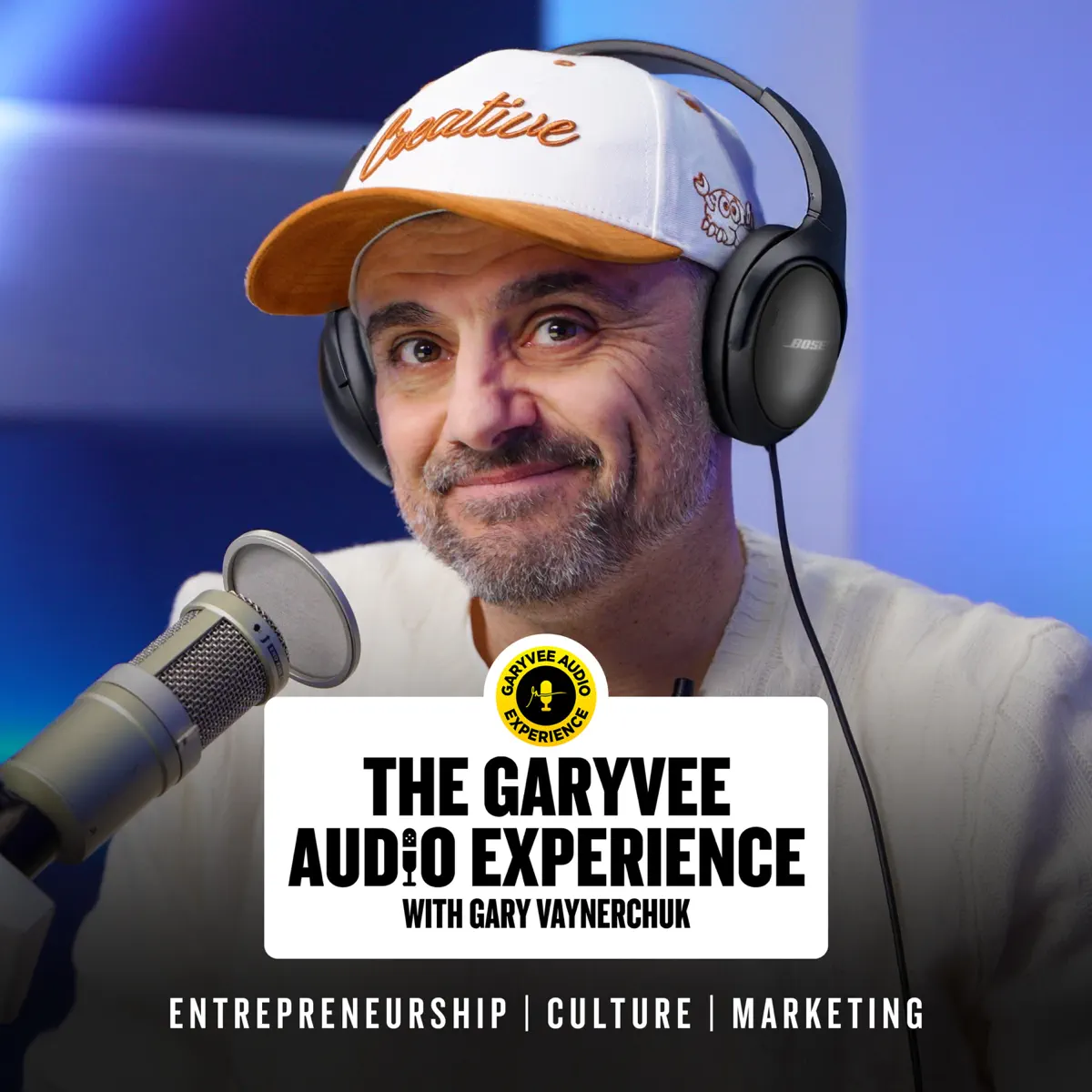
2025 Marketing Strategy That Will Revolutionize Your Ads
Timestamps are as accurate as they can be but may be slightly off. We encourage you to listen to the full context.
Podcast Summary
Gary Vaynerchuk delivered a transformative presentation to Fortune 500 executives, challenging traditional marketing approaches and advocating for a radical shift toward social media-first creative strategies. (05:21) He emphasized that brands must prioritize relevance at scale over matching luggage corporate campaigns, warning that startup brands with minimal budgets are outflanking established companies by mastering organic social media. (10:03) The discussion centered on how Fortune 500 companies are losing market share to agile competitors who understand modern consumer behavior and distribution channels. Gary stressed the critical importance of mitigating creative risk through data-driven social media testing rather than subjective boardroom decisions. (13:07) • Main themes included the urgent need for marketing transformation, the power of social media algorithms as creative testing platforms, and the fundamental shift from corporate-centric to consumer-centric marketing approaches.
Speakers
Gary Vaynerchuk
Gary Vaynerchuk is a serial entrepreneur, CEO of VaynerMedia, and seven-time New York Times bestselling author whose latest book is "Day Trading Attention." He owns one of the largest e-commerce wine businesses in the country and has built VaynerMedia into a leading creative agency specializing in social media marketing. Gary is also an active angel investor who has invested in companies like Liquid Death, which was started by a former VaynerMedia employee and is projected to generate him approximately $30 million in returns.
Key Takeaways
Prioritize Creative Risk Mitigation Through Social Testing
Gary emphasized that the biggest challenge in marketing isn't targeting or reach—it's creating content that actually converts consumers. (06:23) He argued that traditional creative development processes, where small groups make subjective decisions and then purchase expensive reports to justify them, are fundamentally flawed. Instead, companies should use social media platforms' native analytics and AI algorithms to test creative in real-time with actual consumers. This approach provides both quantitative and qualitative feedback while simultaneously marketing to potential customers, creating a "two-for-one" benefit that traditional testing methods cannot match.
Allocate Creative Budgets to Match Platform Importance
One of Gary's most striking examples involved a comparison between a startup t-shirt brand and a multi-billion dollar apparel company. (26:22) The startup spends $6.6 million annually on organic social media creative, while the established company allocates significantly less despite social media being the primary platform where consumers discover and engage with brands. Gary argued that companies often spend more money on measurement reports than on actually creating social content, representing a fundamental misallocation of resources that puts them at a competitive disadvantage against more agile competitors.
Embrace Consumer-Up Marketing Instead of Boardroom-Down Campaigns
Traditional marketing approaches start with corporate briefs and brand guidelines, then create "matching luggage" campaigns across all channels. (09:44) Gary advocated for the opposite approach: start with what works on social media platforms where consumers actually spend their attention, then scale successful creative concepts upward to traditional media. This consumer-centric approach ensures that marketing messages have already proven their effectiveness with real audiences before significant media spend is committed, reducing the risk of expensive campaign failures.
Understand That Brand Positioning Is More Fragmented Than Companies Realize
Gary challenged the traditional reverence for brand positioning by conducting an exercise with Nike's "Just Do It" slogan, asking executives whether it applied to a student working hard on homework. (16:21) The result was a 50/50 split, demonstrating that even the most famous brand positioning statements are interpreted differently by different people. He argued that while brand positioning matters, companies have become too academic in their approach, forgetting that consumers think about relevance rather than brand guidelines when making purchasing decisions.
Recognize the Power of Individual Viral Content to Drive Sales
Gary provided concrete examples of single social media videos creating massive sales impact, including a TikTok about Walgreens' mango gummies that not only sold out the product nationwide but created a secondary market where people resell them for 5-20 times the original cost on eBay. (30:35) He contrasted this with traditional advertising, noting that no one can name a single TV commercial from the last 25 years that achieved similar sell-out results. This demonstrates the unprecedented power of viral social content to drive immediate, measurable business outcomes.
Statistics & Facts
- A startup t-shirt brand has grown from zero to $100 million in revenue in five years, spending $6.6 million annually on organic social media creative fees, while a multi-billion dollar apparel company spends significantly less on social despite its importance. (26:22)
- Gary Vaynerchuk revealed that his investment in Liquid Death, started by a former VaynerMedia employee, began with a $10,000 charitable investment and is now projected to return approximately $30 million. (11:08)
- For Super Bowl advertising, Gary noted that $8 million reaches 130 million people for 30 seconds, making it the cheapest cost per impression in marketing, though the most expensive absolute cost. (19:48)



