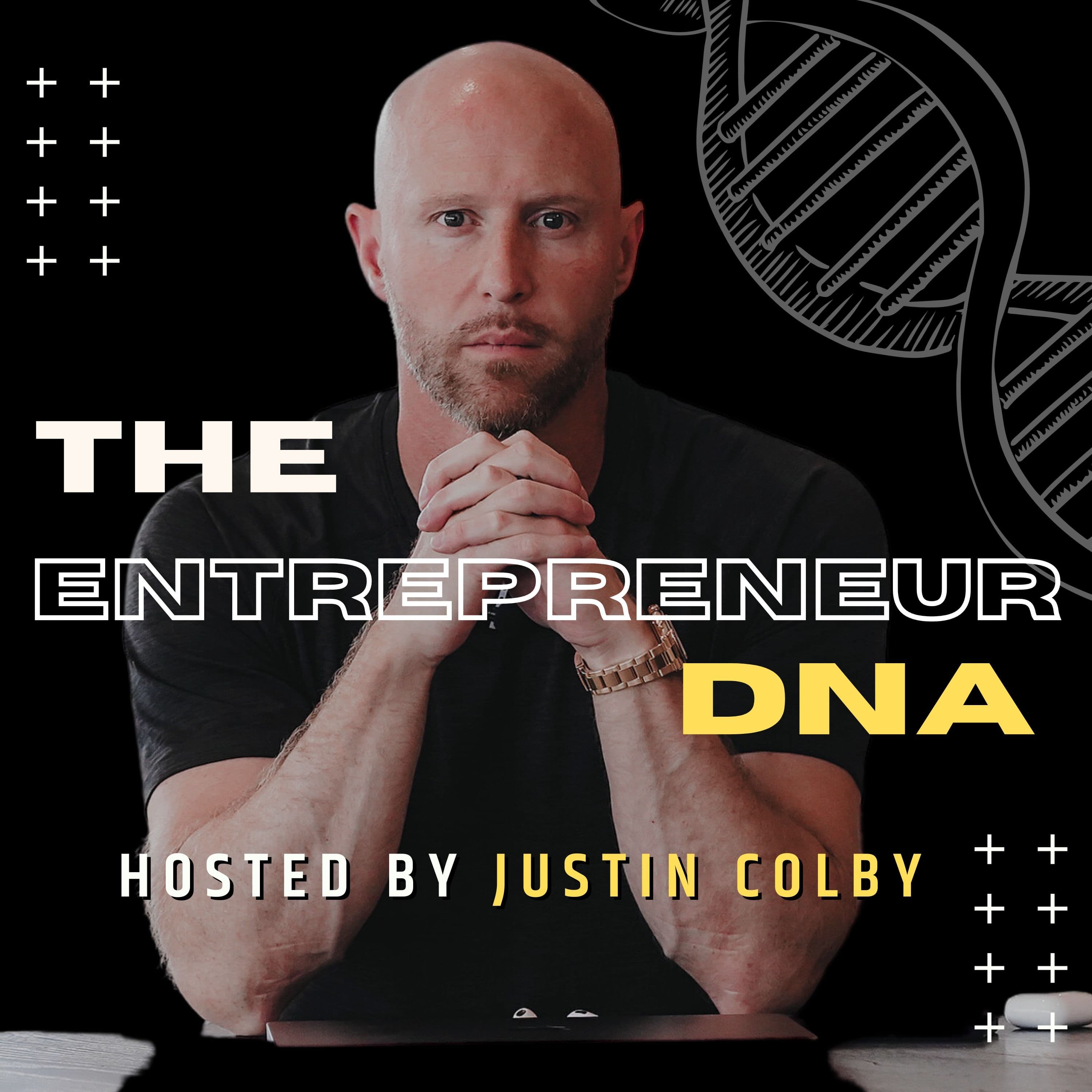
What Every CEO Must Know About Branding in Today’s Digital World | Dawson Gibbs
Timestamps are as accurate as they can be but may be slightly off. We encourage you to listen to the full context.
Podcast Summary
In this episode, host Justin Colby sits down with Dawson Gibbs, founder of EVO Marketing Agency, to explore the essential role of content creation and personal branding in entrepreneurial success. (00:30) The conversation dives deep into practical strategies for building authentic social media presence, overcoming content creation fears, and scaling businesses through strategic content production. (02:30) Gibbs shares his journey from fitness influencer to marketing agency founder, emphasizing the importance of authenticity over polished content, while Colby discusses his own rebranding strategy focused on helping entrepreneurs avoid common business pitfalls. (18:00) The episode provides actionable frameworks for content creation, frequency recommendations, and the mindset shifts necessary for long-term social media success.
- Core theme: Building sustainable personal brands through authentic content creation and strategic social media presence to drive business growth and establish credibility in the entrepreneurial space.
Speakers
Dawson Gibbs
Dawson Gibbs is a brand and content strategist and the founder of EVO Marketing Agency, one of the fastest-growing creative and performance agencies in the industry. He built his company by combining high-volume organic content production, influencer partnerships, and paid ad optimization to help brands scale attention and revenue. EVO works with startups, creators, and multi-billion-dollar companies, producing thousands of pieces of content monthly and running campaigns that guarantee view volume and performance.
Justin Colby
After investing in real estate for over 18 years and completing almost 3,000 deals, Justin has created a 7-figure business through wholesaling and fix-and-flip operations while accumulating millions of dollars in rental properties. His success in real estate led him to start The Entrepreneur DNA podcast and The Science Of Flipping podcast, where he has coached and mentored thousands of aspiring and active investors over the last decade.
Key Takeaways
Authenticity Beats Over-Production in Content
Gibbs emphasizes that raw, authentic content consistently outperforms highly edited, professional-looking posts. (24:00) He explains that when people are doom-scrolling, they're more likely to stop for content that feels real and relatable rather than overly polished material. Colby tested this by comparing a highly edited reel with an organic video, finding the authentic version performed significantly better. (23:14) The key is creating content that feels like you're talking to a friend on FaceTime rather than producing a commercial.
The 10-Year Commitment Mindset
Both speakers stress that successful content creation requires a long-term perspective, with Gibbs sharing that he posted consistently for 6-7 years with only 2,000 followers before his content took off. (30:13) He had created 1,500-1,600 videos before seeing significant growth, while Colby podcasted for 12 years before achieving major success in 2024. (29:52) The critical insight is that entrepreneurs must be prepared for a decade-long journey while hoping for earlier results, focusing on loving the process rather than just the destination.
Content Volume and Testing Strategy
Gibbs recommends posting 3-4 pieces of content daily across multiple platforms (Instagram, TikTok, YouTube Shorts), then analyzing the top 10% of performing content every two weeks to identify patterns. (27:44) This approach allows creators to double down on what works while continuously testing new formats and topics. The strategy involves creating 100 pieces of content over 14 days, then studying the variables that made the top performers successful - whether it was location, topic, or format.
Document Don't Create Philosophy
Following Gary Vaynerchuk's approach, both speakers advocate for documenting your daily life and business activities rather than trying to create scripted content from scratch. (22:39) Gibbs suggests having team members follow you around with cameras, asking organic questions while you're working or driving. This creates authentic content that provides behind-the-scenes access to your entrepreneurial journey, which audiences find more engaging than staged productions.
Fear of Judgment Is the Biggest Obstacle
The primary barrier preventing entrepreneurs from creating content is caring too much about others' opinions. (07:58) Gibbs points out that people are primarily focused on their own bills and families, not judging your content for more than a few minutes per day. He reframes content creation as providing value to others, suggesting that not sharing your expertise actually does a disservice to people who could benefit from your knowledge. (09:52)
Statistics & Facts
- Dawson Gibbs posted 1,500-1,600 videos across Instagram and TikTok over 6-7 years while maintaining only 2,000 followers before his content finally took off. (30:13) This demonstrates the massive volume and persistence required before seeing social media success.
- EVO Marketing Agency guarantees a minimum of 10 million views per campaign for their clients, typically delivering 1,500 posts with 12-15 creators. (15:31) This shows the scale at which successful content agencies operate.
- Gibbs recommends posting 3-4 times per day across multiple platforms, which would result in approximately 1,095-1,460 posts per year per platform. (27:32) This volume recommendation illustrates the commitment level needed for content success.



