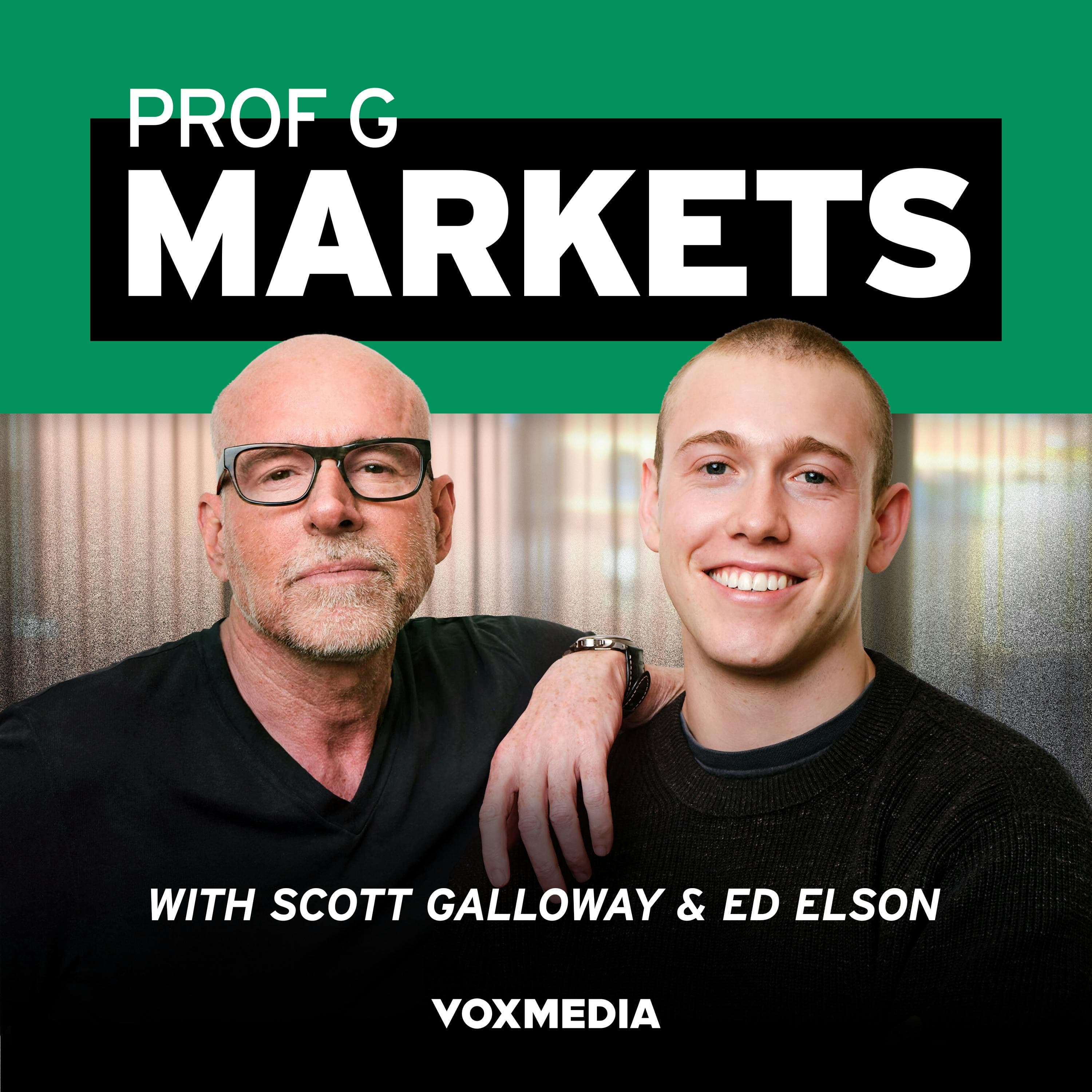
What Happens if the Fed is Compromised — ft. Claudia Sahm
Timestamps are as accurate as they can be but may be slightly off. We encourage you to listen to the full context.
Podcast Summary
In this episode of Prof G Markets, Scott Galloway takes a victory lap for correctly predicting the largest take-private deal in history - Electronic Arts' $55 billion acquisition by private equity. (03:06) The hosts discuss how the gaming industry represents a massive untapped advertising opportunity, with video games commanding significant attention but receiving only 3% of global ad spend. (05:56)
• Main themes: The conversation centers on market predictions coming to fruition, the gaming industry's advertising potential, and a deep dive into Federal Reserve independence with former Fed section chief Claudia SahmSpeakers
Scott Galloway
Professor of marketing at NYU Stern School of Business, serial entrepreneur, and founder of Prof G Media. Galloway is known for his sharp economic insights and has been a vocal critic of big tech's market dominance while making successful investment predictions across multiple sectors.
Ed Elson
Co-host and producer of Prof G Markets, bringing millennial perspectives to economic discussions. Elson provides research support and engaging dialogue while helping translate complex financial concepts for younger audiences navigating their careers and investments.
Claudia Sahm
Chief economist at New Century Advisors and creator of the famous "Sahm Rule" recession indicator. She spent over 12 years at the Federal Reserve as a section chief overseeing household economic surveys and macroeconomic forecasting, making her one of the foremost experts on Fed policy and recession prediction.
Key Takeaways
Timing and Valuation Matter More Than Quality
Galloway's experience with Epic Games illustrates a crucial investment lesson - even outstanding companies can be poor investments if purchased at inflated valuations. (09:00) Despite Epic being an exceptional business with Fortnite's massive success and the Unreal Engine, Galloway is down 40% on his 2022 investment because he bought during peak digital euphoria. This teaches us that investment success requires both identifying great companies AND buying them at reasonable prices. The lesson extends beyond individual stocks to entire market vintages - most 2022 venture capital deployments are struggling regardless of company quality.
Manage Your Personal Addictions Strategically
The hosts' discussion about personal addictions reveals an important framework for self-awareness and improvement. (12:30) Galloway identifies his two primary addictions: obsession with money and craving validation from strangers, both stemming from childhood abandonment issues. The key insight is that everyone has addictions that infringe on other life areas, and successful people actively monitor and manage these patterns. Rather than eliminating all potentially addictive behaviors, the strategy involves conscious substitution - like Ed replacing gaming addiction with social media, which has less career impact.
Low Hire, Low Fire Economy Creates Dangerous Vulnerability
Sahm explains how the current labor market represents a "low hire, low fire" environment where companies retain existing workers but barely hire new ones. (31:07) This creates a bifurcated experience: current employees feel secure while job seekers and recent graduates face unprecedented difficulty. The danger lies in this setup's vulnerability - if any economic shock increases layoffs, workers would be fired into an environment with depressed hiring rates, potentially causing unemployment to spike rapidly. This insight helps explain why economic recovery feels uneven despite low headline unemployment numbers.
Fed Independence Hangs on Supreme Court Decision
The Federal Reserve's independence faces its greatest threat in decades through multiple attack vectors. (25:45) Trump's attempts to fire Fed governor Lisa Cook, appointment of loyalist Stephen Myron who maintains White House ties, and threats to reserve bank presidents all converge on a central question: can the President remove Fed officials at will? Sahm emphasizes that if the Supreme Court allows presidential removal without proven cause, it effectively eliminates Fed independence since the President could define what constitutes "cause." This would fundamentally alter monetary policy from data-driven decisions to presidential whims, similar to what we've seen in Turkey and Argentina with inflationary consequences.
AI Concentration Risk Could Trigger Recession
The extreme market concentration in AI stocks creates systemic risk that could precipitate an economic downturn. (38:00) With 10 companies representing 40% of S&P 500 market cap and generating 70% of earnings growth, any sobering of AI expectations could destroy wealth quickly enough to cause recession. Sahm notes that historically, transformative technologies like railroads and electricity experienced periods of overinvestment followed by corrections. The current setup is particularly dangerous because the "low hire, low fire" labor market means any economic shock would hit an already vulnerable employment landscape, potentially accelerating any downturn.
Statistics & Facts
- Video games command massive attention globally with half the world now playing, up more than 60% in the past decade, yet they only receive 3% of global ad spend while TV commands 25%. (05:56)
- The US economy created less than 30,000 jobs per month on net in the last three months, despite having almost 160 million workers - representing essentially no job growth. (33:58)
- Ten companies now represent 40% of the total S&P 500 market cap, with these same companies generating over 70% of earnings growth, creating unprecedented market concentration. (37:40)



