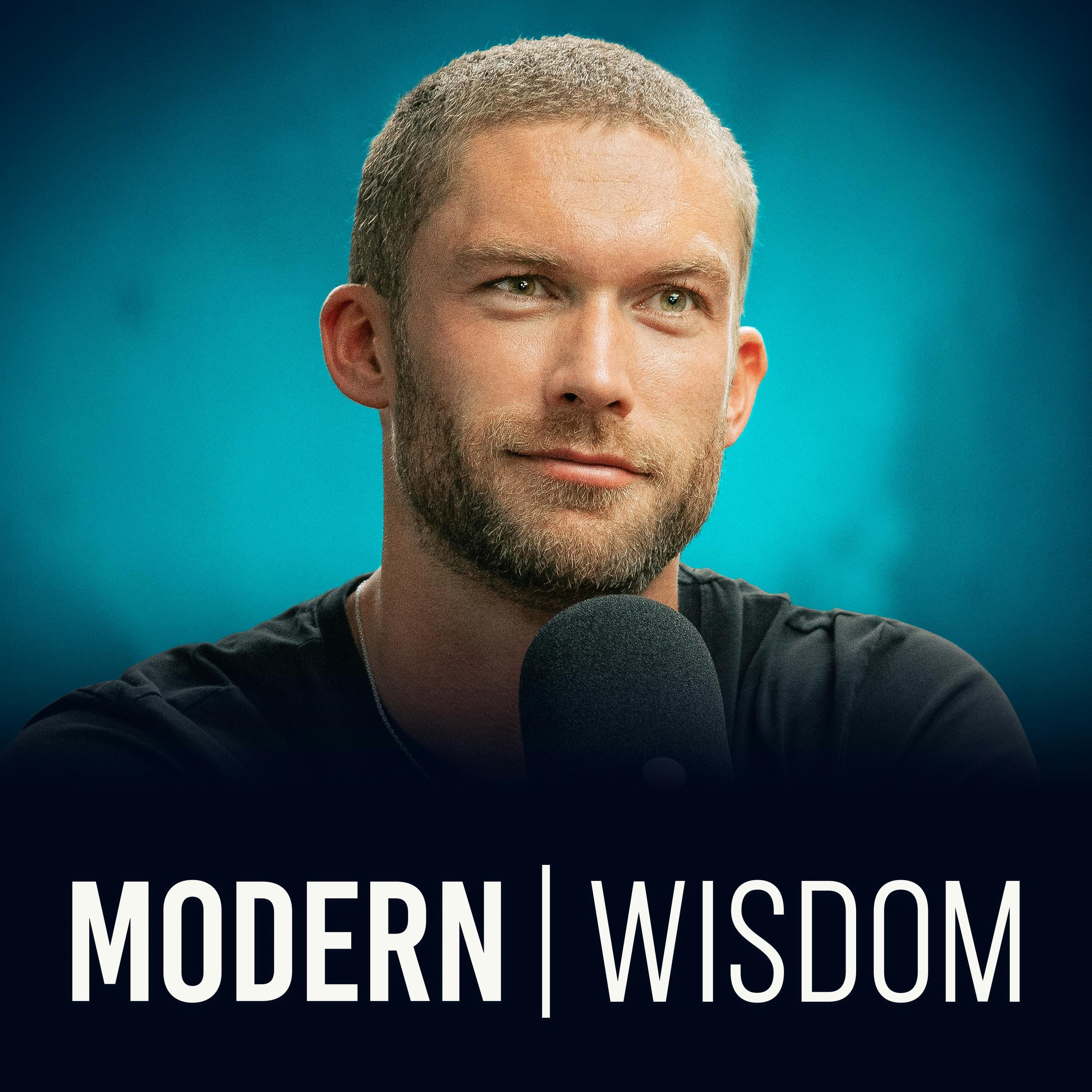
#1008 - Angelo Sommers - Why Life Feels So Pointless (and what to do)
Timestamps are as accurate as they can be but may be slightly off. We encourage you to listen to the full context.
Podcast Summary
In this deep conversation, Chris Williamson explores themes of ambition, self-belief, and personal growth with philosopher Angelo John. The discussion begins with Angelo's concept of "trying for 20" - a competitive mindset where you always aim to do double what others are doing. From there, they dive into Angelo's unconventional journey, including dropping out of school at 12 and his subsequent struggles with nihilism and addiction as a teenager. (49:00)
- Main themes: The conversation examines the tension between external achievement and internal fulfillment, the role of meaning versus pleasure in life satisfaction, and the challenges facing young men in modern society seeking purpose and authentic self-expression.
Speakers
Chris Williamson
Host of Modern Wisdom podcast with over a billion plays, Chris has built one of the most successful interview shows by focusing on learning in public. He previously worked as a club promoter and nightlife entrepreneur before transitioning to content creation and personal development.
Angelo John
A philosopher and content creator who left traditional education at age 12 to pursue self-directed learning. After overcoming significant personal challenges including addiction and nihilism in his teens, he now creates philosophical content on YouTube and develops wisdom tools to help others navigate life's complexities.
Key Takeaways
Question Your Motivational Fuel Source
Angelo reveals that much of high achievement is often driven by "toxic fuel" - fear, inadequacy, and the desire to prove oneself rather than genuine passion. (02:40) While this can lead to impressive external results, it creates an unsustainable cycle where you're constantly anchoring your actions to what others do, rather than internal values. The key insight is recognizing when you're operating from fear-based motivation versus authentic desire, and gradually transitioning toward healthier drivers as you mature.
Embrace Positive Disintegration
Drawing from psychologist Dobrowski's theory, Angelo explains how psychological breakdown can actually be necessary for growth - like heating metal to make it stronger. (79:48) Difficult experiences often serve as catalysts for positive change by forcing you to confront uncomfortable truths about yourself. Rather than avoiding all discomfort, strategic engagement with challenges can lead to genuine development and increased resilience.
Focus on Trajectory Over Position
Both speakers emphasize that progress and momentum matter more than absolute achievement. (93:03) Jimmy Carr's insight that "trajectory is more important than position" captures why people feel most fulfilled during periods of growth rather than static success. This explains why lottery winners often return to baseline happiness while entrepreneurs find meaning in the building process itself.
Distinguish Between Problems and Problems with Problems
Angelo shares his realization about jealousy - he thought he had a "jealousy problem" but actually had a "problem with being jealous." (98:31) The difference is crucial: the first frames you as fundamentally flawed, while the second recognizes jealousy as a normal human emotion you're simply uncomfortable experiencing. This reframe reduces resistance and shame, allowing you to work with your emotions rather than against them.
Optimize Your Character Over Intelligence
Research shows that higher IQ often makes people better at rationalizing what they already believe rather than finding truth. (43:03) Angelo argues that character development - integrity, persistence, courage - is more predictive of life satisfaction than raw intellectual ability. Many highly intelligent people achieve little because they lack the character traits necessary for sustained effort and honest self-reflection.
Statistics & Facts
- Research shows people with higher IQs are better at generating arguments for positions they already hold, but not for opposing viewpoints, making them more susceptible to confirmation bias rather than objective reasoning. (42:03)
- According to Shopify's data mentioned in the episode, their checkout system performs 36% better on average compared to other leading commerce platforms, with Shop Pay boosting conversions by up to 50%. (40:00)
- Angelo left traditional schooling at age 12 and wrote a 22-page presentation to convince his parents to allow self-directed learning, demonstrating early signs of the analytical thinking he would later develop. (47:12)