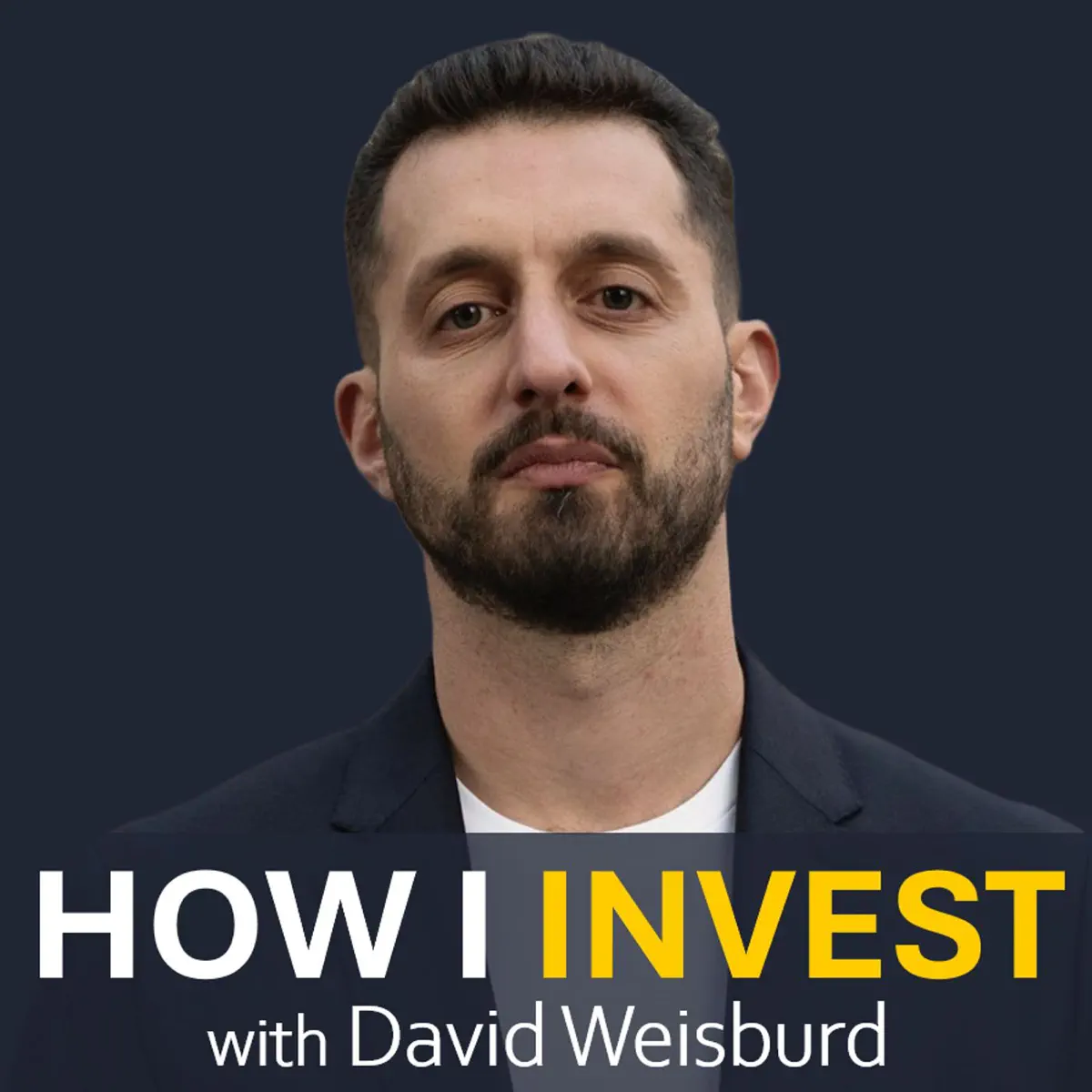
EP273: What the Best Family Offices Do Differently
Timestamps are as accurate as they can be but may be slightly off. We encourage you to listen to the full context.
Podcast Summary
In this episode of How I Invest, host David Weisburd interviews Alex Tonelli, Co-Founder of Endurance, a family office that evolved from a startup holding company into a sophisticated investment operation for three serial entrepreneurs. Alex shares how their entrepreneurial mindset shaped their approach to managing their own capital, creating structured vintage funds, and building a diversified portfolio targeting a 14.7% expected return. (00:00) The conversation explores why principal-driven capital behaves differently than institutional capital, how disciplined portfolio construction and contrarian thinking create durable long-term returns, and why institutions systematically underperform their opportunity set. (13:43)
- Main themes: The advantages of managing your own capital with first-principles thinking, the behavioral differences between principal and institutional investing, and how structured portfolio construction can achieve superior returns through vintage discipline and contrarian positioning.
Speakers
Alex Tonelli
Alex Tonelli is Co-Founder of Endurance, a family office managing capital for three serial entrepreneurs. He previously co-founded Funding Circle alongside partner Sam Hodges, which became the largest small business lending marketplace globally before going public in 2018. (00:46) Along with his Stanford Business School classmates, Alex has successfully launched five out of six companies through their holding company structure, demonstrating an exceptional track record in both company building and capital management.
David Weisburd
David Weisburd is the host of How I Invest podcast, focusing on conversations with elite investors and capital allocators. He brings deep expertise in investment strategy and portfolio construction to his interviews with leading figures in the investment community.
Key Takeaways
Principal-Agent Dynamics Create Superior Investment Outcomes
When managing your own money versus someone else's, the behavioral psychology fundamentally changes. (05:03) Alex emphasizes that at Endurance, partners are encouraged to "pound the table" against investments they don't want in their personal portfolios. This creates a completely different dynamic than institutional investing where career risk often trumps optimal decision-making. (13:36) Alex argues that institutional investors often make "defensible choices" rather than optimal ones because they need to explain decisions to less sophisticated audiences and avoid career-damaging mistakes, even if it means accepting lower returns.
Vintage Discipline Through Systematic Fund Structure
Endurance operates 25 different funds as "Lego blocks" of their asset allocation strategy, creating annual vintage funds for private equity, venture capital, and real estate. (04:01) This structure forces vintage discipline because one of the most predictive factors of success in private investing is vintage year. Rather than trying to time markets, they maintain consistent allocation levels while making small "thermostat" adjustments - moving from 70 to 68 degrees rather than dramatic swings. (09:42) This approach prevents the common mistake of market timing while capturing the benefits of consistent deployment across different market cycles.
Contrarian Investing Creates Alpha Through Supply-Demand Imbalances
Alex believes the best time to invest is generally when assets are "cold" rather than hot, noting how money piling into an area often signals being too late in the cycle. (07:54) He points out the absurdity of talking about asset classes as if pricing is fixed - startups can be valued at $4 million or $60 million, representing fundamentally different risk-reward propositions. (09:07) When others exit spaces due to poor sentiment, valuations often reset to much more attractive levels, creating better entry points for contrarian investors.
Scale and Brand Can Destroy Returns in Private Markets
One of Endurance's biggest lessons has been recognizing that as assets under management rise, returns become inversely correlated. (20:09) Large, prestigious funds often require LPs to accept unfavorable terms like high fees, forced diversification into other funds, or paying premium prices simply because they have too much capital to deploy effectively. Alex describes market leaders showing up to triple term sheets just because they need to deploy capital quickly - hardly a sustainable investment strategy. (23:14) The key is identifying when firms are growing their alpha alongside their fund size, rather than simply harvesting their market position.
Information Diet Directly Impacts Investment Performance
Alex follows Tim Ferriss's principle of not consuming news, believing that important information will reach him through other channels. (38:51) He avoids text messages, Twitter, and most social media to insulate himself from noise and negative information. This connects to the concept of "negative alpha" - where bad information sources actually decrease returns below market beta. (40:06) Instead, he focuses on high-quality, curated sources like podcasts that provide thoughtful, long-form analysis rather than reactive, emotion-driven content that can lead to poor investment decisions.
Statistics & Facts
- Endurance achieved a 5 out of 6 success rate in their company launches, with Alex noting this is "one of the best success rates for a half dozen companies I've ever heard." (02:35) This exceptional track record provided the foundation for their transition from company building to capital management.
- Over the last ten years, Endurance has invested in about 200 different private funds while maintaining an expected portfolio return of 14.7%. (13:00) Their asset allocation consists of 40% public markets, 12.5% each to private equity, real estate and venture, 5% idiosyncratic opportunities, 6% digital assets, and 10% private credit.
- Their venture capital pocket makes 8-15 fund investments per year and approximately 20 direct investments annually. (29:06) Alex believes this diversification approach, while requiring significant work, provides synthetic benefits through enhanced information flow and market positioning.