E256: What Fintech Will Look Like in 5 Years - Steve McLaughlin (FT Partners)
Timestamps are as accurate as they can be but may be slightly off. We encourage you to listen to the full context.
Podcast Summary
Steve McLaughlin, Founder and CEO of FT Partners, shares the remarkable journey of building what's widely considered the leading FinTech investment bank from humble beginnings in 2002. (00:18) Starting with just a $99 incorporation, a used laptop, and $10 business cards from Kinkos, McLaughlin has grown FT Partners to a 250-person global firm that recently secured a record-breaking $167 million fee on a single transaction. (14:45) The conversation explores McLaughlin's contrarian approach to investment banking, including his philosophy of "never die" during market downturns, innovative fee structures that align banker incentives with client outcomes, and his $25 million investment in AI company ModelML to revolutionize financial services. (06:48) McLaughlin discusses the future of FinTech, particularly his bullish outlook on real-world asset tokenization and his prediction that we'll see multiple trillion-dollar FinTech companies emerge in the next decade.
- Main themes: Building sustainable competitive advantages in investment banking, aligning incentives between bankers and clients, leveraging AI for competitive differentiation, and identifying the next wave of FinTech disruption through tokenization and global scalability.
Speakers
Steve McLaughlin
Steve McLaughlin is the Founder, CEO, and Managing Partner of FT Partners, the leading investment bank in FinTech. He previously spent seven years at Goldman Sachs in their Financial Institutions Group from 1995 to 2002, gaining expertise during the dot-com boom and bust. Starting FT Partners from his San Francisco apartment in 2002 with minimal capital, McLaughlin has built the firm into a global powerhouse with 250 employees across San Francisco, New York, and London, having closed hundreds of major M&A, capital raise, and IPO advisory transactions in the FinTech sector.
David Weisburd
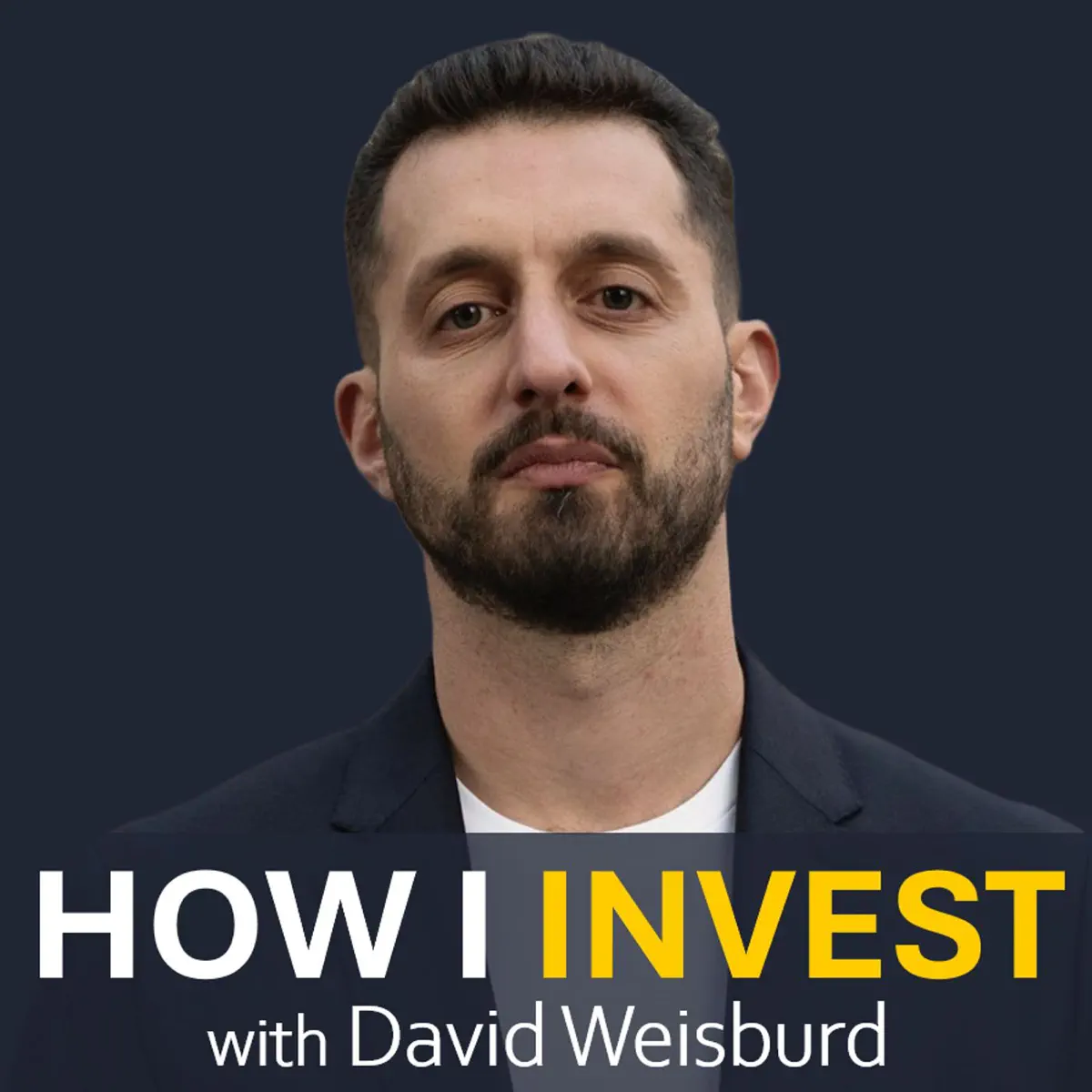
David Weisburd is the host of the "How I Invest" podcast, where he interviews leading investors and business leaders about their investment strategies and insights. He conducts in-depth conversations with prominent figures in venture capital, private equity, and entrepreneurship to extract actionable insights for ambitious professionals seeking to advance their careers and investment acumen.
Key Takeaways
Focus on High-Opacity, High-Value Transactions
McLaughlin emphasizes the critical importance of specializing in deals where valuations are highly opaque and bankers can add substantial value, rather than commoditized transactions. (11:09) Unlike large banks that handle administrative roles on public company deals with established market premiums, FT Partners focuses exclusively on private market capital raising and sell-side M&A where their expertise in matchmaking and valuation can create billions in value. This strategic focus allows them to command premium fees because they're solving complex problems rather than processing standard transactions. The key insight is that true value creation in investment banking comes from navigating uncertainty and complexity, not from administering well-understood processes.
Embrace Long-Term Client Relationships Over Transactional Work
The most compelling example of this philosophy is FT Partners' relationship with AvidXchange, which began in 2009 when the company was worth $20 million. (18:20) Despite initially considering the deal too small, McLaughlin agreed to a long-term engagement structure where they would serve as the company's banker indefinitely. Over 16 years, they helped AvidXchange raise a billion dollars, complete eight acquisitions, go public, and ultimately sell for $2.3 billion to TPG and CorpPay - a 100x return. (18:59) This demonstrates how viewing banking as relationship-building rather than deal-churning can create exponentially greater value for both clients and bankers.
Align Banker Incentives with Value Creation Through Performance-Based Fees
McLaughlin argues that traditional investment banking operates on an "administrative fee" model that doesn't reward actual value creation. (15:33) FT Partners has revolutionized this by structuring deals with significant upside participation - they recently earned a $167 million fee on a single transaction by helping add billions in value. (14:45) This approach mirrors private equity's "2 and 20" model, where success fees are tied to outcomes rather than just transaction completion. The key is building a proven track record first, as clients need confidence that you can actually deliver the extraordinary results that justify extraordinary compensation.
Invest Heavily in Differentiated Capabilities During Downturns
While competitors cut costs during the 2022-2024 market downturn, FT Partners invested $25 million in ModelML, an AI company for financial services, to enhance their client service capabilities. (06:48) McLaughlin's philosophy of "never die" means continuing to build competitive advantages when others are retreating. (03:49) This includes developing proprietary data science teams, detailed 500-page client presentations, and AI-powered buyer research that can identify potential acquirers globally. The insight is that market downturns are opportunities to widen the competitive gap by investing in capabilities that will pay dividends when markets recover.
Leverage AI for Revenue Expansion, Not Just Cost Cutting
Rather than viewing AI primarily as a cost-cutting tool, McLaughlin sees it as a way to dramatically expand their service capabilities and market reach. (38:16) AI enables FT Partners to identify and analyze thousands of potential buyers globally for any given client, something no human banker could accomplish. (36:02) This "asymptotic level of perfection" in buyer research and outreach represents a fundamental expansion of what's possible in investment banking, potentially turning every deal into a truly global auction rather than limited to known contacts.
Statistics & Facts
- FT Partners has a current backlog of at least $23 billion in signed client revenue, representing the largest pipeline in the firm's 23-year history. (04:50)
- The firm recently secured a $167 million fee on a single transaction, making it the largest fee earned by any investment bank in 2024, surpassing Goldman Sachs's $110 million fee and Merrill Lynch's $137 million fee on much larger deals. (14:45)
- FT Partners invested $25 million as the lead investor in a $75 million funding round for ModelML, an AI company for financial services, competing against elite Silicon Valley investors. (06:48)