E230: What Great VCs Actually Do for Founders
Timestamps are as accurate as they can be but may be slightly off. We encourage you to listen to the full context.
Podcast Summary
In this episode, David interviews Vivek Ladsariya, Managing Director at Pioneer Square Labs, about the evolving landscape of early-stage investing in 2025. (01:30) Vivek shares his philosophy of investing before consensus, backing founders at their earliest stages when "their alpha is highest." The conversation explores how AI has fundamentally changed startup expectations, with Series A requirements now demanding $7 million ARR compared to $1-3 million just five years ago. (29:42) They dive deep into the transformation of programming from Java and Python to plain English through LLMs, enabling unprecedented automation and efficiency gains. The discussion covers practical strategies for thought partnership, the power of intellectual honesty in founders, and how AI-driven productivity is rewriting the rules of startup building and scaling.
- Main Theme: Early-stage venture investing in the AI era, focusing on pre-consensus opportunities, founder partnership, and the dramatic efficiency gains reshaping startup expectations and capabilities.
Speakers
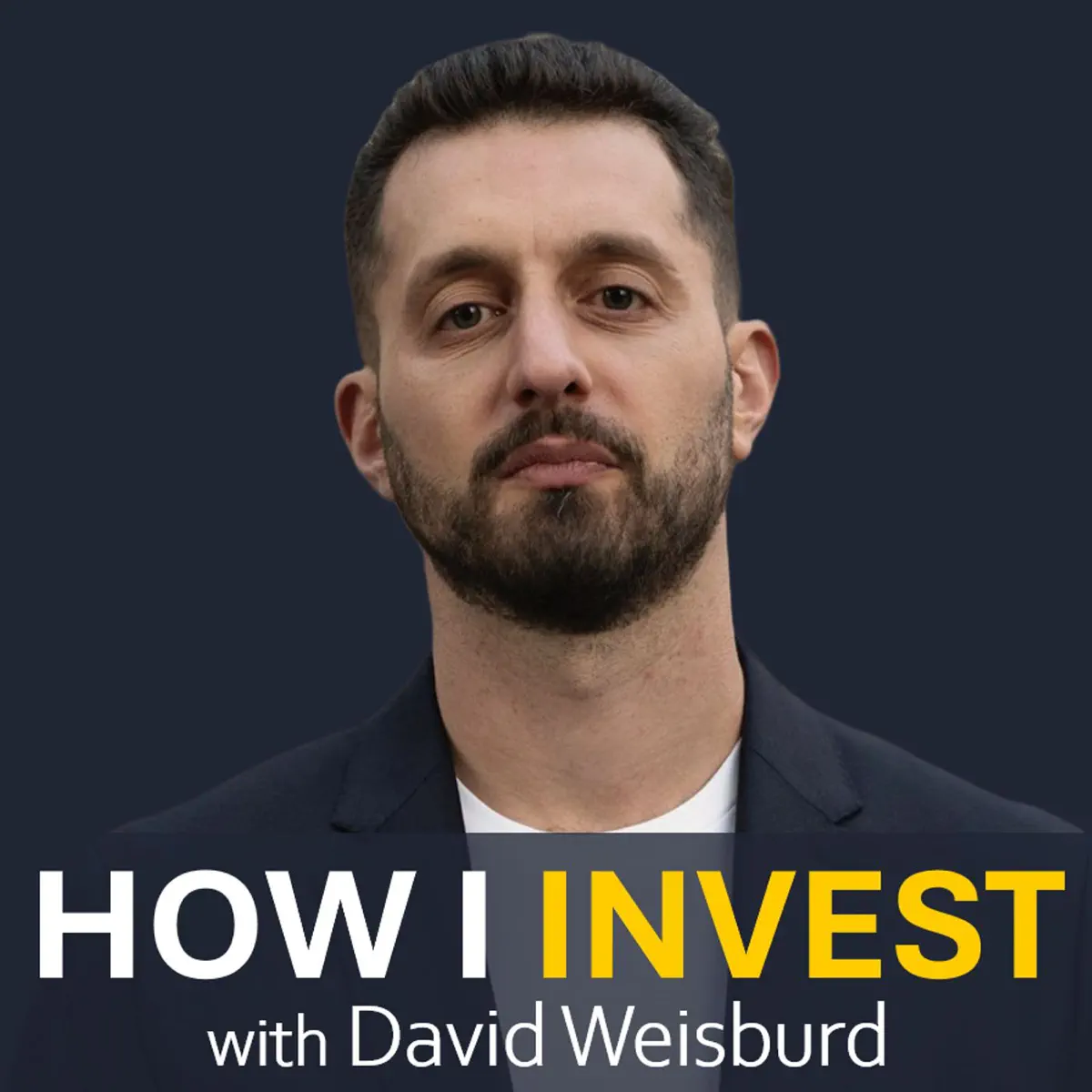
David Weisburd
Host of the How I Invest podcast, interviewing leading investors and venture capitalists. David has built a reputation for conducting in-depth conversations with top-tier LPs and venture professionals, focusing on investment strategies and market insights.
Vivek Ladsariya
Managing Director at Pioneer Square Labs, a venture studio and fund that partners with founders at their earliest stages. A two-time founder with roughly a decade of VC experience, Vivek specializes in backing entrepreneurs before traction becomes obvious, focusing on pre-seed and seed investments. He became a father just 12 days before this interview was recorded.
Key Takeaways
Invest Before Consensus for Maximum Alpha
Vivek emphasizes backing founders "before it's a consensus, before it's been priced in by the market, before traction is obvious." (01:34) This approach allows VCs to partner with founders during their conceptualization phase, providing the opportunity to collaborate deeply and understand their decision-making process. The strategy offers higher potential returns because the market hasn't fully recognized these founders yet. However, this requires developing strong pattern recognition and the ability to identify founder quality without traditional metrics. VCs who can effectively evaluate founders at this stage gain access to relationships that can compound over years, even as companies outgrow their initial investment.
Thought Partnership Through Strategic Questioning
Great thought partnership isn't about changing founders' minds or influencing their business decisions, but rather "asking questions that make them think." (06:10) The key is creating trust so founders move out of "sales mode" and become genuinely candid and transparent. This requires asking thought-provoking questions that challenge assumptions while staying humble about your own knowledge limitations. Effective thought partners absorb shock during crises rather than adding to founder stress, and they reinforce positive behavior by responding rationally to problems. The best investors use anecdotes and pattern matching from their experience while primarily relying on strategic questioning to help founders see different paths forward.
Ideas Are Overrated; Execution and Iteration Rule
Startup ideas are fundamentally "too abstract at the start" and don't create enough value without relentless iteration and execution. (16:25) Looking at successful companies reveals they've gone through many layers of pivots from their original concept. Product-market fit doesn't come from a spark of inspiration but from delivering to customers, listening to feedback, and iterating relentlessly. The most successful companies either pivot dramatically or go through numerous iterations to find their true value proposition. This means founders need the ability to understand customers deeply, listen to both direct and indirect feedback, and iterate based on what they learn rather than falling in love with their original idea.
AI Has Revolutionized Series A Expectations
The efficiency gains from AI have dramatically raised the bar for Series A funding, with the 75th percentile now requiring around $7 million ARR compared to $1-3 million five years ago. (29:42) One engineer can now do the work of several engineers from previous years, while sales teams can process thousands of leads instead of hundreds. AI enables automations across every business function, from engineering to go-to-market, making every dollar of investment go much further. Additionally, enterprise customers have new AI budgets they need to spend, creating revenue opportunities for startups. However, founders who aren't "violently aggressive" in their efficiency are struggling to raise Series A rounds. The expectation is now that you prove significantly more with your seed funding than was required historically.
English Has Become the New Programming Language
LLMs have "fundamentally removed any syntax barrier that Python enforces or Java enforces," allowing anyone to describe what they want in plain English and get it automated. (36:28) This represents an evolution from machine code to compilers to high-level languages, and now to natural language programming. There's "no engineering roadblock in creating some kind of software or automation" anymore, which means every person in every function can create their own automations. Vivek has built his own "Scout" automation to scan LinkedIn and X for potential founder signals, dramatically improving his deal sourcing. (39:20) A portfolio company at $25 million ARR operates with zero full-time finance people and just one contractor, having automated their entire finance function. If you're not leveraging this capability, "you're falling behind."
Statistics & Facts
- The 75th percentile for Series A rounds is now around $7 million in ARR, meaningfully higher than the $1-3 million that could secure a sizable Series A five years ago. (29:42) This dramatic increase reflects how AI-driven efficiency gains have raised investor expectations for what founders should accomplish with their seed funding.
- A PSL portfolio company operating at $25 million ARR (grown from under $10 million last year) has zero full-time finance employees and only one contractor handling their entire finance function through automation. (40:15) This demonstrates the extreme efficiency gains possible through AI-driven automation.
- Instagram was acquired by Facebook with just 11-15 employees, showing that the concept of highly efficient, small teams creating massive value isn't entirely new, though it's becoming much more prevalent and accessible through AI tools. (50:39)