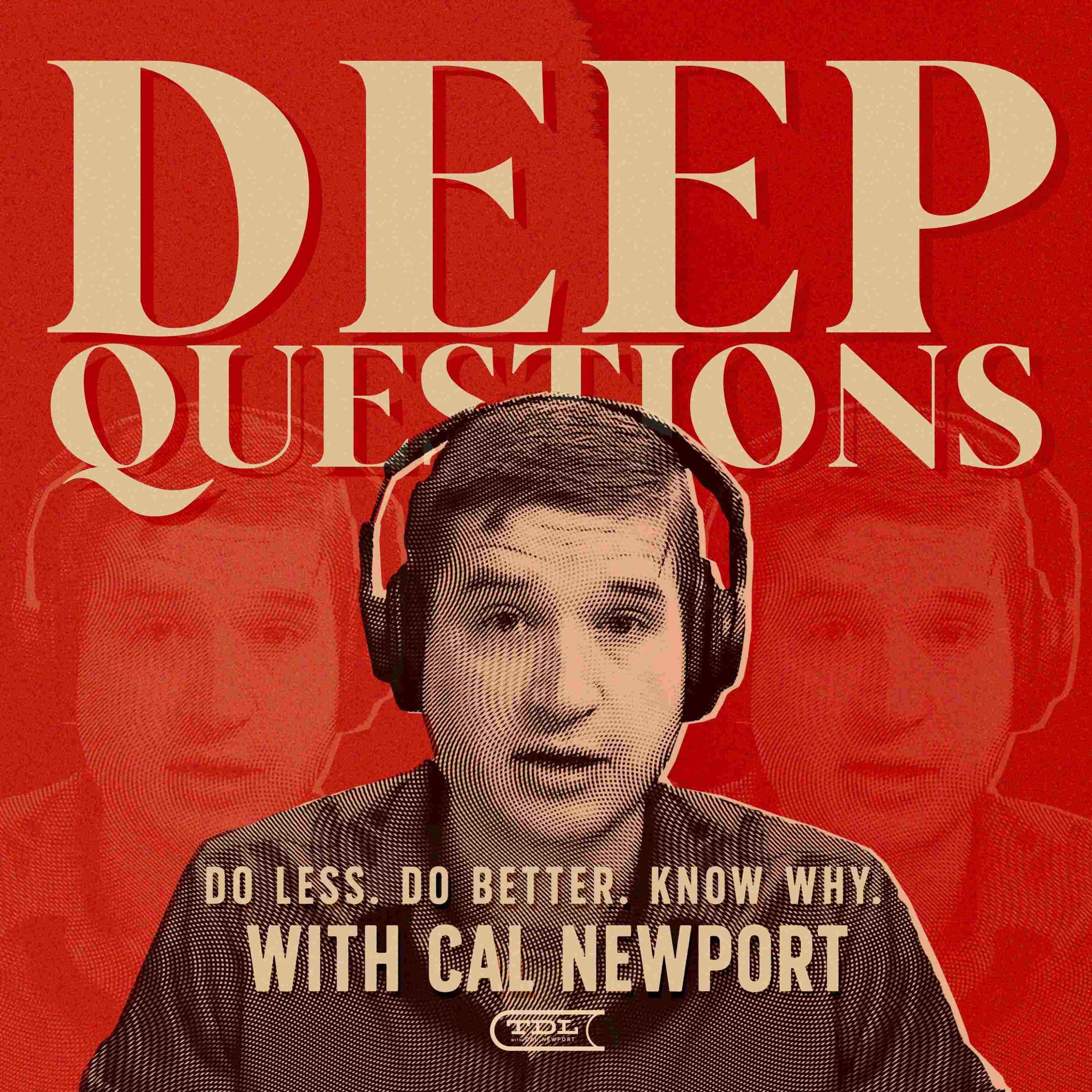
Ep. Ep 381: Life Advice from Legendary Writers
Timestamps are as accurate as they can be but may be slightly off. We encourage you to listen to the full context.
Podcast Summary
In this episode of Deep Questions, Cal Newport explores how legendary writers' advice about their craft can be transformed into actionable wisdom for living a deeper, more intentional life in our increasingly distracted world. (02:00) He examines five pieces of writing advice from acclaimed authors including George Saunders, Robert Caro, David Grann, and Stephen King, then extracts broader life lessons from each.
- Main Theme: Writing advice contains generalizable wisdom for cultivating meaningful lives and resisting digital distraction in the modern age.
Speakers
Cal Newport
Cal Newport is a computer science professor at Georgetown University and bestselling author of books including "Deep Work," "A World Without Email," and "Slow Productivity." He's also a regular contributor to The New Yorker, where he writes about technology and productivity, and hosts the Deep Questions podcast focused on helping people build more intentional lives in our distracted age.
Key Takeaways
Embrace the "Iterative Method" for Life Planning
George Saunders emphasizes that great writing happens in the editing phase, not the first draft. (02:23) Similarly, you can't plan a perfect life from scratch - you need to start living, gather feedback, and continuously refine your approach. Create a lifestyle vision document and maintain an insight journal to track what resonates and what doesn't, then regularly edit your vision based on real experience rather than abstract planning.
Practice Diligence and Deliberateness with Long-Term Focus
Robert Caro's advice to "turn every page" in research translates to the principle that meaningful accomplishments require both sustained effort over time and deliberate practice of what actually matters. (10:53) Use seasonal projects (3-4 months) with written training plans to practice sticking with something past initial enthusiasm while doing the right activities, not just what feels good in the moment.
Use Evidence-Based Planning for Major Decisions
David Grann spends extensive time researching book ideas before committing years to them. (17:04) Before making major life changes, treat yourself like a journalist - interview people who've made similar moves, research the economics and realities, and gather concrete evidence about whether your idea will actually work. This prevents wasting years on compelling but impractical plans.
Implement Autopilot Scheduling for Important Activities
Stephen King maintains the same writing routine daily regardless of inspiration or convenience. (25:25) Protect time for your most important activities by putting them on autopilot - same time, same place, same day, scheduled weeks in advance. This eliminates decision fatigue and ensures progress on meaningful work even when life gets chaotic.
Minimize Context Shifts to Maximize Cognitive Performance
The key to productivity in the digital age isn't moving faster, but avoiding the "cognitive poison" of context shifting. (34:58) Even briefly checking email or social media during focused work initiates expensive cognitive operations that reduce your mental capacity. Use tools like full-screen timers and keep phones physically separated to create true focus periods without any distractions.
Statistics & Facts
- Cal mentions reducing daily screen time from 9 hours to 1.5 hours per day as described in Owen's case study, demonstrating the dramatic impact systematic approaches can have on digital consumption habits. (63:11)
- No other specific statistics were provided in this episode, as the focus was primarily on qualitative advice and philosophical approaches to living deeply.



