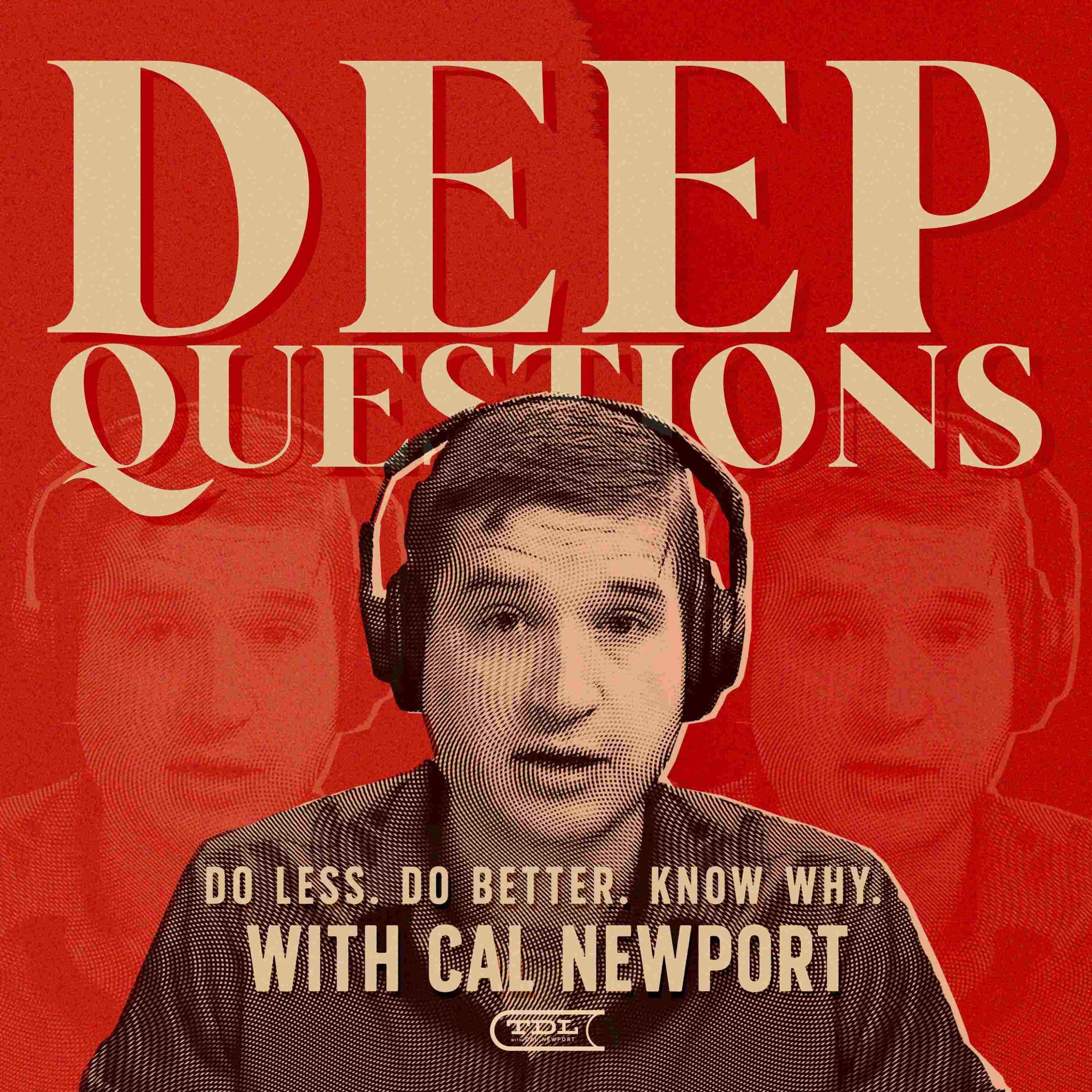
Ep 385:
Timestamps are as accurate as they can be but may be slightly off. We encourage you to listen to the full context.
Podcast Summary
This episode features a classic replay from March 2024 where Cal Newport explores the powerful concept of using single-purpose notebooks for creative exploration. (00:25) Newport shares his experience using a small Field Notes notebook during his book tour to develop ideas for a new book, carrying it everywhere from bars and hotel breakfasts to recording studios and the beach in Santa Monica. (02:30)
The episode also includes a slow productivity takeover featuring multiple listener questions about implementing the principles from Newport's book "Slow Productivity." Topics range from how pseudo-productivity persists in profitable businesses to practical advice on limiting missions, projects, and daily goals. (12:12)
- Main themes include creative ideation tools, slow productivity implementation, and the psychology behind focused work environments
Speakers
Cal Newport
Cal Newport is a computer science professor at Georgetown University and bestselling author of books including "Deep Work," "Digital Minimalism," and "Slow Productivity." He's known for his research on focused work, technology's impact on knowledge workers, and practical philosophy for living meaningfully in the digital age.
Jesse Miller
Jesse Miller serves as the producer of the Deep Questions podcast and frequent co-host, helping facilitate discussions and providing production support for the show.
Key Takeaways
Single-Purpose Notebooks Create Focused Cognitive Context
When you dedicate one notebook to exploring a single idea, your brain associates that physical object with only that topic, allowing you to slip into the right cognitive context faster and generate higher quality insights. (10:07) Unlike pulling out your phone with its multitude of associations (email, games, social media), a dedicated notebook signals to your mind that you're working on one specific creative challenge.
Pseudo-Productivity Persists Due to Managerial Capitalism
Knowledge work companies can remain profitable despite inefficient pseudo-productivity because of managerial capitalism - where managers optimize for stability, risk reduction, and convenience rather than direct market signals. (24:51) Additionally, in complex knowledge organizations, a small number of people often produce the bulk of cognitive capital while others handle supporting functions.
Limit Your Work at Three Hierarchical Levels
To effectively manage overload, you must limit missions (high-level goals), projects (specific initiatives), and daily goals in that order. (30:27) If you have too many missions, you'll struggle to limit projects; if you have too many projects, you can't effectively limit daily goals. Start at the top level and work down.
Invest Proportionally in Your Most Important Tools
Spending money on high-quality tools for your most valuable work signals to yourself that you take it seriously, leading to better performance. (36:30) Newport's example of a $50 lab notebook that generated multiple published papers and NSF grants demonstrates how investment in tools can compound returns through psychological commitment.
Lifestyle-Centric Career Planning Beats Prestige Chasing
Instead of always choosing the most objectively impressive job option, work backwards from your desired lifestyle to make career decisions. (59:08) The diplomat case study shows how prioritizing work-life balance and avoiding after-hours emergencies led to a fulfilling role that matched personal values rather than just career advancement.
Statistics & Facts
- TikTok reported a near 10% drop in users between ages 18-24 in one year, which Newport discusses as evidence of his prediction about the instability of pure algorithmic addiction versus social graph-based platforms. (67:11)
- Newport mentions that his $50 MIT lab notebook generated seven or eight different published papers and NSF grants, demonstrating the return on investment in quality tools. (37:15)
- In the CBS turnaround example, Newport notes that two key shows (CSI and Survivor) generated hundreds of millions of dollars in value, illustrating how small numbers of people often create the bulk of cognitive capital in knowledge work organizations. (27:58)



