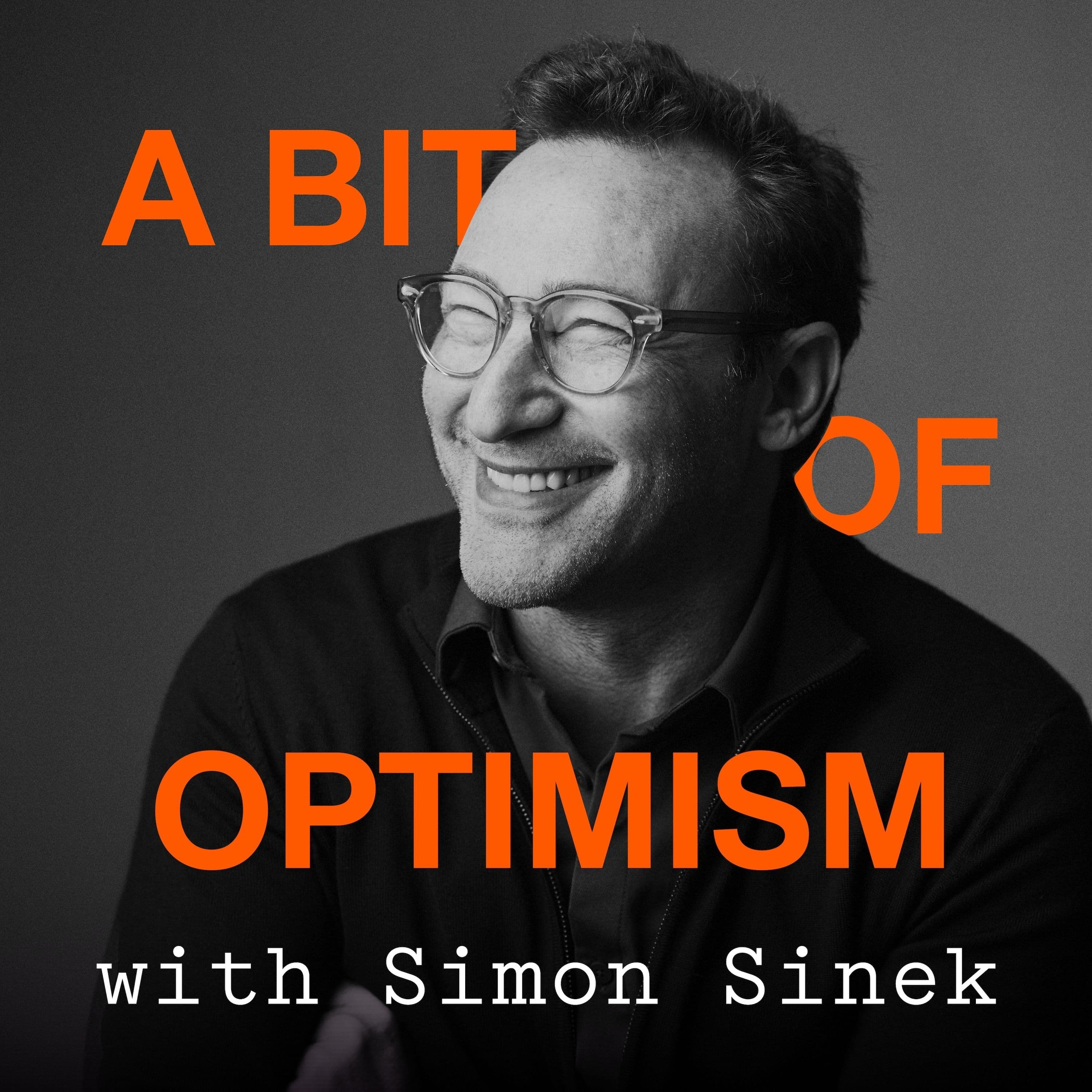
The Smartest Way To Be Stupid with comedian Matthew Broussard
Timestamps are as accurate as they can be but may be slightly off. We encourage you to listen to the full context.
Podcast Summary
Stand-up comedian and former financial analyst Matthew Broussard joins Simon Sinek for a fascinating exploration of learning, growth, and the surprising parallels between mathematics and comedy. (00:23) The conversation reveals how both disciplines rely on empirical feedback loops - whether it's solving mathematical equations or testing jokes in real time. (24:00) Broussard shares his unconventional journey from spreadsheets to stage, forced into comedy when his parallel career path collapsed, ultimately discovering that feeling stupid while learning is actually a sign you're doing it right. The episode challenges common assumptions about intelligence and introduces a powerful framework for approaching difficult concepts through better teaching rather than self-blame.
- Main themes: The intersection of analytical thinking and creative expression, the importance of vulnerability in both learning and comedy, and how empirical feedback can drive personal and professional growth
Speakers
Matthew Broussard
Matthew Broussard is a stand-up comedian, former financial analyst, and creator of Monday Punday, a puzzle webcomic and app. He has been featured on The Tonight Show with Jimmy Fallon, Conan, and Comedy Central's Roast Battle, and has made appearances on The Marvelous Mrs. Maisel and The Mindy Project. His analytical background and mathematical expertise uniquely inform his approach to comedy, treating each joke like an equation to be tested, refined, and solved for maximum impact.
Simon Sinek
Simon Sinek is an optimist, author, and speaker focused on inspiring others to do what inspires them. He is the author of several bestselling books including "Start With Why" and "Leaders Eat Last," and is known for his work on leadership, purpose, and creating infinite-minded organizations that prioritize long-term impact over short-term gains.
Key Takeaways
Reframe Feeling Stupid as a Learning Signal
When you struggle to understand something new, the problem isn't your intelligence - it's the quality of instruction you're receiving. (29:08) Broussard explains that mathematicians and learners in any field are "constantly bombarded by frustration, but you embrace the frustration" because breakthrough understanding follows. Rather than accepting "I'm bad at math" or "I don't get this," the correct mindset is "I haven't yet found someone who can explain this in a way I can understand." This shift from self-blame to seeking better teachers transforms learning from a fixed mindset challenge into a growth opportunity with clear action steps.
Use Empirical Feedback to Improve Performance
Both comedy and professional development benefit from treating every interaction as a real-time focus group. (11:12) Broussard describes how "every decision I make is focus grouped in real time" during stand-up performances, allowing him to iterate and improve instantly. This approach can be applied to presentations, team meetings, or any situation where you're communicating ideas. Instead of guessing what works, actively observe reactions, test variations, and adjust based on immediate feedback to continuously refine your effectiveness.
Maintain Integrity Through Peer Validation
When external metrics like social media engagement or immediate results threaten to compromise your standards, use respected peers as a moral compass. (50:56) Broussard relies on "the respect of my peers" and "making other comics laugh" - specifically those he admires - to ensure he doesn't sacrifice quality for quick wins. This system works by creating accountability beyond just numbers or immediate gratification, ensuring that success is measured by those who share your values and understand the craft at a deeper level.
Focus on Destination Over Route
Most people obsess over specific career paths while remaining unclear about their ultimate destination, leading to climbing the wrong ladder entirely. (46:28) Sinek explains his approach: "I'm obsessed with the destination" rather than the route, making decisions based on whether opportunities move him toward his long-term vision of undoing harmful business practices. This destination-focused mindset allows for opportunistic pivots while maintaining strategic direction, preventing the trap of following a predetermined path that may not lead where you actually want to go.
Start Each Day with Self-Validation
Combat the need for external validation by beginning each workday with a document titled "You're Doing Great" that lists everything you're currently doing well. (63:35) This practice, which Broussard uses to manage his ADHD and drive for validation, creates positive momentum before tackling challenging tasks. The technique works because "you work better when you like yourself" rather than operating from self-criticism, and creates a Pavlovian response that makes you look forward to starting your day rather than dreading it.
Statistics & Facts
- Broussard lost his financial analyst job on October 4, 2013, which he describes as "the worst day of my life," but within two months he started booking college comedy gigs, demonstrating how forced pivots can accelerate career transitions. (05:56)
- Math education fails because it's taught with "zero dimensions of time, two dimensions of space" when it should utilize three dimensions of space plus time, similar to how Pixar creates educational content. (23:47)
- Every punchline in Broussard's act represents "one day of my life" - the entire daily accomplishment of creating a single joke that might be just three words but generates audience laughter. (32:21)



