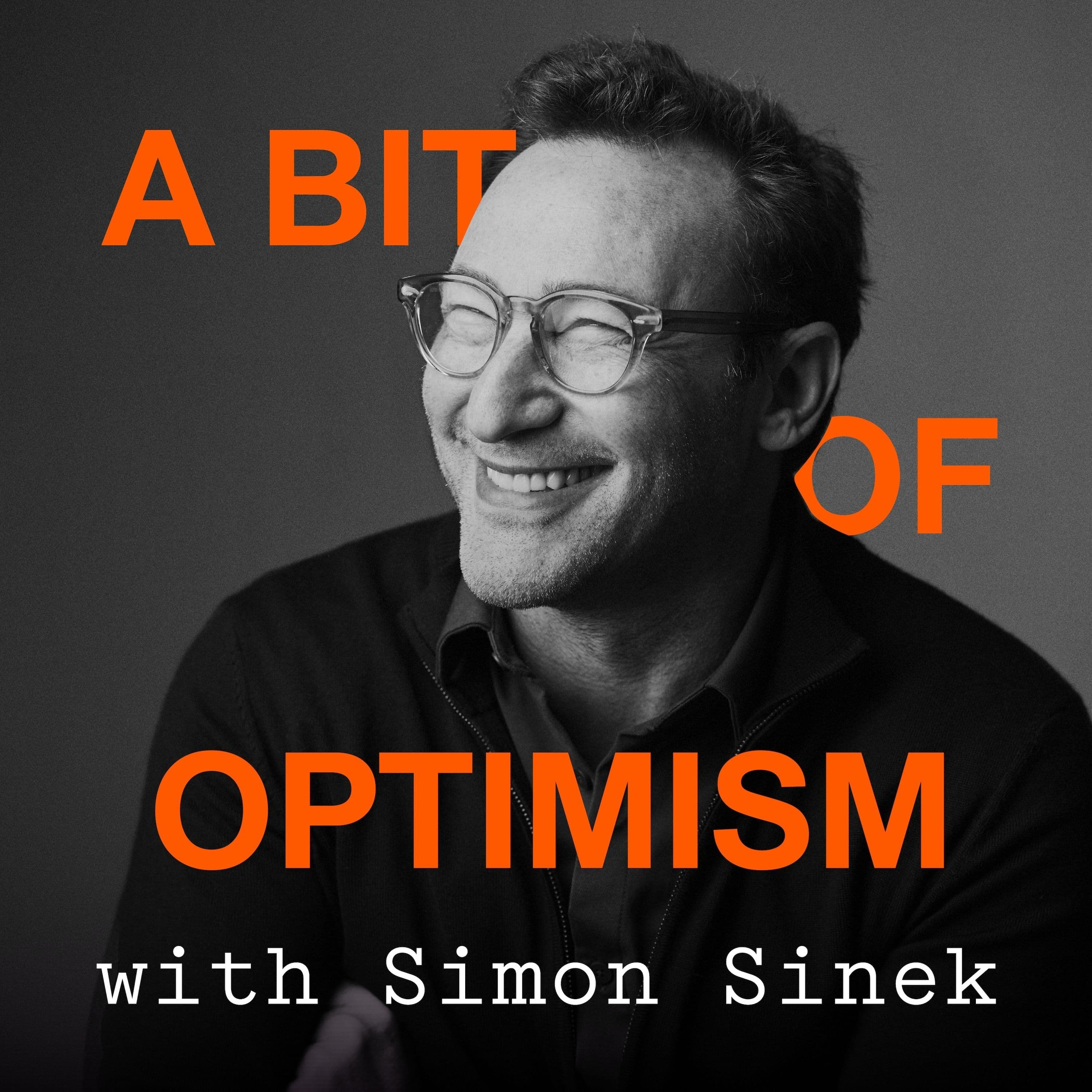
The Man Who Proved Me Right with CEO Bob Chapman and the Barry-Wehmiller Team
Timestamps are as accurate as they can be but may be slightly off. We encourage you to listen to the full context.
Podcast Summary
In this episode of A Bit of Optimism, Simon Sinek returns to Barry-Wehmiller's BW Paper Systems facility in Phillips, Wisconsin, to explore how CEO Bob Chapman has transformed traditional manufacturing through his "Truly Human Leadership" philosophy. (01:34) Over five decades, Chapman has grown a humble Midwestern manufacturing company into a $3.6 billion global powerhouse with nearly 12,000 team members, proving that prioritizing empathy, trust, and relationships can drive exceptional performance. (02:36) The episode features conversations with employees at different stages of their Barry-Wehmiller journey - from three years to over twenty-five years - who share how the company's people-first culture has transformed not only their work lives but their personal relationships and family dynamics.
- Core theme: How treating people as "somebody's precious child" rather than line items creates a workplace culture that transforms lives, families, and communities while delivering outstanding business results
Speakers
Bob Chapman
Bob Chapman is the CEO of Barry-Wehmiller, a $3.6 billion global manufacturing company with nearly 12,000 team members worldwide. Trained as an accountant with an MBA from Pricewaterhouse, Chapman spent his first career managing people traditionally before experiencing a profound transformation that led him to develop his "Truly Human Leadership" philosophy. He is the author of "Everybody Matters" and founded the Chapman & Co. Leadership Institute to teach caring leadership skills globally.
Simon Sinek
Simon Sinek is a bestselling author and leadership expert known for his work on organizational culture and leadership. He is the author of several books including "Leaders Eat Last," which features Bob Chapman as a central character, and is also the publisher of Chapman's book "Everybody Matters." Sinek has been documenting and sharing Barry-Wehmiller's transformation for over fifteen years.
Key Takeaways
The Lens Through Which You See People Determines How You Lead
Bob Chapman's transformation began when he realized at a wedding that every employee is "somebody's precious child" placed in his care. (09:01) This shift from seeing people as "machinists, labor, union members" to seeing them as precious children fundamentally changed his leadership approach. The practical application means leaders should ask themselves: "Am I treating this person the way I would want someone to treat my own child?" This reframe creates accountability and drives more compassionate decision-making in everything from daily interactions to major business decisions like layoffs.
Layoffs Represent Leadership and Business Model Failure
Chapman argues that layoffs indicate a fundamental failure of stewardship and business planning. (34:01) During the 2008 recession when Barry-Wehmiller's orders dropped 30%, instead of laying people off, they found creative solutions to maintain employment. Chapman believes a leader's primary responsibility is creating a business model where people feel safe and can plan their lives. When companies regularly use layoffs as a financial tool, they're essentially admitting their leadership and strategic planning have failed to create sustainable stability for the people who depend on them.
Caring is a Teachable Skill That Transforms Both Work and Home Life
Barry-Wehmiller created their own university with three core classes: empathetic listening, recognition and celebration, and culture of service. (12:36) The most surprising discovery was that 95% of feedback about these work-focused classes was about how they improved marriages and relationships with children. (14:24) This demonstrates that when people learn human skills at work, they take those skills home, creating healthier families and communities. Leaders can implement this by investing in teaching listening skills and emotional intelligence, not just technical training.
Trust People With Responsibility Beyond Their Perceived Qualifications
When Barry-Wehmiller needed to replace a $750,000 machine, instead of having procurement make the decision, they gave the budget to Lance and Jared - the operators who actually worked on the machine daily. (43:03) These high school graduates saved the company $250,000 and selected a machine that has run flawlessly for twelve years. This shows that often the people closest to the work have the best judgment, even if they don't have advanced degrees or traditional credentials. Leaders should identify who actually understands the work best and trust them with significant decisions.
Work Environment Shapes Personality More Than Personality Shapes Work Performance
Randall Fleming's transformation from being described as "Darth Vader" - someone who turned away engineers at 50 feet - to becoming a beloved leader and teacher illustrates how work culture shapes who people become. (23:36) His anger and hostility weren't inherent personality traits but responses to a toxic work environment. When the culture changed, so did he. This challenges the common assumption that difficult employees have bad personalities, suggesting instead that leaders should examine whether their environment is bringing out people's best or worst qualities.
Statistics & Facts
- Barry-Wehmiller has grown to a $3.6 billion global company with nearly 12,000 team members worldwide, demonstrating 12% compounded share price growth over 25 years. (38:46) This financial performance proves that people-centered leadership can outperform traditional management approaches.
- During the 2008 recession, Barry-Wehmiller's orders dropped by 30%, yet they refused to lay off any employees and instead found alternative solutions. (33:36) This contrasts with most companies that use layoffs as their primary cost-cutting strategy during economic downturns.
- 95% of feedback from Barry-Wehmiller's empathetic listening classes focused on how the training improved participants' marriages and relationships with their children, rather than work performance. (14:24) This unexpected outcome revealed the profound connection between workplace skills and family health.



