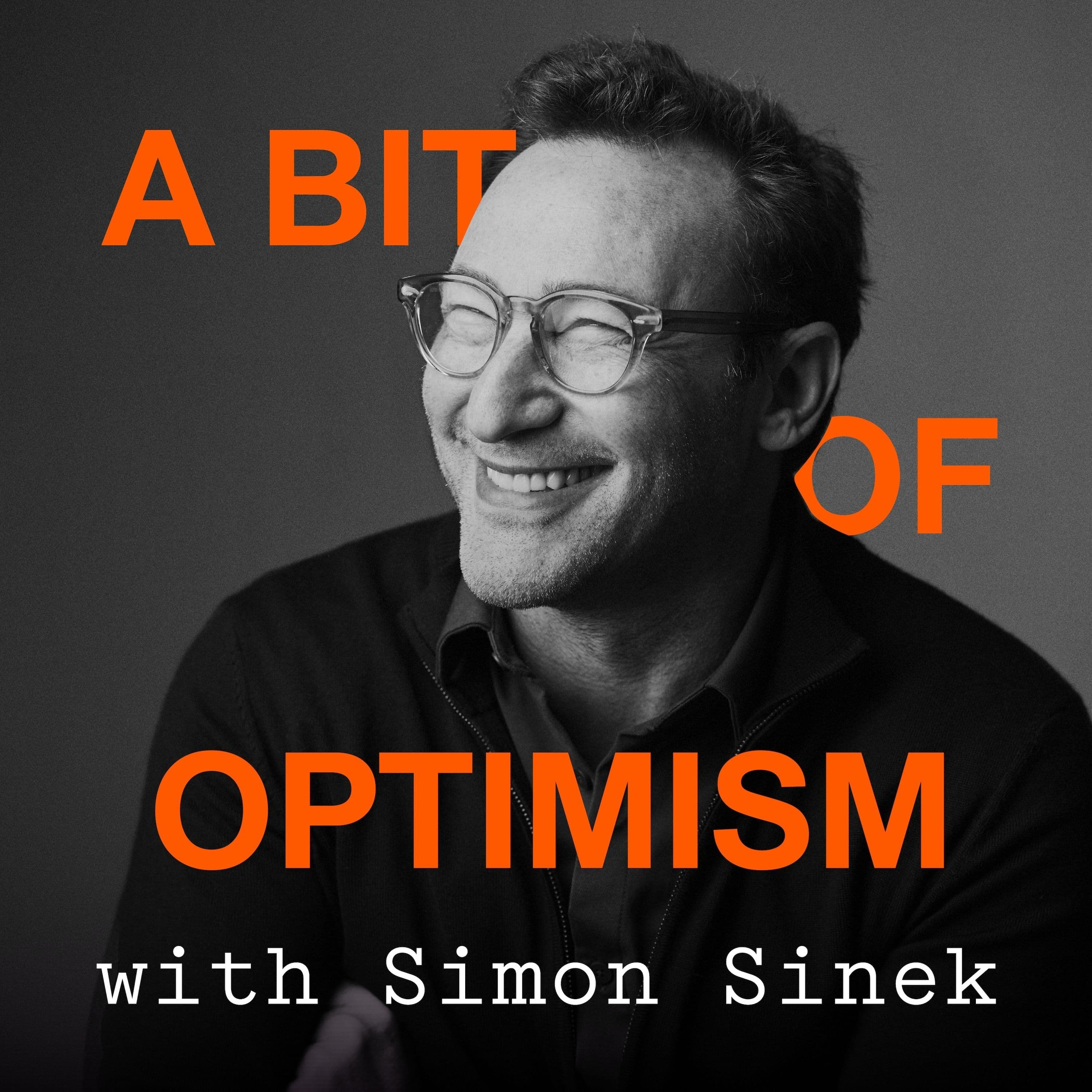
The Future You Avoid Is Riskier Than the One You Face with LinkedIn co-founder Reid Hoffman
Timestamps are as accurate as they can be but may be slightly off. We encourage you to listen to the full context.
Podcast Summary
This episode features a fascinating conversation between Simon Sinek and LinkedIn founder Reid Hoffman about idealism, technology, and the future of humanity. (00:58) Hoffman shares his journey from aspiring science fiction author to CIA director aspirations (which his father quickly discouraged) to ultimately becoming a tech entrepreneur who views his work through the lens of contributing to human progress. (08:48) The discussion explores why science fiction shifted from optimistic visions of the future in the 60s-80s to predominantly dystopian narratives today, and how this affects our collective imagination about what's possible. (24:43) They delve into AI's potential to elevate human capabilities rather than replace them, with Hoffman arguing that technology has always been humanity's path to evolution - we are "homo techne more than homo sapiens."
- Core themes include the necessity of idealistic vision for human progress, the role of technology in human evolution, and the importance of maintaining optimism while acknowledging real challenges in our technological future.
Speakers
Reid Hoffman
Reid Hoffman is the co-founder and former CEO of LinkedIn, the professional networking platform that fundamentally changed how we think about career development and professional relationships. He's currently a partner at Greylock Partners, one of Silicon Valley's most prestigious venture capital firms, and was an early investor in companies like Airbnb. Hoffman is also the author of "Super Agency," a book advocating for an optimistic view of AI's potential to enhance human capabilities.
Simon Sinek
Simon Sinek is a renowned author, speaker, and optimist best known for his concept of "Start with Why" and his work on inspirational leadership. He hosts "A Bit of Optimism" podcast and has written several bestselling books on leadership and organizational culture. Sinek is recognized for his ability to articulate complex ideas about human motivation and organizational behavior in accessible ways.
Key Takeaways
Idealistic Vision Is Essential for Progress
Hoffman emphasizes that "you don't get a future like you don't get a future that you want by avoiding the futures you don't want." (10:02) He uses the analogy of driving from San Francisco to LA - if you spend all your time planning to avoid traffic accidents and potholes, you'll never get in the car to begin with. (10:16) This insight reveals that progress requires positive vision, not just risk avoidance. Organizations and societies need to articulate what they're building toward, not just what they're trying to prevent. The absence of optimistic science fiction in recent decades has left us without the collective imagination necessary to build better futures.
AI Should Augment Human Capabilities, Not Replace Them
Rather than viewing AI as a threat, Hoffman argues we should see it as expanding human agency - hence his book title "Super Agency." (34:54) He provides a compelling example of a friend whose cousin was saved at a hospital because GPT-4 provided a crucial second opinion that led them to seek emergency care elsewhere. (36:36) The key insight is that AI becomes most powerful when it enhances human decision-making rather than replacing human judgment entirely. This requires us to maintain our critical thinking skills while leveraging AI's computational advantages.
Technology Is Humanity's Primary Evolution Path
Hoffman argues that "we're homo techne more than homo sapiens" - we evolve through technology rather than just biology. (37:21) This perspective reframes our relationship with technological advancement from something happening to us to something we actively participate in. The challenge isn't to resist technological change but to consciously shape it in ways that elevate human potential. This requires understanding that every major technological shift - from the printing press to calculators to the internet - has fundamentally changed human capabilities while creating new forms of value.
Competitive Dynamics Drive Innovation and Growth
When discussing concerns about AI replacing human skills, Hoffman points out that competition will continue to exist and will simply shift to new dimensions. (27:07) For example, instead of competing on who can write the best press release from scratch, people will compete on strategic thinking, data interpretation, and the ability to effectively collaborate with AI tools. (28:53) The key is recognizing that human value will migrate to areas where uniquely human capabilities - creativity, emotional intelligence, strategic thinking - remain essential.
Leadership Requires Articulating Positive Vision
Drawing from his experience building LinkedIn, Hoffman explains how he fought against the social norm that posting CVs online was disloyal to employers. (46:04) He believed that transparency would benefit both individuals and organizations by creating better matches and opportunities. This illustrates that effective leadership often means challenging existing paradigms while articulating a better alternative. (48:37) Leaders must be willing to be the "preacher of idealistic vision" even when it's uncomfortable or draws criticism.
Statistics & Facts
- Hoffman mentions that 85% of AI development should be trusted while maintaining 15% healthy skepticism regarding potential blind spots and risks. (12:32) This ratio reflects his balanced approach to AI development - recognizing that the people building AI systems genuinely care about human welfare while acknowledging the need for oversight.
- He references that approximately 80% of jobs today didn't exist 20 years ago, and similarly, 80% of jobs 20 years from now don't exist today. (32:54) This statistic illustrates the rapid pace of economic transformation and suggests that concerns about AI eliminating jobs may be offset by the creation of entirely new categories of work.
- Hoffman describes creating a medical AI assistant as good as current general practitioners that would be available to anyone with a smartphone for less than $5 per hour. (35:03) This represents a potential democratization of healthcare access that could dramatically improve global human welfare.



