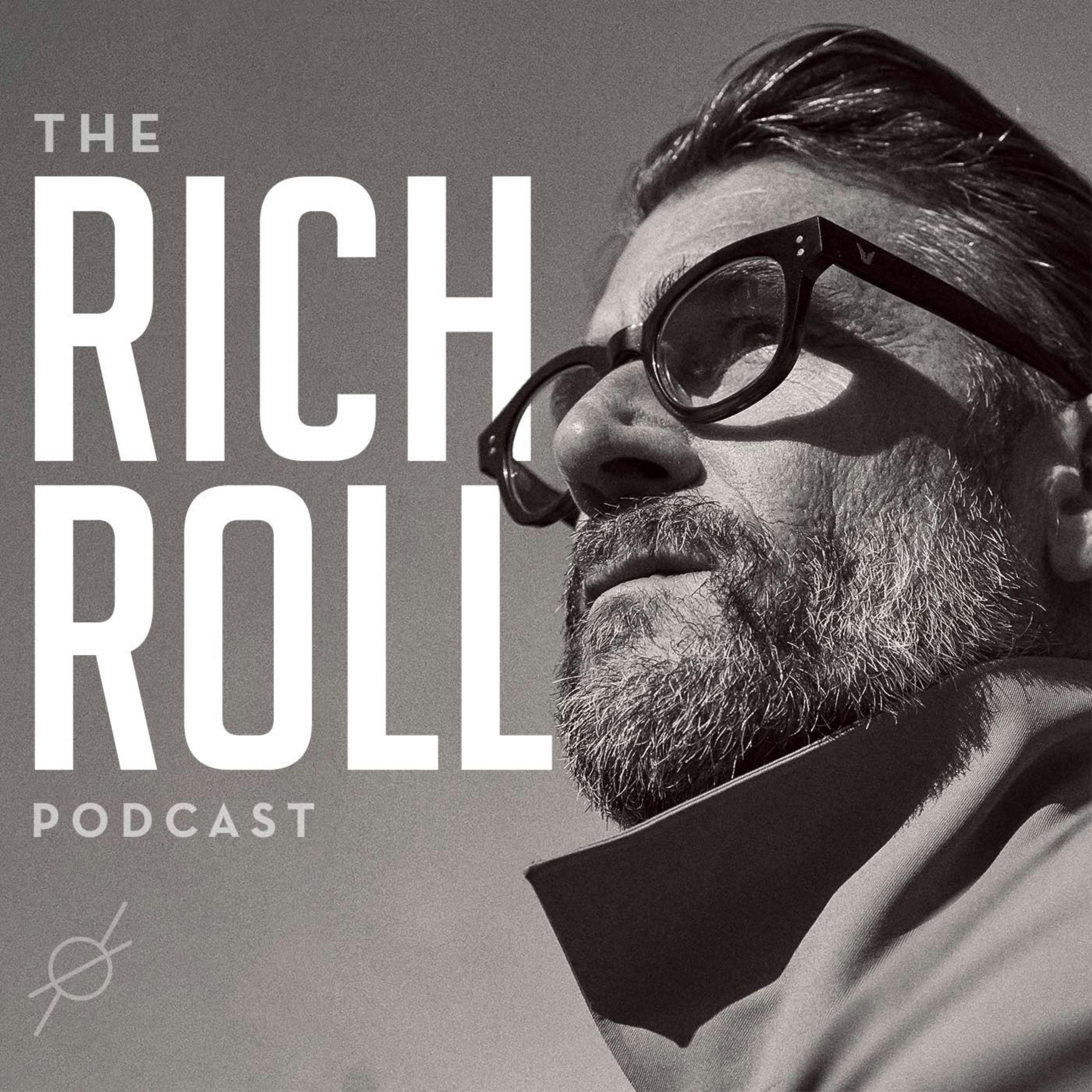
Bruce Wagner Writes Transgressive Novels About Tragedy & Transcendence
Timestamps are as accurate as they can be but may be slightly off. We encourage you to listen to the full context.
Podcast Summary
Bruce Wagner, prolific novelist and former student of Carlos Castaneda, joins Rich Roll for a deeply philosophical conversation exploring art, spirituality, and human nature. Wagner, author of fifteen books including his latest "Amputation," discusses his use of Hollywood as a laboratory for examining the extremes of human behavior, from celebrity worship to homelessness, vanity to invisibility. (01:22)
The conversation delves into Wagner's decade-long tutelage under Carlos Castaneda, his approach to transgressive fiction that skewers the desperate while searching for transcendence, and how the recent LA fires inspired him to write "Amputation" in just one month. Wagner reflects on Buddhist and Sufi wisdom, the relationship between suffering and art, and why fiction serves as our most potent vehicle to truth.
- Core Focus: The intersection of spiritual wisdom, literary artistry, and the human condition as seen through Hollywood's extremes
Speakers
Bruce Wagner
Bruce Wagner is a novelist, former student of Carlos Castaneda, and author of fifteen books, including his latest, "Amputation." He has had a prolific and eccentric career using Hollywood as a laboratory for examining human behavior through transgressive fiction. His work has been praised by literary luminaries including Salman Rushdie, John Updike, and Bret Easton Ellis, who called him "the best prose writer working now."
Rich Roll
Rich Roll is a bestselling author, ultra-endurance athlete, and host of The Rich Roll Podcast. He underwent a dramatic personal transformation from addiction and poor health to becoming one of the world's fittest men, documented in his book "Finding Ultra." His podcast explores wellness, spirituality, and human potential through conversations with diverse guests.
Key Takeaways
Embrace the Scent of Authentic Art
Wagner describes being attracted to literature with a particular "scent" - works that contain both darkness and transcendence. (03:13) He explains how he was drawn to writers like Dickens because they combined fastidious language with both acrid and sentimental ingredients. This teaches us to develop our own artistic sensibility and follow what authentically moves us, rather than what's commercially viable or critically endorsed. In practice, this means trusting your instincts about what resonates deeply with you, whether in art, work, or life choices, rather than following external validation.
Transform Suffering Through Spiritual Understanding
Drawing from Buddhist philosophy, Wagner discusses the three types of suffering: physical pain, emotional fluctuation, and conditional suffering imposed by social order. (05:11) He learned from his Castaneda studies that everything may be predetermined, but this doesn't excuse behavior - rather, it can alleviate suffering by removing the burden of excessive self-blame. This perspective helps us approach our mistakes and traumas with compassion while maintaining responsibility for our actions.
Inhabit Your Shadow Self for Growth
Wagner explains that in his writing, he inhabits his most malevolent characters with the same proximity as his saintly ones because "we're all interchangeable." (36:57) He explores every forbidden place in himself without hesitation, viewing transgression as essential for understanding human nature. This teaches us that integrating our shadow aspects - our capacity for darkness - is essential for wholeness and authentic self-expression.
Develop Artistic Impeccability Without Attachment
Wagner describes achieving a state where the craft is no longer an issue, making it easier to "get out of the way of Bruce Wagner." (70:34) He's learned to feel no shame when not writing and approaches his work from a place of inner silence rather than ego-driven ambition. This demonstrates how mastery comes from surrendering personal agenda and becoming a clear channel for expression.
Find Poetry in Ordinary Moments
Wagner shares how Castaneda taught him to keep a journal of "memorable events" - not dramatic moments like graduations, but subtle experiences that don't pay homage to social order. (119:18) He recounts his goddaughter saying "how beautiful" while looking at cheap Christmas ornaments, which "destroyed" him with its poignancy. This practice cultivates presence and helps us recognize the sacred in mundane moments.
Statistics & Facts
- Wagner mentions that many writers reviewed in prestigious publications like The New York Times or The New Yorker now sell only about 100 copies, compared to 6,000-7,000 copies that a PBS appearance or New York Times Book Review cover would generate in the past. (74:11)
- Wagner references that back in the day, if an agent got a writer on PBS or the cover of the New York Times Book Review, those placements would move 6,000-7,000 copies, but now they move only 3-4 copies. (75:01)
- No other specific statistics were provided in this episode.



