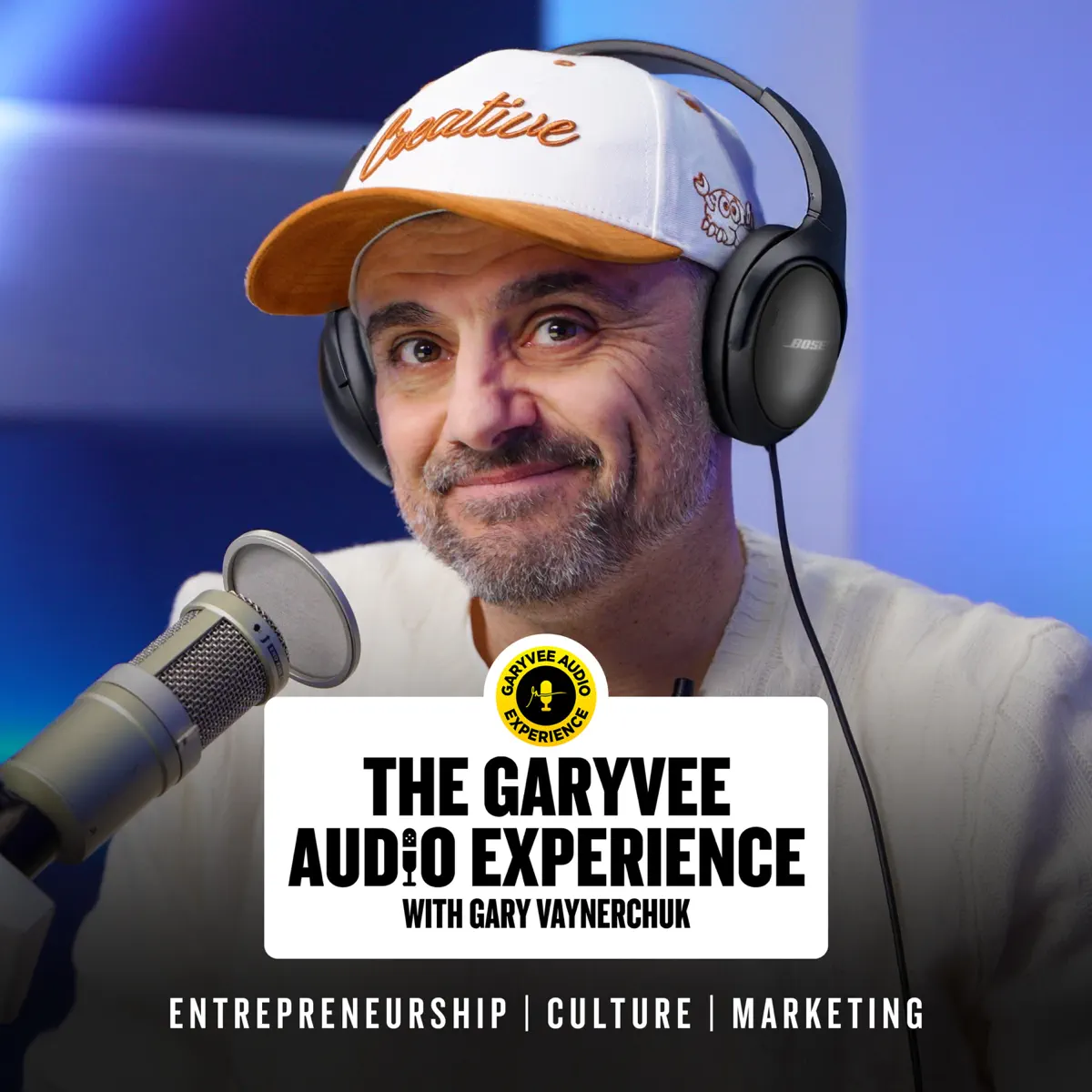
What It Really Takes to Build and Lead a Company in 2026 l The CEO Series with William Salvi
Timestamps are as accurate as they can be but may be slightly off. We encourage you to listen to the full context.
Podcast Summary
Gary Vaynerchuk, CEO of VaynerMedia and Chairman of VaynerX, provides an in-depth look at his multifaceted business empire and entrepreneurial philosophy in this candid conversation. (04:40) He reveals the scope of his 2,000-person global marketing organization spanning multiple continents, while also discussing his intellectual property venture VeeFriends, sports agency VaynerSports, and restaurant business VCR Group. (07:07) The discussion explores his transition from personal brand influencer back to active content creation, the challenges of building corporate credibility while maintaining authenticity, and his predictions for the future of business communication and experiential marketing. Throughout the conversation, Gary emphasizes the importance of authenticity in leadership, family relationships in business, and his belief that "winners fucking win" regardless of circumstances.
- Main themes include the evolution from personal brand to business empire, the balance between authenticity and corporate leadership, and the future of attention-based marketing in an AI-driven world
Speakers
Gary Vaynerchuk
Gary Vaynerchuk is the CEO of VaynerMedia and Chairman of VaynerX, a 2,000-person global marketing organization with offices across New York, LA, London, Amsterdam, Singapore, Tokyo, and Mexico City. He's recognized as a pioneer in social media marketing for Fortune 500 companies and one of the original YouTube content creators, having started a wine show in 2006. Beyond VaynerMedia, he's the founder of VeeFriends (an intellectual property business), chairman of VaynerSports (a major sports agency), and involved in multiple ventures including VCR Group restaurants and Vayner Watt TV production company.
William Salvi
William Salvi is the host of the CEO series and Executive House, focusing on conducting real conversations with real CEOs. He specializes in interviewing Fortune 500 CEOs, startup founders, and various types of executives to provide insights into business leadership and entrepreneurship.
Key Takeaways
Authenticity Requires Freedom from External Control
Gary emphasizes that true authenticity in leadership is only possible when you have complete freedom from external pressures. (10:00) He explains that CEOs of large companies often wear "masks" because they fear getting fired by their boards, while he maintains complete authenticity because "no one has say" over his decisions. This freedom allows him to be fully himself, including cursing and dressing down, behaviors that initially hurt VaynerMedia's corporate prospects but eventually became normalized as culture shifted. The key insight is that authentic leadership requires either exceptional performance that makes you indispensable, or better yet, owning your own business where no one can fire you.
Build Communication Infrastructure as Ultimate Leverage
Gary reveals his master plan to build VaynerX into a comprehensive communication infrastructure that can drive attention and success for any entity. (23:33) He believes that in a world where everything will be commoditized, the ability to communicate and capture attention will be the ultimate differentiator. His vision is to create a "death star" of marketing capabilities that can be pointed at any politician, B2B business, or B2C company to dramatically increase their success, recognition, and conversion rates. This represents a shift from being just an agency to becoming a private equity firm built on communication prowess.
Family Business Success Requires Emotional Sacrifice
Gary's twelve-year journey building his father's wine business from $3 million to $65 million while making under six figures demonstrates the emotional complexity of family business relationships. (32:34) He worked 100 hours per week throughout his twenties, sacrificing his social life and financial compensation for the long-term relationship with his parents. Despite the financial sacrifice and occasional conflicts with his father, he considers it "the greatest thing I ever did in my career." The lesson is that family business success often requires accepting short-term personal sacrifices for long-term relationship and character development.
Day Trading Attention Means No Platform Loyalty
Gary's philosophy of "day trading attention" means constantly adapting to wherever attention is underpriced, without romantic attachment to any particular platform or strategy. (29:21) He predicts that by 2042, people will still be stuck doing social media while he'll have moved on to whatever communication method is most effective then. This approach requires treating all platforms, including ones that made you successful, as temporary tools rather than permanent solutions. The practical application is to continuously analyze where your audience's attention is shifting and reallocate resources accordingly, rather than doubling down on yesterday's winning platforms.
Consequences Cure Entitlement in Business
Gary addresses the balance between positive leadership and accountability, explaining that business naturally provides consequences that other systems don't. (14:54) Unlike education, politics, or parenting, business has a built-in correction mechanism: "if you over coddle and you over entitle, you go out of business and everyone gets fired." He believes this makes business the most honest system for addressing entitlement issues. While maintaining his positive leadership style, he recognizes that market forces will ultimately correct overcorrection toward entitlement, making business naturally self-regulating in ways other institutions are not.
Statistics & Facts
- Gary built his father's wine business from $3 million to $65 million annual revenue over twelve years while never making six figures in salary. (32:26) This statistic demonstrates the extreme financial sacrifice he made for family business relationships.
- VaynerX employs 2,000 people globally across offices in New York, LA, London, Amsterdam, Singapore, Tokyo, and Mexico City. (04:40) This shows the massive scale Gary has achieved in the marketing industry.
- Pokemon is worth over $100 billion, making it more valuable than multiple sports teams combined. (05:44) Gary uses this to illustrate the incredible value potential in intellectual property businesses like his VeeFriends venture.



