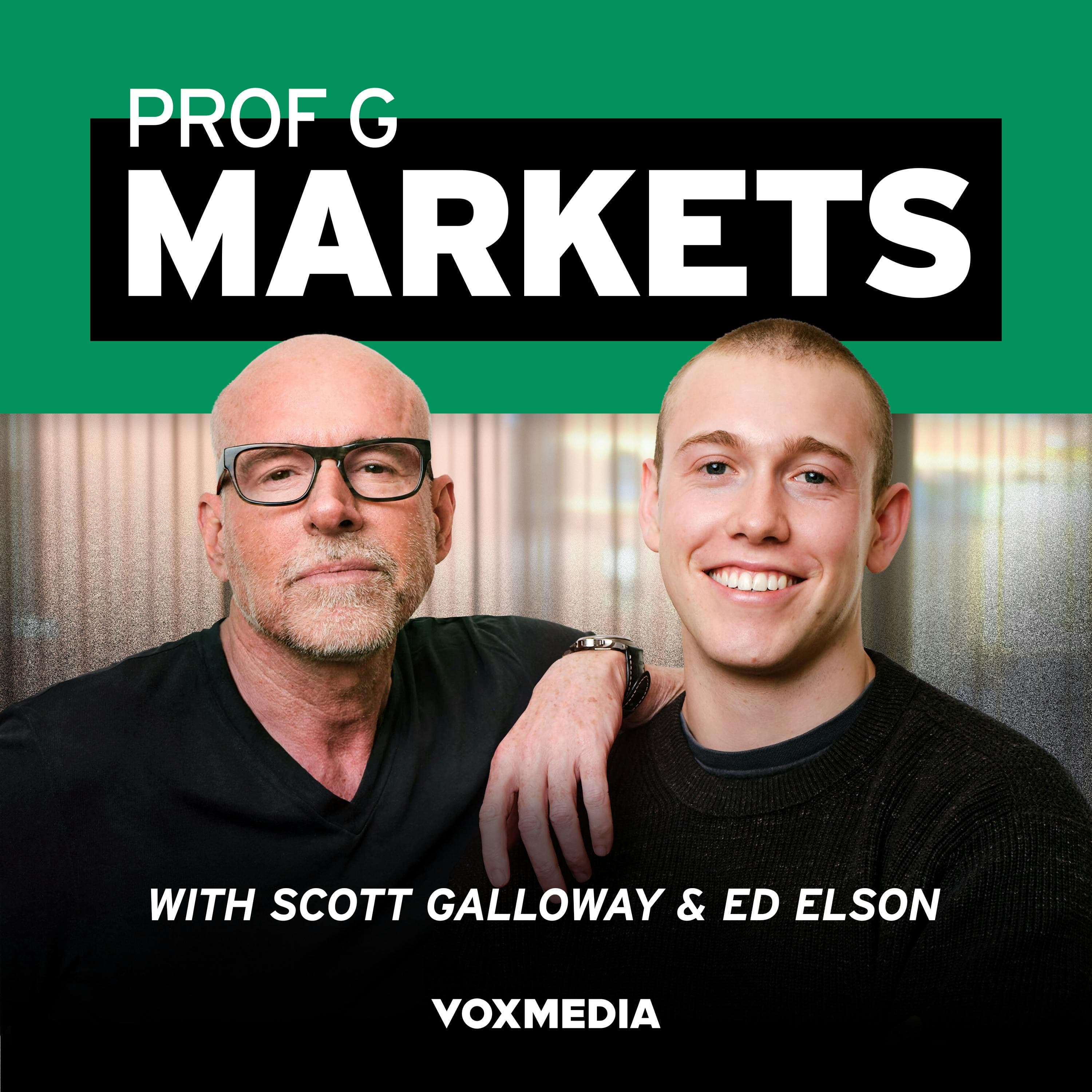
TikTok, Warner Bros, and the Rise of the Ellison Empire
Timestamps are as accurate as they can be but may be slightly off. We encourage you to listen to the full context.
Podcast Summary
In this insightful episode of Prof G Markets, Scott Galloway and Ed Elson dive deep into the media empire consolidation happening under the Ellison family, examining how Larry and David Ellison are positioning themselves to control major media properties including Paramount, potentially Warner Brothers Discovery, and TikTok. (04:54) The hosts analyze the implications of this media oligarchy, comparing it to Russian-style oligarchy systems where wealth and power are concentrated in the hands of a few families with political connections. Beyond media consolidation, the episode explores fascinating new data revealing how people actually use AI tools - with ChatGPT serving primarily consumer needs for practical guidance while Anthropic's Claude dominates in technical and coding applications.
- Main theme: The dangerous consolidation of American media power into the hands of billionaire families, particularly the Ellisons, and what this means for democracy and free speech
Speakers
Scott Galloway
Professor of Marketing at NYU Stern School of Business and serial entrepreneur who founded multiple companies including Red Envelope, L2, and Section4. He's a bestselling author and regular contributor to CNN and other major media outlets, known for his sharp analysis of big tech and market trends.
Ed Elson
Co-host of Prof G Markets and business journalist who provides detailed market analysis and research. He works closely with Scott to break down complex business stories and market movements for their audience.
Key Takeaways
Media Oligarchy is Real and Dangerous
The consolidation of American media into the hands of a few billionaire families represents a fundamental threat to democratic discourse. (10:10) In 1983, 50 companies controlled 90% of American media - today it's just six companies. The Ellisons now control Paramount and are eyeing Warner Brothers Discovery, which would give them control over CBS, CNN, TNT, TBS, HBO, and more. This isn't just business consolidation - it's the creation of a media oligarchy where political loyalty to figures like Trump can determine who gets awarded major companies like TikTok. The hosts argue this mirrors Russian oligarchy systems and poses serious risks to free speech and independent journalism.
Economic Strikes May Be the Only Response Left
Traditional democratic responses to authoritarian overreach aren't working, so wealthy Americans need to consider economic action. (26:45) Scott suggests that the top 3.3% of households, who control 25% of consumer spending, should organize economic strikes - transferring assets to foreign banks, reducing luxury spending, and boycotting companies that enable authoritarian behavior. The Tesla boycott that hurt Elon Musk's influence demonstrates how economic pressure can create real change when political channels fail.
AI is Becoming a Consumer vs Enterprise Split
Data reveals a clear differentiation emerging in AI usage patterns that companies should understand for strategic positioning. (37:45) ChatGPT has become primarily consumer-focused with 75% of OpenAI's revenue coming from consumer subscriptions, used mainly for practical guidance rather than work tasks. Meanwhile, Anthropic's Claude dominates enterprise with 85% of revenue from business contracts, particularly for coding (36% of prompts) and technical work. This split suggests different monetization strategies and market opportunities for AI companies.
Hollywood's Employment Apocalypse is Coming
The Ellison takeover of media companies will accelerate AI adoption and massive job cuts in entertainment. (16:46) Scott points out that movies like Fantastic Four employed over 3,200 people while generating only $150,000 in revenue per employee - compared to tech companies generating millions per employee. David Ellison, unlike traditional Hollywood executives, has no loyalty to existing talent relationships and will aggressively implement AI to reduce production costs from $200 million to $20 million per film.
Google is Winning the AI War
Despite OpenAI's early dominance, Google is systematically reclaiming market share through integrated strategy. (52:04) ChatGPT's market share has dropped from 87% to 76% in 12 months, with Google's Gemini rising from 7% to 11%. Google searches with over eight words are up 7x as people use Google's integrated AI like they would ChatGPT. Google's bundle strategy - integrating AI into search rather than creating a separate product - mirrors how Internet Explorer defeated Netscape by leveraging existing user relationships.
Statistics & Facts
- Media consolidation has accelerated dramatically - in 1983, 50 companies controlled 90% of American media, today it's just 6 companies. (10:16) This statistic demonstrates the unprecedented concentration of media power.
- The top 3.3% of households are responsible for 25% of all consumer spending in America. (26:51) This reveals the extreme wealth concentration and potential power of targeted economic boycotts.
- ChatGPT's market share has declined from 87% to 76% in just 12 months, while Google's Gemini has grown from 7% to 11% market share. (52:11) This shows Google's successful counter-attack in the AI space.



